I read more this year than any year since grad school, but very little that was new. But this short book by one of the greatest living critics was clearly unmissable. Penman is best known as one of the defining pop critics of the post-punk era, a writer so casually erudite that he inspired a whole generation of early bloggers and lost the NME half of its subscribers. For the most part he is not a classical music writer, and that occasionally becomes obvious in this book on the fin de siècle French composer Erik Satie. But if he sometimes imbues very basic tenets of music theory with undue mystical significance, it is worth it for the sensation of direct access to a mind at play.
Satie is the heart of the book, but Penman allows many other figures to drift into his orbit: some of whom are related to Satie only through the happenstance of Penman’s moods, listening impulses, and trips to the thrift shop: Bill Evans and Spike Milligan appear as related to Satie as John Cage and Jean Cocteau. What they all share with Satie is a talent for ambiguity and a lightness of flavour. Penman’s book is a celebration of bubbles, of smoke, of a light fog at sunrise. Let the ordinary critics praise the ocean.
Philip Pullman: The Rose Field
In the last few months of this year, I somehow kept coming across peans to the imagination and odes to different ways of knowing. It is a theme that seemed to seek me out, as opposed to the reverse. It’s there in the questions posed by the puzzle game The Witness. It’s in Kurt Vonnegut’s ramshackle swan song Timequake. It is (not the imagination, but alternate ways of knowing) the explicit subject of A Holistic Lemma Science of Mind by Shinichi Nakazawa, the tangles of which I’m making my way through with a book club. I see it in my own way in Wordsworth’s “Tintern Abbey.”
That last poem is explicitly referenced in what will almost certainly be the final book in a story that has followed me through my life: the story of Lyra in Philip Pullman’s two trilogies His Dark Materials and The Book of Dust. The former trilogy is famous for its antipathy towards organized religion, but its critique was never the facile “how could you possibly believe in a man in the sky” sort. The Book of Dust almost feels like an attempt to clarify this: if not to make a clean break with the likes of Richard Dawkins, then at least to introduce a little nuance. The Rose Field is a celebration of storytelling and imagination as vital and indispensable ways of understanding the world. And it is, as it would have to be, a great story.
It Was Just An Accident
I’ve yet to see most of the year’s most exciting movies. Hamnet, Resurrection, No Other Choice, Is This Thing On, and Marty Supreme are all on deck at my local cinema in January. Sentimental Value, Die My Love and The Mastermind passed me by in cinemas altogether. Not having seen any of those, it hasn’t seemed like a great year for movies. Maybe it will, eventually. But It Was Just An Accident is the sort of movie that makes the little Martin Scorsese in your head go “this is what cinema is for.”
Given that it’s about the trauma of having been tortured, I wasn’t expecting it to be so funny. But for the bulk of the running time, Jafar Panahi lets the story play out as something resembling a farce. It is about a group of hapless people who make a very extreme decision and have to deal with the ridiculous fallout. The fact that even in this section of the film, the emotional stakes never feel inauthentic is a small miracle, and the way that the farce transitions seamlessly into a tonally very different ending is a masterstroke. It’s the one truly excellent movie I’ve seen this year.
Blue Prince
Right now, I’m about halfway through my second-favourite game of 2025, which is Type Help, a browser-based text game that poses a mystery and requires you to figure out who was where at what time in order to surface new scenes. It’s a wonderful thing, and any other year it might top the list. But this was the year of Blue Prince, a year when my partner and I were hyperfixated on this game for two full weeks, barely able to think about or concentrate on anything else.
Blue Prince is at first blush a puzzle game. It requires you to synthesize bits of information scattered in disparate locations to learn the combinations of safes, etc. But other games like that don’t tend to inspire the kind of compulsive play that Blue Prince did. What did the trick was the fact that it is a very rare hybrid: a roguelike with a hard out. It’s a game that you work towards finishing, not winning repeatedly. You want to solve all those puzzles. And once you do, you’re done. But the act of getting there is couched in the “one more run” garb of Balatro or Slay the Spire, where you gradually learn the game’s contents such that you gradually improve at playing it.
This is probably confusing to read if you haven’t been acquainted with the basic premise of Blue Prince. But it’s honestly too hard a game to describe and I don’t have that kind of time. Suffice it to say, I am an utter sicko for it.
Eruditorum Press
Elizabeth Sandifer’s esoteric group blog has been my favourite corner of the internet for more than a decade now. She is best known for TARDIS Eruditorum, an episode-by-episode critical history of Doctor Who. But having broken up with Doctor Who at some point during the wretched Chris Chibnall era, I found this year’s highlights in a pair of long essays on Alan Turing and Neil Gaiman.
The Gaiman essay is Sandifer in miniature: an incredibly comprehensive reading of Gaiman’s most influential work in the light of the recent allegations against him. It also forms part of Sandifer’s long-running history of British comics, The Last War in Albion, which posits that much of recent history can be read as the result of spells cast by literal magicians in the form of comics. As such, her reading of Gaiman is framed by the assertion that he owes his success to magic borrowed from Alan Moore, which Moore in turn borrowed from William Burroughs, who in turn borrowed it from the Church of Scientology: the very institution from which Gaiman sought to escape. Whatever it’s worth to you, it is a wholly unique way of doing criticism.
Bonus: Game Seven of the World Series
The loss was unbearable, of course, and worsened by the fact that victory was so vanishingly near. Sleep came uneasily. A dismal quiet fell across the land. And it was sometime over the following week of ceaselessly consoling colleagues and overhearing anguished public baseball conversations that I realized, I like this.
I… I like this.
I enjoy the exquisite anticlimax of it. I find the misery faintly delicious.
I naturally wish that the Blue Jays had won, because I’m Canadian and the president of the United States keeps suggesting that we should stop being a country, and because no matter how cursed the public transit continues to be I cannot help but feel a modicum of civic pride in the city where I (used to, and still almost) live.
But the desolation in the stalls of Rogers Centre as the Dodgers celebrated on the field will haunt me for years, like an Elliot Smith song or the last shot of an Ozu movie. In this crushing defeat, there is a tamarind-bitter taste of the sublime.
I have spent most of my life believing that sports are essentially tribal and emotionally uncomplicated. Never once in my first 35 years did I successfully enjoy watching one.
If you’re one of the three people wondering why I still haven’t finished Moby-Dick, here is part of the answer: I’ve been extremely busy reading Stephen King. It started in 2017, when King became suddenly more zeitgeisty than he’d been since probably the ‘80s. This was the year of the first recent It movie, and the second season of Stranger Things. It was also the year of the derided film adaptation of King’s most ambitious work: the Dark Tower series. The movie’s release might have been the first I heard of the Dark Tower. And its reception among reviewers who’d read the novel was my first indication that maybe I should finally read something by King.
I don’t remember any one review in particular. But I remember getting the sense that this by-the-numbers Hollywood blockbuster (allegedly; I haven’t seen it) was working to adapt something beyond cinema’s capacity: something closer to outsider art than to the eminently adaptable novels that made King into the multimedia sensation he is. A tantalizing prospect – a resolutely personal seven-volume drafts folder, written by the most successful popular novelist alive with no eye towards mass appeal, or even coherence. This is my shit. This is what I live for. This is why I’ve now read the whole Dark Tower series and several King obscurities, and I still haven’t read The Shining.
If this is somehow your first point of contact with the Dark Tower series altogether, the basic premise is this: Roland Deschain is the last of a long line of wild west gunslingers who are literally descended from King Arthur, and who once served as defenders of the natural order in a high-fantasy setting that has since deteriorated into wastes. Roland feels that this damage might be reversible if only he can make it to the Dark Tower, the nature of which is initially unclear. In his travels, he makes many unsettling discoveries, chief among them that his world is porous, and contains many passages into other realities altogether, which allows his story to intersect wantonly with stories from other, initially unrelated books by Stephen King.
There are many (too many) knowledgeable guides to the Dark Tower on the internet, detailing what you should read when, and piecing together the connections between the officially demarcated Dark Tower novels and the many many other books in King’s canon that intersect with them. This is my idiosyncratic and personal version of that. It is less complete than many (I haven’t read anything co-written by Peter Straub, and I’m not touching The Regulators, thanks) but hopefully by not pretending to total authority I can help somebody have their own specific and personal reading experience.
Before I read the Dark Tower series, it always seemed like gatekeeping to me when somebody said that you need to read a half-dozen other books to have a Truly Complete Experience. I admired the writers who boldly claimed that all you need to read if you want to read the Dark Tower series is… the Dark Tower series. But I’m afraid I don’t agree. As Cameron Kunzelman observed on the fantastic Just King Things podcast, the series’ controversial final instalments are simply more interesting if you have a sense of King’s development over the long gestation of the series. I’d put it this way: you need an almost personal relationship with Stephen King if you’re ever going to enjoy Song of Susannah. And, contrary to popular opinion, that book can in fact be enjoyed.
Here’s how this will work. The second part of this post will be a ranking of the eight official Dark Tower books (including The Wind Through the Keyhole). Tedious, I know. But frankly, all of the Dark Tower novel rankings I read before I started gave me a very different sense of what the good shit is than I actually experienced myself. If I can counterbalance a bit of conventional wisdom here, great. I’d love for you to start reading these books with absolutely no preconceptions about which ones you’ll like best.
But first, I’m going to go through every Tower-related book I read, in the order that I read them. Why should you care what order I read them in? What authority do I have? Only this: I loved reading the Dark Tower series, and I feel like the order in which I read the various related materials has something to do with how much I loved it. If you were to replicate it exactly, who knows whether it would work as well for you. But here it is all the same. In an effort to offer a more concrete service, I have rated every book out of ten for both its excellence and its Tower-relevance. Let these metrics guide your choices.
A final note before we begin: the only King novel I’ve read that has essentially nothing to do with the Dark Tower in my opinion is Carrie. But if you’re interested in cultivating that personal relationship with the writer, I really think Carrie is worth reading around the same time you read ‘Salem’s Lot. They’re the first two books of King’s career, and they are the reason why he became the writer he did. All the same, this is a fringe argument, so I’m not putting Carrie on the reading list proper.
Oh also, I’m going to try really hard not to spoil anything. If you’re deeply spoiler sensitive you probably shouldn’t read this, but let’s all be reasonable. I’m writing this assuming that you’ve read none of these books. In my opinion nothing discussed here should affect your experience of the story.
Here goes.
Part One: Related Reading
On Writing: A Memoir of the Craft
Placement: After The Gunslinger (book 1) Excellence: 9 Tower-relevance: 7
We might as well begin with the weirdest inclusion on the list. I really think that if you want to get the most out of the Dark Tower (the last two books in particular), you need to read On Writing. It is a work of nonfiction, so how related could it possibly be? Honestly: pretty related. Reality is famously porous in the Dark Tower series, so it stands to reason that some events from our world might become relevant at some point.
This modest autobiography/creativity self-help manual is one of my favourite things King has ever written. Rather than attempt to chart a reliable course towards literary success, King uses his own life as an example of one way it’s been done. His story is defined more by tenacity and good fortune than by the vague notion of “talent,” and perhaps the single most useful thing anybody has written about writing is King’s assertion that you learn it by doing a lot of it.
I encourage you to read this early in your Dark Tower experience. I read it around the same time I wolfed down The Gunslinger and The Drawing of the Three (my first two King novels, perhaps bizarrely). Even before the content of On Writing became surprisingly germane to the Dark Tower’s story, I felt more attached to everything I subsequently read from knowing a bit about King’s life and process. King will be your travelling companion for a good, long time. Let him introduce himself.
It
Placement: After The Waste Lands (book 3) Excellence: 10 Tower-relevance: 4
It is genuinely optional reading from a Dark Tower-focussed perspective. But: it’s fucking good. It is famously messy, arguably overlong, and contains some truly problematic shit. I don’t care. It’s one of the best genre novels I’ve ever read.
In a sense, It embodies the same tendency as the whole Dark Tower series: undisciplined maximalism that’s brimming with ideas and light on actual story. The difference is that It has been successfully adapted not just once but twice, both times focussing on the iconic central image of Pennywise the Dancing Clown. From the adaptations, and the way they’ve woven their way into the public imagination (full disclosure: of these, I’ve only seen It: Chapter One from 2017), you’d think the whole book was about some kids and a scary clown. It isn’t.
It’s connection to the Dark Tower is limited to a brief moment near the end. But: it’s got a spiritual sequel that is significantly more Tower-related, which we’ll be discussing later. More to the point: if you find that the Tower has cultivated your taste for King at his most sprawling, It is essential. Read it at any time; just make sure you get to it before Insomnia.
The Stand
After The Waste Lands (book 3) Excellence: 6 Tower-relevance: 8
If there are any Constant Readers in the audience, maybe this is where I lose them. Go then, there are other opinions than these.
The Stand is the most acclaimed book Stephen King has ever written. I cannot imagine why. The Stand is a huge slog, especially in its definitive Complete and Uncut Edition. It has a lot of good stuff distributed throughout its 1,152 pages, but it also has even thinner characters than King normally writes and makes us spend more time with them than ever. My vague dislike might have something to do with my particular experience of reading it: I started it shortly before COVID, had no desire to resume reading a pandemic apocalypse story during an actual pandemic, and eventually got through the second half several years after I started. I am seemingly in the minority of people who actually prefer the book’s second half – though I agree with the larger contingent of readers who find the ending idiotic.
Listen. You should probably read The Stand. Chances are, you’ll like it better than I do. It is also the book that introduces Randall Flagg, King’s most iconic villain. Flagg is a significant presence in the Dark Tower novels, though less significant than some would have it. (The Man in Black who makes his first appearance in sentence one of The Gunslinger was originally intended to be a separate character, only to be retconned into Flagg later on.) And the setting and story of The Stand are relevant to the frame narrative of the fourth Dark Tower novel, Wizard and Glass. The somewhat self-contained nature of both Wizard and Glass and Flagg himself in the series makes me inclined to believe The Stand is skippable. But if you’re already planning to read thousands and thousands of pages of Dark Tower-related King novels, not reading The Stand is probably perverse. Just before Wizard and Glass is the only appropriate place for it.
The Eyes of the Dragon
Placement: After The Waste Lands (book 3) Excellence: 7 Tower-relevance: 7
Some general advice: I think it’s a good idea to focus your additional Tower reading in two big chunks. I personally read On Writing and It concurrently with the first few novels in the series, and you can feel free to do the same. But overall, I think the best places to lump in all of these other books are just before Wizard and Glass, and just after. These are the points where King took a good long break from the series. This is also where the Dark Tower begins to tick upward in its intertextual tendencies. In a moment, I’m going to argue there are four books you should try to read during the second of these breaks, just before you pick up Wolves of the Calla. In the first break, before Wizard and Glass, there are only two: The Stand and The Eyes of the Dragon.
The Eyes of the Dragon is mainly relevant to the Dark Tower for the same reason as The Stand: Flagg. The version of Flagg that surfaces here is markedly different from the one who shows up in that earlier novel, or in the Dark Tower: almost an emanation of The Stand’s Flagg, rather than a concretely related character. There are other connections between this novel and the Tower, but overall the reason I recommend it is because it’s a rollicking good read, and totally different from anything else on the list. The first half in particular is finely-wrought palace intrigue that’s completely unexpected from King.
It is also fairly short. If my distaste for The Stand has dissuaded you, just read this instead.
Insomnia
Placement: After Wizard and Glass (book 4) Excellence: 7 Tower-relevance: 8
We’ve hit a crucial point, now. All the rest of the books on this related reading list are the ones I packed in between Wizard and Glass and Wolves of the Calla. Famously, King was hit by a van and nearly killed during this period of his career. His first order of business upon recovery was to finally finish the series he’d been putting off for years. The last three Dark Tower novels are a trilogy in themselves. Even more than their predecessors, they bring together threads and characters from throughout King’s body of work. It’s worth doing a little extra homework before taking them on. And you should probably start with Insomnia.
Insomnia is not a well-regarded book. Fair enough: it’s slow and inscrutable, and finds King attempting to grapple with abortion. (This does not go as badly as you might expect, but the sheer tension of reading a book from the ‘90s by a famous man on this topic might decrease your enjoyment.) But personally, I find it pleasantly bonkers. By this time you may be growing weary of King’s stock characters: the self-involved quippy dude, the tenacious boy, the idiot savant, The Woman, etc. Here, King circumvents that tendency by writing a story almost entirely about elderly people. It also contains simply the strangest depiction of supernatural abilities in King’s whole corpus. It wasn’t always fun to read, but I kind of love it in retrospect. It’s definitely better than The Stand.
Tower-wise, Insomnia is hard to pin down. By the end of the novel, it is practically a Dark Tower story in itself. It has a significant connection to the last book in the series. In fact, King explicitly calls attention to Insomnia as a major part of the Dark Tower mythos in the final volume, only to dismiss it mere pages later. It’s a moment so weird that it will probably make you want to read Insomnia regardless when you get there. It also takes place in Derry, Maine. So: if you’re a Dark Tower fan and an It fan, Insomnia is absolutely essential.
Hearts in Atlantis
Placement: After Wizard and Glass (book 4) Excellence: 9 Tower-relevance: 10
Listen: I believe that all of the books I’m listing here will significantly improve your experience reading the later Dark Tower novels. But there are two that are absolutely critical. Hearts in Atlantis is one of them. You should rejoice at this, because aside from being essential Dark Tower prep, it is also one of the most glorious books in King’s whole catalogue. It is a collection of novellas, some better than others. My personal favourite is the titular novella (Tower-relevance: 0), but the main event for our purposes is “Low Men in Yellow Coats,” also one of King’s finest stories.
“Low Men” is neither fish nor fowl: a literary story that’s self-contained for much of its duration, until it becomes so inextricably tied to the Dark Tower that it couldn’t possibly resonate for readers who aren’t caught up. The good news is, as a Tower reader, you are perfectly positioned to experience one of the most beautiful endings ever written by a guy who’s bad at endings.
Hearts in Atlantis as a whole reckons with the legacy of the 1960s: the broken dreams and self-importance of King’s generation. It is the great boomer novelist tackling the great boomer subject. That in itself is relevant to the Dark Tower, whose characters come from throughout time, and whose values reflect the times they come from, ‘60s counterculture included. More concretely, the events of “Low Men in Yellow Coats” are directly important to the final Dark Tower novel.
Everything’s Eventual
Placement: After Wizard and Glass (book 4) Excellence: 5 Tower-relevance: 6
I’m going to do you a favour here. You don’t need to read all of this one. It is perhaps King’s least acclaimed short story collection, though it’s also the only one I’ve read. The only story in it that I truly loved was “Lunch at the Gotham Café” (Tower-relevance: 0), and there are only two stories in it that pertain to the Dark Tower at all.
One, “The Little Sisters of Eluria” is a straight-up Dark Tower story, featuring the series’ protagonist Roland of Gilead shortly before the events of The Gunslinger. The other, the title story, deals with a character who will unexpectedly reappear in a Dark Tower Extended Universe supergroup of sorts, about midway through the final Dark Tower novel. (Hardly a spoiler – what could he possibly be doing there?)
My advice is simply to read those two stories (and “Gotham,” just for fun) and leave the others aside. They’re only worth your time if you’re “in for a penny” and you’re a pretty fast reader.
‘Salem’s Lot
Placement: After Wizard and Glass (book 4) Excellence: 8 Tower-relevance: 10
The two most essential Dark Tower-related books are Hearts in Atlantis and ‘Salem’s Lot. In particular, reading Wolves of the Calla without having read ‘Salem would be like skipping a book in the series. Good news, though: ‘Salem’s Lot is really good. It’s arguably the novel where King becomes King, jettisoning the tight focus of Carrie in favour of a massive, town-spanning cast and a powerful sense of place.
Here is a spoiler that you’d also encounter on the book jacket of any of the last three Dark Tower novels: ‘Salem’s breakout character Father Callahan is a central character in the Tower saga, from Wolves of the Calla onward. Wolves is as much a sequel to ‘Salem’s Lot as it is to the previous Dark Tower books. It is almost comically essential. There should be a warning sticker on every copy of Wolves, warning readers off unless they’ve got the pre-requisites. At least this one.
And that’s it! Having read all of these books (or at the very least: Hearts in Atlantis, ‘Salem’s Lot, and the relevant stories in Everything’s Eventual), you’re totally prepared to barrel forward through the last three books in the Dark Tower series, and love them as much as I do. To that point:
Part Two: The Dark Tower, ranked
8. The Wind Through the Keyhole (Book 8, or 4.5)
King’s return to the world of the Dark Tower seven years after it had officially finished is a perfectly entertaining book. But of the three stories here, nested inside each other like Russian dolls, only the innermost one feels totally committed. It’s a sort of fairytale that’s told as a bedtime story within the fiction of the Dark Tower, but the suggestion is that it’s also something that definitely actually happened.
The story’s outer layers deal explicitly with the story of Roland and his various sidekicks throughout his long life, but they’re really mostly interesting to bring out resonances in the inner story, which has nothing explicit to do with that set of characters.
Some people recommend reading this book after Wizard and Glass, which is where its events take place within the series’ continuity. Don’t do that. This book is an afterthought, and should be read accordingly.
7. Wizard and Glass (Book 4)
Easily the most contentious book in the series, some consider it the best of all and one of the best things King ever wrote, and others see it as a needless diversion from the main thrust of the story. To be clear, it’s my least favourite of the main series by a wide margin, but I don’t really understand what’s to hate about diverging from the main story as such – if you’re looking for ruthless narrative efficiency, you’re reading the wrong series. You’re reading the wrong author.
Still, Wizard and Glass is a huge slog. Like The Wind Through the Keyhole, it is presented mainly in flashback. The flashback that makes up the bulk of the novel is primarily a love story, one that establishes the causes of certain tendencies in our hero. The best thing about it is its setting: a town whose geography and characters become familiar by the end. (King has done this before, more successfully, outside of this series – and he’ll do it again within the series, to much stronger results.)
The worst thing about it is the love story. Roland’s love interest, Susan, is an extremely central point-of-view character, with an extremely underdeveloped point of view. Many readers disagree. Fair enough. I didn’t hate Wizard and Glass, but hearing that it’s some people’s favourite makes me feel like I read a different book.
6. The Drawing of the Three (Book 2)
To be clear: everything from here on is aces, in my opinion. I say that, because this is one of the most acclaimed books in the series, and I’m placing it lower than some less beloved installments. The Drawing of the Three is in many ways where the story of the Dark Tower really begins, where Roland meets the supporting cast that will define the rest of the series. It’s also where the multiverse spins up, such that the book is almost more like three novellas than like a single novel, each in its own time and place.
These novellas are of dramatically different quality. The first and best of them is a crime thriller that’s as much of a page turner as anything King has ever written. The others are more mixed, and the introduction of a Black character named Odetta Holmes – overall, one of the best characters in the series – rankles. King is… let’s call him a problematic boomer antiracist. He’s really trying here, and he almost gets to something interesting about stereotypes of Black people in fiction. It doesn’t really land.
Drawing still rips. The frame narrative connecting the three novellas is one of the best drivers of tension King’s ever devised.
5. Song of Susannah (Book 6)
This is the one that’s supposed to be at the bottom. And here I am debating whether I should maybe put it one slot closer to the top. Granted, it isn’t perfect. The last three books of the Dark Tower series are a trilogy in themselves, and Song of Susannah has some traits of the neglected middle child. The main characters are split up between plotlines. Some of them are absent for nearly four hundred pages. Where most of the other books in the series have a distinct story of their own, a lot of this one is table setting for the final volume.
But as table setting goes, it’s pretty enthralling. It is the book where the series’ intertextual tendencies finally pays off. And it is a wild ride for its title character, who endures one of the most imaginative horrors King has ever devised.
Again, no spoilers: but there is one thing that happens in this book that makes some readers specifically angry: a metafictional turn reminiscent of Breakfast of Champions, Adaptation, and stories by Borges and Calvino. I’m not sure that this thing I’m talking about works as well here as in those other examples. But if you’ve spent thousands of pages in this writer’s company and when this thing happens you aren’t at least interested to see how he handles it, I dunno what’s wrong with you.
4. The Waste Lands (Book 3)
The closest the series has to a consensus masterpiece, The Waste Lands is our first opportunity to spend time with our whole supporting cast, together. It’s also the book where Roland travels through the largest swathe of his fictional world. Many of the other books move frequently from one reality to another, or else simply focus on one key location. The Waste Lands is unique in that it takes place mostly in Roland’s own reality, and it’s a travel-heavy story. There’s no better book in the series for delivering a sense of the vastness of this world.
It’s also where the best supporting character in these books, Jake Chambers, becomes a series regular.
And it’s got an evil pink monorail who speaks in all caps. It’s really no wonder people love this one.
3. The Gunslinger (Book 1)
If you take as long as I did to read the Dark Tower series and its various related novels, you might forget by the end of the process how wildly different the first novel is in tone from anything that came after. (This is easily rectified by re-reading it immediately after you finish book seven, which I highly recommend.) King started writing The Gunslinger in his early twenties, and it reads like a book written by an author with Very Serious Literary Aspirations. In particular, it reads like Blood Meridian, but if Blood Meridian were kind of dumb (complimentary).
King revised the book after finishing the series, in a fashion now frowned upon in a world blighted by George Lucas’ “special editions.” The revised book now contains references to elements of Dark Tower continuity that King hadn’t devised at the time of the novel’s original composition, and even alters the text to suggest the story’s ultimate ending in a way that the original version did not. It also contains occasional incursions of in-universe colloquial speech like “tell ya sorry” that don’t become prominent until much later. Reading the revised Gunslinger first, then proceeding throughout the rest of the series causes the disorienting experience of these linguistic tics existing, vanishing for three whole books, then returning suddenly for their actual invention in Wolves of the Calla.
Still, King wisely left some of The Gunslinger’s most unresolvable questions open. The novel’s most beguiling ambiguities remain unreconciled to such an extent that if you choose to reread it (even its revised version) after completing the series, you may well find it more baffling than before, not less. Neither of The Gunslinger’s two texts is ideal (I have sampled the original text by way of an old audiobook you might find floating around). But their inconsistencies speak to King’s process in a way that, to me, enriches it. The Gunslinger was, and remains, a bizarre outlier. It’s a great novel, whether its author knows it or not.
2. The Dark Tower (Book 7)
The final book in the series is gargantuan and reluctant. At least the first three quarters of it have the sense of a chain of dominoes falling: everything you knew had to happen does, usually in a wonderfully unexpected way. Then, it suddenly slows down dramatically, as if King is unwilling to face the actual end of a story he’s been struggling to tell for thirty years.
The story ends in, to me, the only way it possibly could. I’m aware some readers dislike it. I simply don’t understand that. Forgive my vagueness, reader who in theory hasn’t read this book yet, but the final ending of the Dark Tower series is not the sort of thing you can call “good” or “bad.” It’s simply necessary that it is exactly what it is.
All of this is entirely beside the point: The Dark Tower is over 1000 pages of incredible shit that brings thousands and thousands more pages of King’s writing to a head. It’s as good as King gets.
1. Wolves of the Calla (Book 5)
A lot of what happens in the Dark Tower series has an air of inevitability. King goes on about the concept of “ka,” which essentially means “destiny.” The prevalence of that idea in these books makes for a lot of moments when a wild plot contrivance is simply deemed inevitable. It also means that things frequently happen exactly as you would expect, without any attempt at a last-minute plot twist or reversal of fortune.
Nothing feels more inevitable than the moment when this wild west-inspired intertextual epic simply turns into The Magnificent Seven. It was bound to happen.
The thing that’s great about The Magnificent Seven – and even better in its source material, Seven Samurai – is how it takes its sweet time getting to the fireworks factory. Both movies spend the bulk of their running time establishing the texture of their settings, making you care about the towns where they take place and establishing the stakes of the final action sequence. Even putting iconography aside, this is extremely compatible with the whole sensibility of the Dark Tower. I can think of no other story that’s more committed to atmosphere over plot, and I’m sure Akira Kurosawa would approve of King’s love for a melancholy anticlimax.
The town where Wolves of the Calla takes place is the most compelling single location in this whole series, filled with believable characters and weird little rituals. Overall, quite a lot happens in Wolves of the Calla, but not in the same way that a lot happens in The Drawing of the Three. A lot happens in the same way that a lot might happen in a year of your actual life. It’s a wild genre fiction with the texture and pace of lived experience: a theme park in book form. I’m not sure I’ll ever read the full Dark Tower series again, but I am quite certain I want to revisit Wolves of the Calla, which is maybe second only to It – another masterpiece of small-town atmosphere – in my overall ranking of King’s books.
And, I mean, it’s also got a vampire-slaying, multidimensional priest from a book King wrote almost thirty years before. How anybody couldn’t love this is beyond me.
We select “New game” from the title menu, and we immediately find ourselves lost in the woods. We have no clear idea of who or where we are, or what we’re meant to do.
Better get our bearings.
Nostalgia Figurines $1
Lorelei and the Laser Eyes is unlike anything else the developer Simogo has ever made, and at the same time it is explicitly linked to everything they’ve ever made. I would know. This post is intended to work as a standalone piece, but it is also the fourth and final part of a retrospective on Simogo’s complete works. If you’d like to read from the beginning, you’ll find it here. I have spent a good chunk of the nine or so months since Lorelei’s release replaying Simogo’s whole catalogue, tracing common themes from one game to the next, and discovering the general shape of their body of work.
In my view, Lorelei is the second game in an intentionally backwards-looking phase of their career, forming a pair of “secret sequels” with Sayonara Wild Hearts. Here’s my schematic in brief:
…and most recently, they’ve created two ambitious games that each recall a different past phase of Simogo’s career…
Sayonara Wild Hearts, a secret sequel to their early trilogy of casual games
Lorelei and the Laser Eyes, a secret sequel to their second trilogy of metafiction adventures.
If this schematic continues to its logical conclusion, then Simogo’s next game will have to be a meditation on the trilogy that it is itself a part of: a secret sequel to Sayonara Wild Hearts, to Lorelei and the Laser Eyes, and–somehow–to itself. In practice, this would be ridiculous, not because it’s impossible but because Simogo has already made that game. It’s this one.
Lorelei and the Laser Eyes shares most of its DNA with Simogo’s second trilogy, particularly DEVICE 6, which is also a midcentury-inspired adventure through a labyrinthine property littered with escape room puzzles and enigmatic men in suits. But its explicit references to Simogo’s back catalogue go back well beyond Year Walk, encompassing their early casual games and even their pre-Simogo work ilomilo. It sequelizes the whole of Simogo’s corpus. And if any game is recursive enough to be considered its own sequel, it’s either The Stanley Parable: Ultra Deluxe or it’s this.
Lorelei’s dialogue with its predecessors begins in literally the first frame, with a car named “Lily Christine,” a reference to a rowboat in The Sailor’s Dream. The car’s license plate number, YW-D6-2013, completes the trilogy, referring to Year Walk, DEVICE 6, and the year of their release. Get in the car and turn on the radio, and you’ll find the jockeys playing old hits like the final boss music from Beat Sneak Bandit. This is not hidden. Before the game reveals anything about itself, it allows you a trip down a memory lane full of memories you might not actually have.
Knowledge of Simogo’s catalogue is by no means plot critical to Lorelei. But for those of us who’ve scrutinized the complete works, there are more than just Easter eggs here: there is a continuity of purpose, an explicit attempt to frame their work as a tidy series of related gestures that, for better or worse, culminate here. Whatever else it is, Lorelei and the Laser Eyes is a self-curated Simogo retrospective. And why shouldn’t it be? We’ll soon discover that this is a story about artists seeking to give shape and meaning to their own pasts. It may or may not be self-indulgent, but it’s all of a piece.
If you’ve read the first three parts in this series, you may be expecting a fairly holistic analysis of this game, which is what I attempted to bring to each of Simogo’s other games. That won’t be possible here. The most obvious difference between Lorelei and the Laser Eyes and its predecessors is that it is comparatively gigantic. You can have a relatively complete experience with any of Simogo’s other games in one or two sittings. Lorelei has a 17- to 24-hour campaign, with the strong possibility that it will take even longer if you’re a Smell The Rosestype player. If I’m going to say anything meaningful about this sprawling work, I’ll have to limit my scope.
(Full spoilers, nevertheless.)
In certain creative works, you can hear the creators asking themselves a question. Having played through everything Simogo has ever made, and having now finished Lorelei twice, the question I hear in this game is: who do we make things for?
This is not a simple question. At any given time, the answer could be: for ourselves, for the publisher, for the critics, for the general public, for a niche community of self-identifying “gamers,” or for people who are specifically invested in Simogo games in particular. I haven’t spoken to anybody involved in the creation of Lorelei, but I feel that the game itself announces its intent to grapple with this question, trying on different responses for size. This game is a treasure hunt for self-awareness, not just on the player’s part, but (I suspect) on the artists’ parts as well. It is an act of stock taking: an explicit attempt to address a question that has implicitly defined Simogo’s output for fifteen years.
So. Who is Lorelei and the Laser Eyes actually for?
Directional input… any button…
The singlemost prevalentcomplaint in Lorelei’s broadly positive reviews was about its control scheme. As Griffin McElroy put it: “In this game, you can move around, and then you have button.” Which is to say, there are only two inputs in Lorelei: a single directional input, and an action button. Several action buttons, really. In the Switch version, all of the main gameplay buttons on the controller are interchangeable. The action buttons–all of them–double as the button that pulls up the menu when the player character isn’t standing near an interactable object. Odder still, while you’re in the menu, if you want to retreat to the previous submenu, there’s no dedicated button for that. Instead, you’ve got to navigate to the “x” icon in the corner of the screen.
The fact that this extremely small UI issue came up in so many reviews, positive or not, indicates just how annoying it is. There is a widely agreed-upon, better way to do this: the A button is for selecting things; the B button is for going back. It’s so prevalent, and so ingrained in the muscle memory of anybody who’s ever owned a console or handheld, that it feels odd to even describe it. Lorelei’s lack of a back button makes you feel like you’re writing with your non-dominant hand. It causes an effortless task to become effortful.
But to whom is the task effortless? Again: to anybody who’s ever owned a console or handheld. What about everybody else? Historically, this is one of the main questions that Simogo has sought to answer. They started their career in the primordial days of “casual games” for mobile phones. And since then, they’ve been more committed than almost any other game developer to questioning the assumptions of what a player will come to a game already knowing. Simogo made a name for themselves by creating thoughtful and immersive games that required no more explanation than a web browser. Reducing the barrier to entry has traditionally been part of their core mission.
In theory, Lorelei’s control scheme is simpler than the standard one. The “move around, and button” approach keeps you from having to think about what button to press. But, unlike with Year Walk, DEVICE 6, The Sailor’s Dream or even Sayonara Wild Hearts, I find it hard to imagine that much of this game’s potential audience would see the benefit of this ostensible simplicity. For one thing, it is Simogo’s first game not to be released on mobile devices. For the first time in their history, Simogo is selling a product exclusively through video game shopfronts like Steam and the Nintendo eShop, making it unlikely that players who aren’t predisposed towards games will encounter it at all.
But more puzzlingly, Lorelei and the Laser Eyes is a video games-ass video game, filled not only with references to Simogo’s own back catalogue, but to the culture and heritage of video games in general. With their previous release, Sayonara Wild Hearts, Simogo’s stated aim was to finally create a video game that was “unashamed of being a video game.” Lorelei goes much further in this direction, incorporating references to the Game Boy, to the cheat codes you could sometimes input via secret controller inputs on vintage consoles, and to the physical ephemera of retrogaming. On three separate occasions, it forces you to use fucking tank controls.
It feels like Simogo is being pulled in two directions. On the one hand, they maintain their impulse to keep the controls simple for the benefit of the broadest possible audience. But on the other hand, they’ve filled Lorelei with old-school gamer shibboleths. Lorelei is neither fish nor fowl. Maybe the only way to make sense of it is to take it for what it aggressively asserts itself to be: a Simogo game. The Simogo game. The game where Simogo lays all of their principles and fascinations on the table for the enthusiasts to puzzle through.
INVESTIGATION REPORT
Before we move on, it’s probably worth discussing what actually transpires in Lorelei and the Laser Eyes, as I understand it. The game takes place in a grand old hotel containing a frankly decadent variety of locked doors. As we unlock those doors, we gradually learn the identities of four key players in the story.
Our player character is Lorelei Weiss, a conceptual artist whose work made trailblazing use of computers in the early 1960s. We’re told that her early drawings prefigured the polygonal wireframes of 3D animation. One of Weiss’s most notable works was a collection of puzzle boxes, inviting the viewer to participate in unlocking them. So essentially, Lorelei Weiss is a game dev: an authorial insert on behalf of any or all of the artists who created this game.
The two most obvious answers to the question “who do we make things for” are “the audience” and “ourselves.” If we’re ever tempted into thinking that those two answers are mutually exclusive, we should remember that the player’s avatar in this game is also an authorial insert. It’s never simple.
Next up, the man we came to see:
Renzo Nero is a filmmaker who’s summoned us to the hotel to assist him with a project he refuses to describe. Renzo talks in half-meaningless aphorisms that he seems to have made up on the spot. We learn more about him as we collect documents scattered around the hotel. He’s a fearsomely divisive figure in the film world: a provocateur with a gambling problem, a penchant for mysticism, and a dictatorial streak. He courts controversy by saying dumb shit, like that the atomic bomb was beautiful. (I’m reminded of Karlheinz Stockhausen calling 9/11 “the greatest work of art imaginable for the whole cosmos.”) He is every inch the Problematic Art Man of a prior generation, but perhaps it’s all bluster.
Notably, for almost the entire game, we only see him from the nose down. The same is true, for hysterically obvious reasons, of our next player:
This guy is in fact not nameless; he is Lorenzo the Great, an old-timey stage magician who is transparently just Renzo in disguise. But that is not all he is. We hear stories about Lorenzo, that place him at a far earlier time in history to the mid-20th century when Renzo supposedly lived. And he communicates with us through uncanny means: letters placed beside safes that contain floppy disks, and then through messages hidden within those disks. There are posters of him scattered throughout the hotel, each adorned with a mysterious red rune.
And finally:
This woman appears in three forms across the hotel grounds. There’s this eyeless ghost, floating outside a broken third-floor window. There’s the conspicuous corpse lying on the ground directly below that broken third-floor window. And there’s a young girl wearing an owl mask. It isn’t obvious from the start that this girl is related to the woman, but the more we see her the more she suggests this. It’s nice of her to be so direct. She is in fact the most helpful person around–unsurprising, since the instructions explicitly told us: “Listen very carefully if a person wearing an owl mask speaks.” She is this game’s Kaepora Gaebora: a quest giver, who imparts information as plainly as Lorelei’s idiom allows.
The woman’s name is Renate Schwarzwald, and she was ostensibly the owner of this estate before it became a hotel. Like our other characters, she is an artist: a portraitist whose eyes failed in later life, leading her to embrace abstraction–not unlike Sargy Mann. Schwarzwald’s late work gives Lorelei its most indelible image: a man in a black suit with a neon red maze for a head. Identity is a puzzle in this game. Faces are obscured by coy camera angles, blurry textures, and sunglasses. Schwarzwald’s maze man–a creative insight born from a lack of literal vision–hits the nail on the head.
Schwarzwald isn’t the only character here who appears in multiple instances. When we find our way into our hotel room, we discover that we’re already there:
This old woman with glowing red eyes is Lorelei Weiss, our player character, decades later, ohne sunglasses. That fact is not immediately obvious: in my view, the narrative purpose of the player character’s sunglasses is to mask whether she has glowing red eyes or no eyes at all, i.e. whether she is actually Lorelei or Renate. Until close to the end, the game is very keen on allowing its characters to crisscross into each other’s identity space.
But by the end, it’s obvious that this elderly woman represents the most empirically “real” thing in this whole godforsaken hotel. It is not actually the middle of the 20th century; it is 2014. We are not actually in the Hotel Letztes Jahr; we are in the Schöner Tag care home, coping with dementia. What we have been experiencing in this game is a difficult journey through Lorelei’s heavily barricaded memory palace. The people we’ve been talking to are two-thirds fictional: Renate Schwarzwald and Lorenzo the Great are characters in an unmade film by Renzo Nero. Renzo himself was an old colleague of Lorelei’s. He invited her to collaborate with him in 1963, but fell into a deep mental illness before the project was complete.
The reason we haven’t seen Renzo’s eyes yet is because he gouged them out. In this state, he threatened Lorelei, who pushed him through a window in self-defense: an inversion of the ending of Renzo’s unmade film, where it’s Renate who’s pushed through a window by Lorenzo the Great.
It’s a clean and decisive ending–possibly a disappointing one for those of us who appreciate ambiguity. “It was all in her head” is not the sort of ending a creative writing professor would sanction. But there’s more to it than that. At the end of my second playthrough, the facet of the ending that really hit home for me was Lorelei’s reconciliation with Renzo. Clearly, she feels guilty for her part in his death. And obviously her memories of Renzo are coloured by the fact that she knew him at his worst. But the image of Renzo that the game leaves us with is not of him with bloodied eye sockets, or even with his face cut off at the nose. Rather, we see him in full, looking youthful: a comforting presence for the dying Lorelei.
My favourite single moment in Lorelei is a sequence during which Renzo and Lorelei dance the bossa nova. Renzo’s interests are “not amorous”–he’s gay. Rather, he insists on dancing with every collaborator before a project. That way, when things get heated, “we know that once we danced together.” Much of what transpires in Lorelei’s memory palace cannot possibly be literal memory. But I take this scene to be an actual recollection of something that happened before Renzo took a turn for the worse: a fond memory of Renzo at his most charming, wily and beguiling. Keeping this scene in mind, the ending is less about the reveal that “it was all in her head” than about one final character beat. For decades, Renzo has lived in Lorelei’s head as a source of trauma: now she remembers the whole person.
Cinema does not need people to exist
Back to our central question: who is Lorelei and the Laser Eyes for? Another possible answer is: cinephiles.
Perhaps unsurprisingly, I’d been following what little news there was about Lorelei very intently during its development. To me, the single most exciting announcement was that Simogo was working on something inspired by Alain Resnais’ 1961 film Last Year at Marienbad. I wasn’t excited because I love the film overall (I don’t), but rather because Resnais’ specific triumph is a triumph of atmosphere. Marienbad is a film that gets enormous mileage out of the sheer, undeniable mood of its opulent setting–a hotel, no less. (Other films like this include Casablanca and Spirited Away.) It is a film that makes you want to live inside of it, however eerie and unsettling that experience might be. Lorelei and the Laser Eyes fulfills a dream I didn’t know I had: Last Year at Marienbad, but make it Resident Evil 1. (The dramatic central staircase could be a reference to either.)
Last Year in Marienbad is the most explicit cinematic influence on Lorelei (the neon sign reading “Hotel Letztes Jahr” is visible from the woods you start the game in). But it’s hardly the only one. If you’re obsessed with this period, you’ll probably detect a hint of Persona or Performance in the identity slippage that occurs throughout the game. If you’re obsessed with David Lynch, you’ll find it impossible to imagine Lorelei without him: a pioneer of the boundary between the real and the unreal–and a connoisseur of the colours black, white, and red.
But the cinematic influence that has the most to do with the question of “who is this for?” is Federico Fellini’s 8½. This is another film mentioned in Simogo’s initial announcement. Like Lorelei, the film is concerned with the creative process. It is a film about filmmaking, with a filmmaker at its centre in the same way that Lorelei centres on a prototypical game developer. Renzo bears a slight resemblance to Guido Anselmi, 8½’s protagonist, and they share a profession. But it’s Lorelei Weiss who’s inherited his taciturn cool, his tendency towards autobiographical art, his position as an authorial insert, and his extremely rad shades.
Like Lorelei and the Laser Eyes, 8½ is an act of autocritique. If we continue to take Lorelei as a hunt for self-awareness and an act of stock taking, then it is very much in the tradition of 8½.Fellini’s film is self-referential, almost to the point of smugness. It is named for its position in Fellini’s filmography. Close to the start of the film, we learn that Guido has hired a film critic to help him flesh out the screenplay he’s struggling with. Predictably, he’s of no help whatsoever. He spends the film manifesting Guido’s (and possibly Fellini’s) inner critic, saying things like “you need a much higher degree of culture.” There’s also a producer stomping around, looking after the bottom line, telling Guido: “How could you not care if audiences understand? I’m sorry, but that is arrogant and presumptuous.” It’s hard to know whether Guido, or Fellini, agrees.
If 8½ is going to resonate with you, you’ve got to be onboard for this kind of talk, where the big questions about the relationship of artists, their art, and their audience are debated in plain language. The same goes for Lorelei and the Laser Eyes, which approaches the same themes in precisely the same register of near self-parody. Both the film and the game put themselves at risk of smugness by preemptively ridiculing their critics and suggesting that we, the audience, might not be all that important. And in both cases, the sincerity of these claims is a matter of interpretation.
In Lorelei, it’s the filmmaker who makes the Big Proclamations. Renzo Nero’s personal manifesto is the most direct statement in the game on the question “who do we make things for?” Like the dialogue of the critic and the producer in 8½, it’s not necessarily sincere–but it might be disagreeable all the same, for readers who prefer a subtler approach:
Renzo spends the game inveighing against any external force that threatens his singular vision. To Renzo, there is nothing more important than a singular vision. That’s what attracted him to Lorelei as a collaborator in the first place: she has laser eyes. During their cathartic pre-production bossa nova, Renzo assures Lorelei that their project will “overthrow the industrial entertainment complex,” rendering art and commerce separate at last. Renzo reviles his funders, his critics and his audience. He seeks to be free of them all, free to make a parodically extreme form of “art for art’s sake.” In the end, he deems even his own eyes to be a threat to his work, and removes them so he might inherit the visionary capacity of Renate Schwarzwald, his blind creation.
“How could you not care if audiences understand?” asks the producer in 8½.“I’m sorry, but that is arrogant and presumptuous.” If Renzo could bear to use an expression he didn’t personally coin, he might respond: “hold my beer.”
An old artist who looked into a red mirror
In the same announcement where Simogo namechecked 8½ and Last Year at Marienbad as influences on their upcoming game, they wrote of their concern that “entertainment is dying, perhaps is already dead. Pre-chewed to mean absolutely nothing. Culture as hamburgers to pass time and bring in the dollars.” The message was, after the neon embrace of Sayonara Wild Hearts, the next one would be something difficult. But, they hastened to add: “the interactions and controls should not be the barrier. Everyone should be welcome. An intricate meal should not be hindered by a complicated fork.”
That last line is Simogo in miniature. It is the reason for this game’s stubborn refusal to use more than two inputs, even though that would make it easier for many (probably most) of its players. Simogo’s best work has a Renzo Nero-like singularity of vision, but without his sociopathic disdain for the public. Their games are products of the utopian vision that complex ideas can be made accessible to large audiences. This idea is laughably unpopular today. No politician believes this anymore. It is a lonely hill to die on. One day, in the smoldering aftermath of the culture wars, it’ll stand barren with only a smattering of dead educators, librarians and public broadcasting advocates to indicate that anybody ever cared. It is genuinely cathartic to experience art that takes this notion seriously.
Simogo emerged from a more optimistic time. Barack Obama was president, and the smartphone was poised to democratize access to information. As far as games were concerned, smartphones promised to usher in a new era where games were no longer the province of an insular subculture. Simogo’s early games, drunk on the sheer novelty of the touchscreen, paved the way for a series of adventures that used mobile devices in ever more innovative and always accessible ways.
In 2013, we learned just how useful these miraculous new devices were for spying. Simogo responded with DEVICE 6, a game that weaponizes the player’s anxiety about what black magic their phone is capable of. Optimism turned to wariness. The following year, Simogo released The Sailor’s Dream (still their finest work) to weak sales and critical indifference. Instead of publicly succumbing to spite, or forswearing the audience like Renzo Nero, they released The Sensational December Machine. It’s a vanishingly short game that deals with some of the same themes as Lorelei and the Laser Eyes: what it means to make something, and whether it matters what other people think. It concludes that no, it doesn’t necessarily matter. But it does so in the most graceful possible way. Their next major release, Sayonara Wild Hearts, was the definition of a crowd pleaser.
That brings us up to date. The backdrop for this current phase of Simogo’s career is that the era of smartphone pollyannaism is well and truly over. Sayonara was their first game to be released on a console simultaneously with its mobile release, and Lorelei is not available for mobile devices at all. The technology that was once their raison d’etre is no longer viable and has probably made the world worse, so they’ll have to commit to less ubiquitous platforms that cater to a more specialized audience. They’ve experienced success, failure, and compromise. Lorelei and the Laser Eyes is a wild creation whose parts don’t always seem to add up, until suddenly they add up too neatly. But as the culmination of everything Simogo has done before, it could not be more perfect. It strikes me as a reflection of fifteen long years spent constantly thinking about how the audience will respond to something–a howl of frustration at the struggle of making art that welcomes everybody without losing its soul. It is the most melancholy victory lap I’ve ever seen.
To end discussions by giving a “correct answer”
In one version of Lorelei’s story, Renzo has called upon Lorelei to create a maze. “As you know,” he explains, “the maze is a weapon of mass destruction. An endless ride for fascists and critics.” This is Renzo’s trick: he’ll trap us all in a puzzle so that his art remains unblemished by unworthy eyes. That, in a sense, is what Lorelei and the Laser Eyes does as well. It is quite possible to play most of the game, solving puzzles, and not engaging too much with any of the themes I’ve been interested in here.
Then, abruptly, that becomes impossible. The game’s final sequence takes place inside a computer, with code running visibly down the side of the screen. Simogo has always tended to emphasize the softwareness of the software, and for this they deserve an award for the best Verfremdungseffekt of the year. The computer is a manifestation of an ancient force, an artifact called the Third Eye. Think of it as a sort of Train Pulling into a Stationfor all human creativity.
In this computer, we experience something called the Verity Sequence. We are presented with a series of questions pertaining to the characters in the game. All of the questions have right and wrong answers. We’re expected to know that the old woman and the young woman are both Lorelei. We need to have discovered that Renzo and Lorelei were real people, whereas Lorenzo and Renate were fictional characters. And we need to know that Lorelei was responsible, or feels responsible, for Renzo’s death.
Again, this ending might be disappointing to those of us who appreciate ambiguity. Up until this point, the game has been admirably unwilling to “pre-chew” itself. But a line from 8½ continues to echo through the hallways of the Hotel Letztes Jahr: “How could you not care if audiences understand? I’m sorry, but that is arrogant and presumptuous.”
And so, the Verity Sequence frees us from Renzo’s maze. The fact that the game’s big questions ultimately have unambiguous answers becomes an invitation. We are no longer caught up in the minutiae of puzzle solving, we’re obliged to consider the big picture, and at the last minute we become the person it has all been for.
But remember: all this time, we’ve been walking around as a character who doubles as an authorial insert. We cannot be the only person it’s for. That would be far too simple. Even Renzo, a character who stands for all of the complicated forks and labyrinths of gatekeeping that Simogo disdains, is given grace in the end–because maybe self-indulgence is not a completely useless idea.
In the end, Lorelei and the Laser Eyes is quite simple, and fairly complicated.
I try to format this list a little differently every year. Nevertheless, they all have one thing in common: they are always incredibly long. Let’s try something really new. This year, I present a tight seven, appraised briefly with a minimum of honourable mentioning. Here goes.
Best Television: Culinary Class Wars
For the second year running, not a single scripted television program I watched could compete with the rapturous gloss, detail and complexity of a Korean competition show. Culinary Class Wars is, beyond a shadow of doubt, the best cooking show I’ve ever seen. Before its premiere, my partner and I had been watching a lot of Masterchef. We can never go back. We have been spoiled by the brilliance of this. Culinary Class Wars features both traditional comfort food and haute cuisine, but at no point does anybody refer to the need to “elevate” a dish. We witness the tension of skilled chefs working under unrealistic deadlines, but the editing never suggests that something may go horribly wrong that ultimately doesn’t. And the judges, while almost comically exacting, are never rude. In particular, they are never performatively rude for the camera’s benefit.
To say too much more would be to ruin the sense of discovery you’ll get from going in cold: not just the discovery of who wins and who cooks what, but the discovery of what kinds of characters even show up on a show like this. I will say two final things to pique interest. Firstly, the specific events that the competitors are obliged to take part in are enormously more taxing than anything I’ve ever seen on an American cooking show. In some jurisdictions, they would surely run afoul of labour laws. And secondly, in the semifinals, one particular chef does perhaps five or six of the most astonishing things I’ve ever seen anybody do with food, within the span of only three real-world hours.
I’ve largely lost my appetite for television in this era of Mid TV. This year, even some of the shows I was genuinely excited for left me feeling like they’d wasted my time (not to mention Cate Blanchett’s). But a couple of scripted shows stood out. The Curse is a miracle of behavioural comedy, featuring maybe Emma Stone’s best performance and a finale worthy of Twin Peaks. And Ripley is a genuinely cinematic adaptation of a classic story, in a medium that is quickly transforming into radio with pictures.
Best Movie: Perfect Days
I missed this at TIFF 2023, so it’s a 2024 film to me.
The logline of Wim Wenders’ gorgeous film might make it sound like a stunt or a provocation in the vein of the Nicholas Cage movie Pig. It might go something like, “a film about cleaning toilets, except the film is life-affirming.” This summary, while accurate, suggests that the disparity between the film’s subject matter and its incredible beauty might be meant to create some sort of cognitive dissonance: that Perfect Days is somehow perverse. It is absolutely not perverse. It is an utterly sincere and almost innocent film about a man who has learned how to be happy most of the time, dirty toilets or no.
Kōji Yakusho is nearly silent in the lead role, so we leave the cinema largely ignorant of his insights. Perfect Days regrettably does not function as a self-help manual. But it does something better, a Wim Wenders speciality (he does it in Wings of Desire as well): it persuades you that Humanity Is Good.
I saw fewer new movies this year than any other year since lockdown, and only a handful really floored me. Notably, Dune: Part Twois the first version of that story that I have found completely satisfying. Its oddness and spectacle have essentially overwritten my memories of the novel that is its source, David Lynch’s creative nadir, Alejandro Jodorowsky’s spectral recollections, and even this new film’s own predecessor. Anorais a surprisingly frothy film for most of its duration, while also building a wonderful portrait of a marginalised character and illustrating how capitalism poisons everything. The other film I truly loved this year, Rebel Ridge, made me a confirmed devotee of Jeremy Saulnier. He’s one of vanishingly few filmmakers dedicated to making realistic thrillers, all the more realistic since his villains–neo-Nazis and abusive, corrupt cops–are people you could see on the news.
Best Album: Sparagmos, Spectral Voice
By most reckonings, Spectral Voice is a side project of the massively successful prog metal project Blood Incantation. So, Sparagmos isn’t even this approximate collection of musicians’ highest profile release of the year. Blood Incantation’s Absolute Elsewhere is almost certainly the most acclaimed metal album of 2024. But I spent much more time with this release by their shadowy mirror twin, which is eviler by far. The fact that “sparagmos” is an ancient Dionysian ritual makes the metaphor almost too obvious. Where Absolute Elsewhere is striving, Apollonian music of transcendence through knowledge, Sparagmos is intuitive, dark and impulse driven. It is murky and doomed.
It is the only top choice on this essentially optimistic and affirmational list that strikes that mood. Maybe I needed it this year, to help maintain perspective.
And now: new music from an old favourite, a new favourite, and a favourite that’s newish to me. Godspeed You! Black Emperor’s comeback hasn’t been entirely consistent, but No Title as of 13 February 2024, 28,340 Dead is a career highlight–as stark and strident as its non-title. The existence of Geordie Greep’s solo career is distressing in itself, since it implies the end of his old band Black Midi, before I even got to see them. But The New Sound is a small miracle, blending some Thumpasaurusy meme funk tendencies with a genuine gift for extended form. And Four Tet’s Three was the ideal workout companion for several months, touching on nearly every mood in his kaleidoscopic catalogue.
Best Game: 1000xRESIST
It’s absurdly easy for me to choose my favourite video game of all time, much easier than the same choice in any other medium. It’s Kentucky Route Zero. I love that specific game more than I love video games. I’ve played more than a handful of games that are clearly going after what KRZ did so well. Some of them are great. But none of them have KRZ’s lightning in a bottle originality. 1000xRESIST does.
This is a game that, like KRZ, deals with the fallout of recent history: in this case the 2019 Hong Kong protests and the pandemic. Like KRZ, it is suffused with real-world melancholy over the way that social forces have shaped its characters’ lives. Like KRZ, its presentation changes in novel ways from moment to moment. But the atmosphere and preoccupations of 1000xRESIST are entirely its own. Its story and aesthetic are built from scraps of anime, Kojima games and Final Fantasy. Ultimately, I think the main thing the two games have in common is that they were both made by teams with more experience in other media than in games, experience that helps bring originality to their approach, and enables them to sidestep every cliché.
Bizarrely, I interviewed this game’s director, Remy Siu, many years ago in an almost entirely different context. I’d just seen the premiere of a musical performance piece of his called Foxconn Frequency (no. 2) — for one visibly Chinese pianist. The gist is that the performer has to play incredibly difficult exercises on an electric keyboard, amidst a clamorous multimedia stage environment, and can’t move on until they get it right. Different as it is, I’m pretty sure everything Siu told me about that piece is in 1000xRESIST somewhere as well. I should have seen it coming.
This was the most contentious category. I considered two others for the top spot: Lorelei and the Laser Eyes and Balatro. But I’ll be giving plenty of attention to Loreleisoon enough, and I’ve played Balatro so compulsively this year that it’s starting to feel like I ate too much Halloween candy. Both games are ingenious, but neither got under my skin like 1000xRESIST. The other runners-up are Judero, a handmade stop motion adventure game whose somewhat tedious combat doesn’t at all detract from its atmosphere or the wonderful oddness of its NPCs, and 20 Small Mazes, which actually is just 20 small mazes. But they’re very good mazes.
Best Book: The Work of Art, Adam Moss
While I read more than usual this year, I’m afraid this one wins its category by default. Turns out, when I don’t have half my mind turned towards a year-end blog post that a tiny handful of people will even see, I don’t read new books. But the one new book I did read this year is a truly stunning object. Moss was the longtime editor-in-chief of New York magazine, among others. His first book as an author rather than an editor is, and I mean this as a compliment, a huge magazine. It contains 43 features on notable artists and their processes, lavishly illustrated with sketches, scraps, outlines and notes-to-self. The artists featured are always a delight to read, and Moss is a wonderful tour guide through their minds. But it’s this documentary evidence that steals the show: process in still life.
Moss shows us Twyla Tharp’s studio-spanning scroll, on which she details her choreography in a language that’s only legible to her. He shows us the multiple versions considered of two specific jokes in Veep. He shows us studies and sketches by artists that may in their rough emptiness be more poignant than the finished product. It’s an avalanche of fragments, a fragmalanche, and it reinvigorated my urge to make things, over and over and over.
I had considered the notion of “curation” as a focus for this list. Had I gone through with it, this might have served as a sort of sequel to last year’s list, wherein curation becomes my latest alternative to frustrating, modern narrative experiences: instead of telling a linear story, you can simply place things next to each other. I decided against it in the end, possibly because I lived through the halcyon days of clickbait, and I’m not sure the word “curation” will ever be purged of that era’s evil associations. Also, the theme probably wouldn’t have applied to much aside from this book and a handful of games: Lorelei and the Laser Eyes, The Story of Llamasoft, and the latter’s fictional counterpart UFO 50 (which I didn’t even play). This paragraph is as much as I can muster on the topic.
Best Podcast: Benjamen Walker’s Theory of Everything
Benjamen Walker is a podcasting OG with essentially no competitors. We’re a decade into the era of narrative podcast oversaturation, and there still isn’t anybody else who really does what Walker does: a blend of fiction and non-fiction, essays and interviews, often built around ideas that some would consider simply too abstract for radio. This year, the main event on the Theory of Everything feed was Walker’s series Not All Propaganda Is Art, a nine-part group biography of three 20th-century writers with ties to the CIA: Richard Wright, Kenneth Tynan and Dwight Macdonald. It is a titanic work, not only in its architecture but in the research that obviously undergirds it–Walker located not just one but two films that were previously considered lost in the course of making this series. It is one of the vanishingly rare history podcasts that tells you things you couldn’t have previously learned by Googling them.
It is also a proof-of-concept for the whole idea of a podcast group biography. Should anybody else take up the torch, I hope they’ll follow Walker’s lead in thinking as a radio producer first, a writer second. By necessity, he tells most of his story through a written script. But the show is built around documentary evidence: recordings of lectures, film clips, television interviews, etc. that are present here not just for colour, but as the central pillar of Walker’s argument. In a just world, this would be the moment when Walker finally acquired imitators. But I doubt anyone has the energy.
Most of my listening this year was to the same handful of chat podcasts that have made the list over the last several years, but I’ve added some new ones to the stable. Unexpectedly, the best of them comes from one of the godfathers of narrative podcasting: Roman Mars. The 99% Invisible breakdown of The Power Broker by Robert Caro is the platonic ideal of a chat podcast, featuring an smart host who’s also surprisingly funny (Mars), and a funny co-host who’s also surprisingly smart (Elliot Kalan). I did not read along with them, but if I ever pick up that brick of a tome, I’ll listen again. Finally, In the Dark maintains its crown as the best and most virtuous investigative podcast around. Its third season revolves around the infamous mass killing of civilians in Haditha by American marines during the Iraq war. Like its predecessors, the smaller story serves to illustrate a broader systemic reality–one that in this case will only become more troubling throughout the second Trump administration.
Bonus: Jon Bois
If I were following the format, this would be an endorsement of Secret Base, the freewheeling sports-focussed YouTube channel associated with SB Nation. But really, I’ve only been following their creative director, Jon Bois, who created two extraordinary works this year that have nothing to do with sports. One is a data driven (all of Bois’ work is data driven but nobody ever phrases it that way because you don’t say that about funny people) history of America’s essentially defunct Reform Party. It’s one of the most entertaining works of non-fiction I’ve ever seen about American politics.
Unfortunately, Bois’s recent video essay about how many people slip on banana peels is even better.
Tally ‘em up and that’s 21 things I loved. You want an even 25? Fine. Llamasoft: The Jeff Minter Story, Corb Lund’sEl Viejo, M. Night Shamalan’s Trap, and The London Review of Books. Are we done here?
This is the third part of a retrospective on the complete works of the indie game studio Simogo that begins here. This part will cover The Sensational December Machine, SPL-T, and Sayonara Wild Hearts. Full spoilers, insofar as that applies.
The Sensational December Machine (2014)
Let’s begin by revisiting my broad schematic of the Simogo catalogue. They started with a trilogy of casual games for mobile devices. Next, they made a second trilogy of mobile games focusing on narrative and metafiction. Finally, in my view, their two most recent major releases have served as tacit fourth instalments in each of those trilogies.
The point we’ve now arrived at–late 2014–sits between those latter two phases: after their trilogy of fourth wall-breakers was complete, but before they’d set out on developing their secret sequels. At this point, they’ve shipped six games in the past five years. They deserve a break. Every artist needs a moment now and then to take a breath, to reflect, and to chart a new course. So, between the release of The Sailor’s Dream and the bulk of Sayonara Wild Hearts’ long development period, we get a sort of “intermission featurette”: two small releases that serve as a mirror to the past and a map of the future.
Simogo presented the first of these, The Sensational December Machine, as a Christmas gift to fans. It was a tiny, free, interactive story available through their website–notably not for mobile, but for PC and Mac. It begins with static and bells, and a hand-drawn title card depicting something that looks like a radio. Nothing happens. Then you click, and the title card recedes into the background a little. You click again, and it recedes further. A piano melody joins the bells. You recognize that the key mechanic of this game is simply clicking and holding, while occasionally moving the mouse around to gently change perspective.
You keep holding down the mouse button. Text appears. The text tells a story about an artist in a town where everybody is obsessed with machines. This artist is an expert machinist, but she has a deeper ambition: “she dreamed about touching people’s hearts.” (The text of The Sensational December Machine is fable-like and nakedly sentimental, like a children’s Christmas story.) The artist spends a whole December on her latest gadget, and fills it with “words, sounds and pictures.”
When the artist finishes her machine, she takes it to the town square, where she’s met with utter incomprehension from a public that expects something other than what the artist set out to deliver. When the artist attempts an explanation, that the machine is simply for inspiring emotions, the public responds that “this was not something machines could do.” Hold the mouse button a little longer, and the words “or even should” are shunted into the sentence.
The artist sours on her own creation. Frustrated by its reception, she leaves it to rust in an alley. “Why make something no one wants?” The machine is forgotten within days. But every now and then, the artist reaches into her pocket to feel a screw that came loose from the machine as she left it in the alley. She recalls her creation and she feels a sense of fulfilment, regardless of everything else that’s happened in the story so far.
A hand-drawn Simogo logo appears, and you hit Esc to quit.
The Sensational December Machine is a five-minute experience that says more about its creators, and more directly, than anything else they’ve ever released save possibly for Lorelei and the Laser Eyes. The story dramatizes the creation and reception of The Sailor’s Dream, Simogo’s most ambitious but least gamelike game, which was their first release that didn’t match the critical and commercial success of its predecessors. Its mixed reviews from both critics and players tended to reiterate the same tedious points: the game is too short, provides too little agency, and isn’t a game. Reviewers consistently fell back on the old consumer journalism tendency to compartmentalize and rate the game’s elements separately (story: good; art: great; gameplay: ???), and to ask whether a game with such limited interactivity could possibly be worth the money. (I’ll defer to Noah Caldwell-Gervais on Kentucky Route Zero to refute this.)
As clapbacks to the haters go, The Sensational December Machine is remarkably graceful. Instead of obsessing over the community’s reaction to their creation, Simogo’s story echoes Kurt Vonnegut’s advice to grade school students on creativity: “Practice any art… not to get money and fame, but to experience becoming, to find out what’s inside you, to make your soul grow.” One could argue that you don’t make a game like The Sensational December Machine unless you’ve felt a certain amount of creatorly spite and resentment. Certainly, the game portrays the townspeople who wilfully misunderstand the machine as parodically myopic and shallow. And the fact that this story is defiantly un-interactive (a descriptor that frankly does not apply to The Sailor’s Dream) also suggests a certain amount of “I’ll show you.” But ultimately, the story emphasizes an important and altogether more empowering perspective: that art is not fundamentally a commodity, and that the relationship between an artist and the art itself is more crucial than the relationship between the artist and their audience. Some would call this attitude self-indulgent. Kurt Vonnegut would say: “you have made your soul grow.”
I’m tempted to leave it at that, but I can’t help feeling that the critical discourse being relitigated here is not over, even a decade later. Simogo’s early career was informed by the promise of smartphones: specifically, the promise that they would enable people who were otherwise uninterested in games to become interested in them. The success of Year Walk and DEVICE 6 suggested that there was an audience out there for well-made games that didn’t hew to the tedious genre trappings of AAA products (spacemen with guns and jumping children’s cartoons) and that renounced the gatekeeping of unintuitive controls. The failure of The Sailor’s Dream does not, in my view, contradict this. It simply speaks to the challenges of creating art in a milieu where art is generally received as a commercial product to be compared against other similar products for feature richness and value for money.
The historical moment when the smartphone seemed poised to transform games into a democratic, aesthetically heterogenous Big Tent without gatekeepers was over by late 2014–we explored this in the last part of this series. A decade later, the indie games space has evolved into almost this exact environment, albeit still one inhabited by dedicated enthusiasts and not the general public (and one in which smartphones remain a tertiary part). Still, even in this era of abundance and openness, you occasionally encounter the same critical attitude directed at The Sailor’s Dream ten years ago–the attitude reenacted by the townspeople in The Sensational December Machine.
When the (non-indie) studio Obsidian released their small-scale medieval RPG Pentiment in 2022, the reception was broadly positive. Nevertheless, some reviews emphasized that it is “not for everyone.” The game’s director Josh Sawyer offered the simplest response: what is? But even beyond that, asserting that Pentiment is specifically “not for everyone” is bizarre. It’s on Game Pass, and it’s short enough that you can finish it within your trial month. It runs on the laptop you use to answer your emails. Its RPG systems don’t involve any numbers at all, nor do they require any pre-existing familiarity with RPG mechanics. And its story fits the popular mould of historical fiction, which ought not to be any more alienating than science fiction or fantasy. I’m inclined to suspect it is less alienating. Each of these considerations would seem to make Pentiment more approachable than your average AAA game, not less. Yet they’re seemingly the very reasons why it was received as an outlier–a niche product. All of this in spite of the game’s deep interactivity and its very video gamey focus on moving a little guy around on a screen.
During Simogo’s first five years, one of the main ideas floating around in the games discourse was that devs needed to branch out from the most entrenched stories and mechanics if the entire medium was to become less niche. The reception of Pentiment demonstrates that even today, games that are demonstrably more accessible and approachable than standard AAA tentpoles are still sometimes regarded as less “universal” than those games.
This is the notion that Simogo gracefully declines to refute here. Good for them. And alas.
SPL-T (2015)
Simogo is maybe the only developer that could make a game that feels like something by Tale of Tales, and immediately follow it up with a game that feels like something by Zach Gage. If The Sensational December Machine was an epilogue to their trilogy of increasingly narrative-focused adventure games, then SPL-T serves as a prologue to a new era with a renewed interest in the elegant score chasing of Simogo’s early work.
Development on Sayonara Wild Hearts was well underway by the time of SPL-T’s release, so it may be a stretch to characterize it as a second response to the poor reception of The Sailor’s Dream. But it feels like it is. It feels like a deliberate shoving of the pendulum as far in the other direction as it’ll go–an exercise, perhaps, to see if the old arcade muscles are still in fighting trim. It took five weeks to make and it’s the most austere, narrative-free experience Simogo has ever produced. Narrative will reassert itself in their work almost immediately, but it’s still hard not to view SPL-T retrospectively as a statement of purpose for their next creative phase, during which nobody will ever accuse them of making something that is “not a game.”
SPL-T’s basic mechanics are elementally simple: you tap the screen, and a horizontal line divides it in two. Then you tap one or the other of those two halves, and a vertical line divides that half once again. The entire game is a succession of alternating horizontal and vertical lines, always splitting a section of the playfield in two equal parts, until a part becomes indivisibly small. There’s a Cute Little Guy at the top of the screen doing semaphore at you to tell you whether it’s a horizontal or a vertical line coming up.
When a split creates a group of four or more equally-sized blocks, those blocks are frozen in an unsplittable state, regardless of their size. A number appears on the blocks: the current number of splits that you’ve made so far. With each new split you make, the numbers on your point blocks reduce by one, and when they reach zero the block disappears. Every point block above it on the screen drops down to fill the space and, in the game’s most immediately hooky mechanic, all of those dropping point blocks have their numbers cut in half. Stack your point blocks strategically, and you’ll have cascades of them dropping with each new split.
The first time you see a point block drop downwards, you might be surprised to learn that there’s a gravitational pull towards the bottom of the screen. Nothing before this has suggested that we’re looking at the playfield from the side. We could just have easily been seeing it from a bird’s eye view, drawing lines on a map. But the moment that rectangular blocks begin to fall vertically, SPL-T enters into a dialogue with Tetris: the most successful “casual” game of all time. It’ll be instructive to bounce these games off of each other.
The most fundamental difference between SPL-T and Tetris is the pace. There’s no time pressure in SPL-T, and progress occurs on your time–not the game’s. The meditative power of Tetris is that it locks you into the present moment, commanding your attention and focussing it on a single time-sensitive task. SPL-T doesn’t do this. Instead, it offers all the time you need to make your next decision, like a sudoku or a crossword puzzle. This is the key difference between SPL-T and its distant ancestor: Tetris is meditative; SPL-T is not meditative. SPL-T is chill. It declines to short-circuit your rationality the way that Tetris does, engaging your conscious mind rather than your instincts. Entering a flow state while playing SPL-T is not out of the question, but the flow state giveth and the flow state taketh away. If you become single-mindedly focussed on how things are working in your favourite little corner of your rectangle machine, you inevitably miss the big picture. You fail to think holistically. And you accidentally create a massive point block that ruins your whole goddamn game.
So, Tetris and SPL-T are only superficially similar. But they feel more similar than they are, because they’re both among the rare games that exist in a space of complete abstraction. Part of the reason Tetris is more universal than, say Dr. Mario is that the latter modestly incorporates narrative: you’re a doctor, and you’re fighting viruses–whereas, in Tetris, you’re you, and you’re playing a video game. Even in Candy Crush, while it’s unclear what you’re actually accomplishing by eliminating candies, they’re candies–whereas, SPL-T depicts only space on a screen, organized into increasingly chaotic divisions. The only representational images that appear in SPL-T are the semaphore guy and a little frog who appears on the help screen, both of whom take up minimal space on a screen that remains mostly dedicated to rectangles. This purposeful lack of iconography–of branding–lends an air of elegance to both SPL-T and Tetris. Like instrumental music or abstract expressionism, these games are about nothing but themselves.
There’s no randomness in SPL-T: every game starts the same way, and any given playthrough is perfectly replicable. Once you’ve spent a good bit of time with it, you may find yourself drifting towards familiar approaches, as if by a footpath of your own making. My default, unthinking approach is to arrange half the screen into point blocks yielding constant points, while the other half of the screen is a scrapheap of random shapes I only touch when I can’t find a good split on my main half. Playing this way, it only takes a few minutes for a blank screen to transform into a landscape of tiny, interconnected economies: resource extraction in the southwest leads to profit in the northeast. Given the lack of randomness in the game, there’s nothing preventing me from playing this way every single time–except for the lurking sense that there must be a better way.
Simogo marketed SPL-T with IKEA-like Swedish plainspokenness. “We know,” the game’s single, 34-second trailer states, “It doesn’t look like much. And this video is probably not going to sell you on it. But we promise that it’s really good. Like, really good.” The trailer explains nothing, and shows barely more than a few seconds of gameplay. But SPL-T, like DOOM, speaks for itself. Even without knowing the mechanics, or how deep the game becomes once you gain familiarity, you can see what SPL-T is from a couple seconds of gameplay footage: a return to basic principles, invoking the purity-by-necessity of not just Tetris but even earlier games like Pong and Asteroids, whose aesthetics it more closely resembles.
It might be enough that the trailer lets you hear the sound. The sound of SPL-T is its connection to Simogo’s legacy of tactile delights. Each time you place your finger on the screen and release, it’s like popping a little electronic kernel of popcorn. Horizontal splits and vertical splits are tuned a major second apart, giving the game a constant feel of unresolved tension, until a point block vanishes and a little melodic figure brings relief. The music itself, repurposed in uncompromisingly retro fashion from Kosmo Spin and Bumpy Road, taps against your eardrums like a blacksmith striking the world’s tiniest anvil. The sound and feel of the game are as thoroughly considered as any of the interactables on the islands of The Sailor’s Dream.
When Simogo released the game, it seemed a little slight to some of Simogo’s devoted players, accustomed as they were to the overflowing fictions of Year Walk and DEVICE 6. Surely, the makers of such impish games as these wouldn’t produce something… straightforward. The momentary presence of a frog on the final help screen even drew speculation that the game might be connected to Frog Fractions, another game whose fiction famously escapes its boundaries.
Unless something earth shattering remains undiscovered about SPL-T nearly a decade later, this turned out not to be true. The game does contain some entertaining secrets, such as a hidden ball-balancing game that reveals itself when you press and hold the game’s title, and the ability to change the colour scheme by shaking the phone or turning it upside down (good luck actually playing that way, though). Most notably, if you wait long enough on each of the help screens, you’re shown a series of messages from an unknown sender: an almost-story told as a one-sided conversation between a mysterious consciousness and an unseen second party. It’s suggestive, but it doesn’t motion towards any further secrets or any compelling interpretations.
It’s entirely possible that twenty years from now, somebody will unearth a massive secret from within SPL-T that places it alongside DEVICE 6 and Lorelei in Simogo’s pantheon of uncanny metafictions. I doubt this: the fact that SPL-T’s simplicity was so hard for some players to accept is simply a reflection of how completely Simogo had come to be identified with the complex narratives of their last three major releases, and how little they were known as the creators of Bumpy Road. In 2019, the idea that they’d want to create something as uncomplicatedly gamey as this would suddenly become much easier to accept.
A final note: although SPL-T is the Simogo game that least needs a sequel, it is their only game that has one. Nestled within the folds of Lorelei and the Laser Eyes, you can discover SPL-T 2, a feature bloated, perhaps intentionally worse version of SPL-T that serves Lorelei’s commentary on art and commerce, similarly to the bonus content in The Stanley Parable: Ultra Deluxe. Simogo claims it may inspire “the strange sensation of lessening your opinion on the predecessor.” Inferior as it is, I have not found this to be the case.
Sayonara Wild Hearts (2019)
There are only a handful of moments in music history when a cult artist made a record so pure and undeniable that they broke through to a mainstream audience without significantly changing their approach. The archetypal example is The Dark Side of the Moon, an album whose self-seriousness makes it an odd fit to even mention in the context of Sayonara Wild Hearts. Better analogues come from the pop songwriter world: Heartthrob by Tegan and Sara; So by Peter Gabriel; Hounds of Love by Kate Bush.
Sayonara Wild Hearts is a work like this: a warm embrace, human and relatable, that still maintains the particular mannerisms and idiosyncrasies that made its creators interesting in the first place. It is Poptimism: The Video Game, and not just because of its musical reference points. Its fundamental attitude is a belief in people, and a sense that there are universal experiences worth expressing through the closest thing possible to universal means. Simogo has always worked in a big tent, but Sayonara skips wildly and joyfully along the surface of mass culture to create something more inviting and enveloping than anything in their catalogue so far.
This change of attitude is a subtle thing. Simogo’s previous games were all obsessively honed towards accessibility, with an eye towards attracting players who didn’t normally play games. But perhaps this gave the impression of a certain aloofness towards the medium in which they were working–a deliberate distance from the type of games made for people who do normally play games. Envisioning new audiences often means alienating the existing one to some degree. The paradox of Year Walk, DEVICE 6 and The Sailor’s Dream is that they are simultaneously more accessible to inexperienced players than most hit games–and they are highly ambitious, far-reaching and artful works that ultimately seem to be courting a cult audience. Simogo is hard to pin down. Calling them pretentious would be outright rude, given their commitment to accessibility and their philosophy that games should be for everyone. But trying to paint them as video game populists is somewhat challenging because of the esoteric and literary tenor of their best-known works.
Sayonara Wild Hearts kicks dirt in the face of this entire, tortured train of thought. It does so by being, as Simogo themselves put it: “unashamed of being a video game.” No more languid exploration. No more long chunks of text. No more interactive music boxes. Motorcycles. Lasers. Fail states. Accordingly, on its release day, Sayonara Wild Hearts was released not only for mobile devices, but also for Nintendo Switch and PlayStation 4. Knowing all too well that there’s a gendered component to making a game that’s “unashamed of being a video game,” Simogo gave their laser motorcycle game a queer female protagonist, built it around an effervescent pop music score, and made it, just unbelievably purple.
On Sayonara Wild Hearts, Simogo had their cake and ate it too. They once again refused to cater solely to the narrow sliver of the public that so many developers rely on–and they also made a fucking Video Game.
Sayonara’s universality begins with the story: a hero’s journey narrative, where a reluctant protagonist completes a quest through what ultimately turns out to be an interior landscape, and emerges transformed. The idea of the “monomyth” has become a tedious self-fulfilling prophecy ever since Hollywood screenwriters started reading Joseph Campbell. But if you’re aiming for universality, market research suggests you could do worse. Though its protagonist is a young adult, Sayonara fits the mould of classic coming-of-age fantasies like The Wizard of Oz, The Lion, the Witch and the Wardrobe and Labyrinth, where the main character’s journey through a new reality changes their outlook on the mundane world they eventually return to:
Sayonara Wild Hearts takes place on either side of a beanstalk: a threshold between the mundane and the fantastical. The very first cutscene, which plays as soon as you boot up the game, keeps us on the mundane side of the beanstalk: a heartbroken young woman skates forlornly away from a falafel shop. Shortly after, another cutscene at the start of the first level situates us within a fantastical tarot-inspired cosmology involving the fracturing of a once-harmonious universe. In two cutscenes, we understand the twin facets of this story: the personal and the cosmic.
So where is the beanstalk itself? What sits between these two scenes that introduce us to our two realities? The title screen. In a sense, every game’s title screen serves as a threshold between the mundane and the fantastical: it is the passageway that leads from the material world you were living in before you switched on the console into whatever constructed reality waits therein. But Simogo’s title screens tend to make this even more explicit. Sayonara‘s is effectively a synthpop rewrite of the opening of The Sailor’s Dream, which depicts its protagonist crossing the threshold between waking and sleep. Like Sailor, Sayonara begins with a snippet of narration (by Queen Latifah, no less) that makes the boundary explicit: “So our saga begins tonight, yet aeons ago, just here, yet lightyears away.” A couple of logos later, we’re tumbled into a violet universe of strobe lights and sidechaining. The title itself beats at us like a heart, in rhythm with the first of Sayonara’s eight Jonathan Eng songs, all performed by Swedish pop singer Linnea Olsson. “Everything is strange,” Olsson sings, “the end of love doesn’t happen this way.” This is the denial that must exist at the start of any Campbell-approved hero’s journey. It’s up to you whether you sit in that denial for the song’s full 90-second duration, or leave the First Threshold in the dust the second your eyes alight on the “Start Game” option.
It’s remarkable how quickly after this ascension into the sublime that we find ourselves pretty much just playing Subway Surfers. In 2019, Subway Surfers hadn’t yet become a primary component of “sludge content,” a multi-screen experience in which no single element is worth anything. But even then, it felt shocking to see Subway Surfers embedded as such a clear reference point in a game by such an ambitious developer. Some of the same habitual Simogo players who vainly sought a grandiose metanarrative in SPL-T might also have been flummoxed by Sayonara Wild Hearts, which contains precious little text, not the faintest hint of metafiction, and a couple of levels that are almost literally just Subway Surfers.
But if the brief “intermission” encompassing The Sensational December Machine and SPL-T indicates anything at all, it’s that The Sailor’s Dream marked a turning point. It’s quite possible that Sailor was always intended as the final instalment of a narrative-focussed trilogy (Simogo claims as much in retrospect). But the game’s relative failure must have also helped to push them in another direction–you cannot go on making Sensational December Machines forever. With The Sailor’s Dream safely relegated away in “make your soul grow” territory, it makes much more sense that their next project would uncannily resemble the casual mobile games of several years prior–the environment in which Simogo started their career. Thus, Sayonara materialized as a belated companion to Kosmo Spin, Bumpy Road, and Beat Sneak Bandit.
Of the three, it resembles Bumpy Road the most. Superficially, they share a genre: they’re both autorunners–as is Subway Surfers. But the last time Simogo played in this sandbox, Subway Surfers wasn’t even available as a format to riff on. Bumpy Road predates it by nearly a year–and even predates Subway’s predecessor Temple Run by a couple of months. The 3D autorunner hadn’t been codified yet, leaving Simogo to subvert the genre in two dimensions. Sayonara adds the third, but it doesn’t subvert its predecessors as fundamentally as Bumpy Road did. Aesthetics aside, it is mostly just a sequence of well-timed dodges. Its main difference comes in the fact that it is not an endless runner: it is divided into discrete, finite levels that each offer something new.
The framing of these levels takes after Scott Pilgrim Vs. The World: our protagonist, having Crossed The First Threshold, must now defeat mystical representations of all her exes. Every character is inspired by one of the Major Arcana: the player character is the Fool, a figure analogous with Joseph Campbell’s archetypal hero. Each ex and their posse is identified with a particular tarot card: the Devil (a troupe of dancers), the Moon (a bunch of howling wolf people), the Lovers (a person that’s actually two people), the Hermit (a gamer, hilariously), and Death (the protagonist’s canonical Big Ex, “Little Death”: a French euphemism).
Each ex is the focus of a series of levels that offer a constant stream of stimulation. The fixed perspective of Subway Surfers is replaced by a dynamic, constantly shifting camera whose unpredictability adds a little extra challenge, and also makes you genuinely feel like you’re in a music video. The levels rip through the history of pop culture, pillaging images and sounds from disparate quarters and smashing them together so confidently that nothing ever feels out of place. Simogo’s games have often played like interactive “mood boards,” but never more than here: we’ve got Carly Rae Jepson, the occult, cosplay, Mario Kart, bisexual lighting, Final Fantasy VII, and the 75% of Tumblr not already accounted for by the rest of this list. Sayonara’s flood of references, images and themes only coheres because its central mechanic is so simple and consistent. Just keep dodging and watch the pretty colours zip by, and in the end you’ll be surprised by how much of the game’s content got through to you somehow.
Once the Fool has chased down every one of her exes on motorbike, hoverboard, and vintage car, KO’ed them to the rousing approval of Queen Latifah, and released the monster lurking within Little Death, we learn an additional layer of mystical truth: each of these past lovers has been, in a sense, the Fool herself. The last level finds the Fool giving a loving, platonic smooch to each of the game’s characters in sequence–all of them having taken on elements of the Fool’s own character model. Sayonara predates the dominant cultural phenomenon of the moment during which I’m writing this: the Eras Tour. And for all its poptimism, Sayonara’s sensibility is a shade more indie than Taylor Swift. But somehow, it presages the key message that Taffy Brodesser-Akner took from Swift’s gargantuan global spectacle: that a key element of maturity is extending grace to your various past selves–however troubled, however embarrassing.
In that sense, Sayonara Wild Hearts plays like an autobiography. There’s nothing particularly embarrassing in Simogo’s corpus, but it is a body of work characterized by a couple of clean breaks with the past. Sayonara brings all of Simogo’s past selves together in blissful coexistence. Even as it refers back to the sensibility of their earliest work, Sayonara continues to be in dialogue with The Sailor’s Dream, just like the two smaller games that preceded it. It synthesizes the arcade gameplay of Simogo’s first three games with the expressive presentation they honed on Sailor. Sayonara is fast where Sailor is slow, and Sayonara offers ecstasy where Sailor offers reflection. But the priority Sayonara places on sheer audiovisual splendor is characteristic of a post-Sailor Simogo. This game simply doesn’t exist in a world where Simogo didn’t previously create their narrative works.
It also doesn’t exist in a universe where Simogo hadn’t built a relationship with Jonathan Eng–a relationship that fully flowered on Sailor, and which arguably reaches its apex here. Eng’s Sayonara songs take after the grand Swedish tradition of ABBA and Robyn: heartbreak anthems aiming for maximum catharsis. His original sketches for these songs are in a different sonic universe from where the game ended up. It’s easier to imagine some of them as Bon Iver-adjacent anthems of lo-fi anguish in the woods than as the synthpop bangers they actually became. But while Eng was on his own making music for Sailor, here he’s collaborating with Simogo’s longtime composer Daniel Olsen.
Olsen hasn’t come up yet in this retrospective, mainly because Eng is a more novel figure: it’s common enough for a game studio to have a go-to composer, but not a go-to songwriter. But Olsen’s work on Sayonara is more integral than ever. He transforms Eng’s introspective demos into CHVRCHES songs, then does the same with piano music by Debussy. Elsewhere, the instrumental score drifts through Daft Punk and Kaminsky before ultimately settling back into the sweet spot of Carly Rae Jepson’s Emotion. Released during the first year of Sayonara‘s development, Emotion is manifestly an inspiration. It’s a record of loud, glossy exteriors hiding a broken, Sinatra-like inwardness. Emotion’s best cut, “Your Type,” feels like a clear model for Sayonara’s title track, and Sayonara’s pop tunes share a sense of purpose with Emotion: they both reach for catharsis by fusing misery with ecstasy.
This aesthetic evaporates just as the credits start to roll. Sayonara’s final song, “A Place I Don’t Know,” was a country song Eng hadn’t originally intended for the game. Its final form is semi-acoustic dream pop, with an almost whispered vocal performance by Linnea Olsson that suggests a new maturity that’s absent from the callow narrator of previous songs like “Mine” and “Inside.” The lyric is, on its face, an odd fit for the end of a story about self-love. It is clearly a love song directed at a partner. But the relationship it describes seems different from the previous ones hinted at throughout the game:
“I was used to my safety and peace I mistook all this tedium for being at ease But then you came along and said it’s time to let go And you took me to a place I don’t know.”
In its final moments, Sayonara Wild Hearts suggests that the self-love it celebrates in its final level isn’t only an end in itself, although it certainly could be. It also provides the courage that’s a prerequisite for real commitment–real love. For the second time, Jonathan Eng delivers the emotional kicker at the end of the story.
Is it really possible that one of the five or six most beautiful love songs ever written is hidden in the end credits of a racing game?
Yes.
I hadn’t originally intended for this section to end here. My plan was to cover the two small post-Sailor games quickly, and then dedicate the bulk of this third part to the third major phase of Simogo’s career, constituting Sayonara Wild Hearts and Lorelei and the Laser Eyes. But this is quite long enough for one post, even without trying to shoehorn in the densest text in Simogo’s whole output. The next and final instalment will be entirely dedicated to Lorelei. It will be a standalone post, but it will also serve as “part 3.5” of this series, the second of Simogo’s two secret sequels.
I’m satisfied that it turned out this way in the end, because it strikes me now that the three games we’ve covered here are part of a single continuous motion. Together, they constitute a reaction to the end of Simogo’s prior phase: the critical dismissal of The Sailor’s Dream, the exhaustion of a particular creative direction, and the end of the smartphone as a new and promising expressive technology. Lorelei doesn’t strike me as part of this same continuous motion. It’s of a piece with Sayonara in a way, looking backwards for inspiration in previous successes. But after Sayonara, it feels like Simogo has tied up their various preoccupying loose ends. Lorelei, for all its open nostalgia, is something new.
This is the second part of a retrospective on the complete works of the indie game studio Simogo. Part one dealt with their first three games. This part will cover Year Walk, DEVICE 6 and The Sailor’s Dream. It contains full spoilers for all of them.
Year Walk (2013)
The three games that predate Year Walk in the Simogo catalogue are all love songs to the smartphone. You might expect that the novelty of the touchscreen, the quality that made Bumpy Road a success, would have worn off by 2013. Nevertheless, Simogo spent the second phase of their career continuing to mine for novelty in the physicality of the smartphone. This still-new technology had already become mundane, so the new challenge was to create experiences for them that cut through the mundanity and made them feel surprising again.
If that’s the key theme of Simogo’s second era, then the mobile version of Year Walk remains the definitive one. Year Walk has escaped its origins as a mobile game more successfully than any other pre-Sayonara Simogo title: it exists in two dedicated ports for PC and Wii U. But we’ll be glossing over those ports in favour of the iOS original, because that’s the one that shares a continuity of purpose with the two narrative-focussed mobile games that came immediately after.
This version of the game is split in two unequal parts: the game itself, and a chalk-dry secondary app called the Year Walk Companion, featuring short encyclopaedia articles on the folkloric characters that appear in the story. These two apps are so dramatically asymmetrical, one so lavishly designed and the other so plain, that it’s easy to miss the fact that their user interfaces are exactly the same. In Year Walk, you scroll the game’s first-person perspective from left to right, exploring horizontal corridors that give the option of shifting to a new corridor by swiping vertically at specific moments. The Companion offers a menu of articles that you scroll between horizontally and select by swiping upwards. This mechanical similarity is the first suggestion that the Companion may be more than it seems: an integral part of the game, and not just a dutiful infotainment product like the ones you might download to Enhance Your Experience of a public museum or art gallery.
But the game itself is your first point of contact. It opens with the sound of a film projector, and white-on-black intertitles like in an old silent movie. The whole game has the flicker of cinema, though it commits to this premise only about as much as Super Mario Bros. 3 commits to its evocation of the theatre. It also resembles a children’s pop-up book at times, and it never really pretends to be anything other than a straightforward point-and-click adventure game with fairly standard puzzles. You play as an initially unnamed protagonist, undertaking a ritual called the year walk. To complete the ritual you must wander the haunted woods at night, meeting creatures of varying malevolence. At the ritual’s conclusion, you will presumably be confronted by a truth that you’ve been searching for, or avoiding.
The story is threadbare by design. It was based on an unproduced screenplay by Simogo’s collaborator Jonas Terestad, with the details pared away by Simon Flesser until all that remained was the protagonist’s motivation: he’s in love with the miller’s daughter, but she’s engaged to another man. You meet the miller’s daughter once at the start of Year Walk, and once more at the end. The hard truth we encounter at the end of the ritual is that she will fall out of love with the protagonist in the new year. The game’s final revelation is that the miller’s daughter dies for this transgression against male desire, murdered by the protagonist in the morning.
Edgar Allan Poe wrote that “the death of a beautiful woman is, unquestionably, the most poetical topic in the world.” But it’s possible that you need to be alive in the 19th century and you need to be the greatest gothic writer of all time for this to be true.
It isn’t the story that sticks with you after a playthrough of Year Walk. Nor is it the puzzles, really, which are quite simple. This game doesn’t have the self-guided difficulty scaling of Beat Sneak Bandit and Sayonara Wild Hearts baked into it. I suspect it’s too brief and linear to support that kind of approach anyway. The puzzles are easy enough to provide a few moments of friction along the way to the story’s conclusion, which every player should be able to see.
What sticks is the visionary quality of your encounters in the mythical forest. Many familiar stories position the forest as a threshold between the mundane world and the fantastical, but these Swedish woods are darker and chillier than the lotusland of A Midsummer Night’s Dream or even the enchanted forests of the Grimm fairy tales. Simogo brings it to life with a cut paper art style reminiscent of the German shadow-play filmmaker Lotte Reineger and the Soviet animator Yuri Norstein. Simogo’s love of paper and other physical materials has been visible since the arts and crafts-inspired Kosmo Spin, but never more so than in Year Walk. The art is deeply expressive: every frame is suffused with wintry melancholy, underpinned by a soundtrack of whistling wind and snow crunching underfoot.
Throughout the ritual you meet the Huldra, a figure of threatening sexuality; the Brook Horse, a guardian of the drowned; the Mylings, spirits of murdered children; the Night Raven, an omen of death; and the Church Grim, a gatekeeper at the edge of revelation. Of these, the encounter with the Brook Horse and his wayward Mylings is the most memorable, for its puzzle mechanics and its character design alike. The besuited Brook Horse stands waist-deep in the stream that runs through the forest, asking you wordlessly to find the four Mylings hiding in the woods. Each of them requires a different way of physically interacting with the phone, like turning it upside down or scrolling the environment past its ostensible edge. They’re simple puzzles, but the way that they break verisimilitude by making you think about the physical object you’re holding adds to the uncanny atmosphere. What exactly is the player character doing when you turn your phone upside down? The player and the protagonist are visibly distinct from each other in these moments, purposely breaking immersion. It’ll happen again.
The sought-after revelation occurs in the final encounter with the Church Grim, during which the scissors-and-paper physicality of the world dissolves into 3D abstraction. Everything that has defined the game previously is gone. The puzzles cease to be puzzles in any meaningful sense, replaced by frictionless tactile moments of the sort that will be taken up with different degrees of success in Genesis Noir, A Memoir Blue and the flashback sequences in What Remains of Edith Finch. This presentation–a clean break with the game’s previous aesthetic and logic–helps to obscure the straightforward gothic romance of the narrative, which reaches its turning point here. When Year Walk doesn’t rely on words, it is fascinatingly obtuse and elliptical. When it does, it displays the five words “I don’t love you anymore” each on its own emphatic screen. A pool of blood spreads out around the body of a girl, and Jonathan Eng sings over the credits. (Incidentally, the first great Simogo musical number is a Year Walk song, but it isn’t this one. It’s “Myling Lullaby,” the promotional single that isn’t included in the game.)
So what is this ritual we’ve been undertaking? This ending leaves open the possibility of a somewhat tired psychological interpretation, that all the odd things we’ve seen are the product of a deranged mind. But something strange happens after the credits: an unknown voice speaks to us through onscreen text, entreating us to consult the Companion, where a secret passcode will enlighten us further.
The Companion’s blandness is a deeply committed feint. It is so incredibly halfhearted on its face that it almost feels like it was made to fulfil the requirements of a grant: like the Swedish government gave Simogo a few thousand euros to edutain the world with Sweden’s bizarre, forgotten myths. But this mundane supplement contains the secret that makes Year Walk into something more than a gothic point-and-click with a clichéd psychological twist. For reasons not supported by verisimilitude, there’s a login screen in the Companion that leads to the notes of its fictional author, Theodor Almsten. Almsten is a scholar of Swedish folklore whose investigations into the little known ritual of year walking led him to discover the story of Daniel Svensson, a young man who was executed for the murder of the miller’s daughter after undertaking the year walk. This is the name of our previously nameless protagonist.
Almsten’s notes contain the best puzzle in Year Walk. After his discovery, strange things start happening to Almsten. He feels like he’s being watched, and a sequence of strange shapes begins showing up in his life: in drawings he makes in his sleep, on paintings that appear unexpectedly on his wall, tattooed on his skin. He realizes–without saying it explicitly and ruining the puzzle for us–that these shapes are the combination to open the mysterious wooden box he found in the woods near Daniel’s hometown.
We’ve seen this box before. It’s one of the first things you encounter in a playthrough of the main game, sitting there perfectly solvable from the moment you take control of the character, like the final puzzles in Myst and Outer Wilds. You might not think about it at the time, but the box looks odd. It doesn’t fit into the environment. It’s not hovering, exactly, but it’s the one thing in the game that looks like it hasn’t been blended in with the rest of the world: just an asset superimposed on a background. It’s uncanny. It only becomes more uncanny when you open the box–because who is opening the box, exactly? Daniel? How would Daniel know the combination? Does he, in the 19th century, have a smartphone with a copy of the Year Walk Companion? And by the way, who did Theodor Almsten actually get in touch with in that vision after the end credits? Presumably the Companion’s login passcode would be useless to Daniel.
A somewhat underdeveloped thread in Year Walk concerns the idea that the year walk ritual causes a sort of “system error” in the universe: that it causes verisimilitude itself to crash. The game’s final resolution–its “true” ending–involves a connection between two characters: Daniel Svensson and Theodor Almsten. From more than a century in the future, Almsten entreats Svensson to appease the (evidently quite real) forest creatures’ bloodlust with his own life rather than an innocent girl’s, changing history. But this connection requires the intervention of a third figure: us. In order for Daniel to know the combination to the uncanny wooden box floating at a fixed point in space, Almsten must reveal his notes to us, through the medium of an iOS app. You may recall in this moment the immersion-breaking Myling puzzles, or that notion of a “system error” in the universe. Year Walk’s true ending emphasizes the softwareness of the software: a move that Simogo is still finding new ways to pull as of 2024.
Year Walk marks the first time that Simogo let the fiction overflow its banks. It overflows in the form of the Companion, and various Blair Witch-style guerilla marketing. One final notable piece of Year Walk ephemera emerged in conjunction with the release of the Wii U port: the short story collection Bedtime Stories for Awful Children. These stories are fairly self-contained and don’t pull any of the Companion’s metafictional tricks–except in the sense that all scary folktales are frightening because they live on the border between fiction and reality. Year Walk is unsettling for the same reason that ghost stories are to children: because the storyteller swears it’s true.
DEVICE 6 (2013)
“Why, sometimes I’ve believed as many as six impossible things before breakfast.”
— Lewis Carroll
About midway through the development of Simogo’s fifth game, Edward Snowden leaked a massive trove of documents. It’s not like people weren’t already wondering whether their phones were spying on them. But suddenly, the efficacy of the smartphone as a surveillance device was a matter of public record. Simogo’s catalogue of mobile games up to Year Walk is an extended proof of concept for the smartphone as a Fun Little Gizmo: “Hey, look what this thing can do!” exclaimed over and over again to curiously undiminishing returns. By late 2013, the atmosphere had changed. DEVICE 6 asserts even more strongly than its predecessors that the smartphone is capable of just about anything. But this time, “just about anything” includes wanton surveillance, mind control, and the total collapse of reality into narratives that serve capitalism.
The smartphone has been the main character of this story since the start. We’ve arrived at its heel turn.
DEVICE 6 begins with a simple request: to hold the phone six inches from your face and press a button. When you do, the phone begins making scanning noises, and red lines flash across the screen like a sinister photocopier. The game then identifies you as “Player249,” leaving you to wonder what actually transpired here. Of course, the answer is nothing. The app doesn’t have access to your phone’s camera, and the red photocopier beams that appear on the screen couldn’t possibly have a function.
Or could they? DEVICE 6 constantly brings to mind Arthur C. Clarke’s famous assertion that “any sufficiently advanced technology is indistinguishable from magic.” Nobody really knows how their smartphone works, so it may as well be magic. And in the post-Snowden era it may as well be black magic. This is DEVICE 6’s most fundamental trick: it leverages your distrust of technology to make you believe the game is doing things it can’t. It’s barely suspension of disbelief. Your phone really is spying on you. You know it is. You read it in the newspaper. The phone game knows your face.
(Like Bumpy Road, elements of DEVICE 6 don’t work as well on modern smartphones–but not for any mechanical reason. In this case, the sinister novelty of DEVICE 6’s opening is blunted by the fact that our phones actually are constantly looking at our faces now, in lieu of passcodes. We’re used to it. The fact that this moment is less upsetting than it once was is upsetting in itself.)
Moments like the opening face scanning sequence serve as interstitials throughout DEVICE 6. Between chapters, you’re given surveys by a suspiciously friendly corporate entity, each of which suggests in a slightly different way that your device is doing impossible things.
Meanwhile, you read the most esoteric ebook ever devised. DEVICE 6’s story is a mishmash of adventure game clichés concerning an amnesiac called Anna, who has to solve a bunch of escape room puzzles to discover why she’s been brought to this unfamiliar island. But as with Year Walk, it’s all in the telling–which finally brings us to the game’s main selling point: the text of DEVICE 6 doubles as both story and map. As Anna moves through the space, sentences stretch out into long, one-line hallways and stack into paragraph-rooms. At times, the text becomes a staircase or an elevator. Sometimes it turns corners, or branches into forking paths. Time and space collapse into an approximate representation of both at once. And yet, as schematically ambitious as it is, DEVICE 6 is simpler in certain respects than any of its predecessors. As much as it makes you twist and turn your phone around, it doesn’t actually use the motion sensors at all. And it is, after all, mainly just text.
At the time, DEVICE 6 was part of a discourse about the re-emergence of “interactive fiction.” Games composed mainly of text have never ceased to exist, but in 2013 there was reason to believe a renaissance was underway: Twine; Inkle; Fallen London; A Dark Room. DEVICE 6, which unexpectedly became Simogo’s biggest hit to date, was part of an unlikely trend. But DEVICE 6 also stands apart from the trend. It has different priorities from most of the other totems of the IF Renaissance. As the revered IF writer Emily Short noted, DEVICE 6 is first and foremost a “beautiful piece of typographical design.” It doesn’t offer branching story threads, except in a rare few instances that always require both branches to be explored. It leaves effectively no space for role playing, purposely separating the player and the player character for thematic reasons, similar to Year Walk. It is, figuratively if not literally, a linear story interspersed with light puzzles. It feels less like 80 Days than like the New York Times’ “Snow Fall” (the Train Pulling into a Station of high-budget online journalism).
DEVICE 6’s interactivity is subtle. It’s not so much about the tasks you are required to undertake or the choices you are allowed to make. It’s about the relationship it forges with the player: the intense awareness it fosters that you are engaging with technology. Specifically, you are engaging with a kind of technology that Steve Jobs wants you to be completely unaware of. Simogo is once again emphasising the softwareness of the software.
(This is another trend that DEVICE 6 was unexpectedly part of: a vogue for metafiction. 2013 also saw the full release of The Stanley Parable and the first two episodes of Kentucky Route Zero. The following five years would bring a flood of acclaimed metafictional games including Undertale, which follows in DEVICE 6’s footsteps by daring the player to disbelieve its reality.)
Scattered throughout the game’s text are schematics for, count them, six different devices that factor into the narrative, one per chapter. Learning what each device does in sequence gradually changes the way that you read the story. It becomes clear that the text we’re reading isn’t a mere pre-rendered story: it is the live feed of Anna’s actual experiences as she makes her way through the island’s trials on the other side of the world. A shadowy group called HAT has installed a number of clever devices in her brain that convert her inner monologue into text and broadcast what she sees and hears to our screen. More troubling still: one of these devices allows us a limited amount of control over Anna, which is how we can participate in solving the puzzles.
Learning about this succession of devices is the real story of DEVICE 6. Until close to the end, nothing much happens to Anna, really. But we grow more invested–more complicit–as we understand the nature of our interaction with the game. Of course, this is only as true as the facial scan at the beginning. But the fiction has overflowed its banks again, just like at the end of Year Walk, and this time the overflowing has been aided by real-life revelations that your phone is up to more than you know. Believing the impossible isn’t so hard.
This specific type of metafiction, where the story seems to spill uncannily into the real world, is the main thing that DEVICE 6 shares with Year Walk. But where Year Walk revelled in the moments where verisimilitude gave way, DEVICE 6 takes great pains to fill in the gaps that its predecessor left open. In Year Walk, Simogo handwaved away the game’s thorniest questions (“How does this character know how to open this box?”) with talk about a “system error” in the universe. Then, they hung a lampshade on their own handwaving by naming their game after its biggest handwave.
There is no such handwaving in DEVICE 6. The numbered devices we encounter in sequence throughout the chapters exist to precisely map Anna’s experiences onto the way we experience them on the screen: to narrow the distance between the map and the territory; the story and the telling of the story; the signifier and the signified. Year Walk leaves open questions for the player to puzzle out in the shower. DEVICE 6 goes so far in the opposite direction that it provides an in-universe answer to the most basic question in semiotics: what is the relationship between the furry animal that lives in my house, and the symbols “D,” “O” and “G?” (They’re related because DEVICE 1 relates them to each other, naturally.)
Anna’s story culminates in an encounter with DEVICE 6 itself. It serves as the central unit of HAT’s surveillance operation, master control for all of their other devices, a storage tank for the human sensory experiences they’ve collectively sucked up, and an object of worship for the members of HAT. By refusing to worship it as well, Anna seals her fate. The epilogue shows us a contradiction: one of the little devices in Anna’s brain continues to broadcast normally, showing us the reality of what she sees, but another device has been overridden by HAT. So, while the text gives Anna a happy ending where a sea captain answers her distress call, the sound and images show her true fate as a man in a bowler hat raises a pistol and shoots.
In the 2016 documentary HyperNormalisation, Adam Curtis argues that governments and corporate interests have successfully mediated our perception of reality by providing us with simplified narratives that deny the complexity and unpredictability of the real world. Many of his examples come from the Soviet Union and the internet, two places where it gradually became commonplace to deny the reality in front of your eyes. The epilogue of DEVICE 6 illustrates a rather Soviet cognitive dissonance. The story is allowed to end in a way that we know is untrue–but having no alternative, we proceed regardless. In 2013, three years before HyperNormalisation, it was less obvious that tech companies were playing a profound role in this flattening of the world. Nevertheless, DEVICE 6 managed to depict exactly this: a cultish organization developing technologies to filter and depict reality in a way that suits their own interests.
As a gift for playing through to the end, our corporate friends offer to send us a creepy doll in the mail. We know what this doll does. Once we receive it, it will knock us unconscious so that HAT can kidnap and forcibly “enhance” us with their horrible machines. We will be flown to the island, and the cycle will begin anew. Should you decide to play again, the Saul Bass-inspired opening cinematic now takes on a new meaning. What had initially seemed like a random parade of images now clearly depicts Anna’s kidnapping, as well as the player’s own eventual fate when that doll arrives in a few business days. At this point, the barrier between the fictional world and the real one has become precariously thin. Depending on how successful the game has been at suspending your disbelief, you may fear to open your own mailbox.
In 2013, DEVICE 6 seemed so deeply of its moment that it risked dating itself immediately. But we are still living in DEVICE 6’s moment: our realities have become even more strictly mediated by filtered streams of information emerging from consumer electronics, and we have collectively become much better at believing impossible things.
The Sailor’s Dream (2014)
Having thoroughly vilified the very technology that enabled their success, what was Simogo to do? Just keep working. Nothing in Simogo’s copious online documentation of their creative process indicates that they seriously considered moving away from mobile games after DEVICE 6: no hint that the dystopian possibilities they entertained in their fiction felt pressing enough in real life to prompt a clean break with smartphones.
Still, looking backwards from 2024, The Sailor’s Dream feels like the end of something. Simogo’s major releases since then have moved gradually away from smartphones: Sayonara Wild Hearts was their first game to initially launch on consoles, and Lorelei and the Laser Eyes is seemingly not coming to mobile at all. Aside from the spontaneous experiment that became SPL-T, they would never make a mobile-first game again. That knowledge lends an elegiac quality to The Sailor’s Dream: a sense that we are witnessing a fond memory from well after the fact.
But that elegiac quality was there from the start. This game’s atmosphere isn’t haunted in the same way that Year Walk was: there are no threatening or inexplicable creatures here. Instead, The Sailor’s Dream is populated with sad ghosts and wistful recollections of happier times. Our sole objective is to explore a handful of creaky-floored environments, all deserted. The point-and-click mechanics and escape room puzzles of the last two games are gone, but both games’ navigation mechanics are back. To travel the ocean overworld we scroll horizontally and swipe vertically to travel to a new area, like in Year Walk. And the game’s interiors navigate like a more pictorial DEVICE 6: networks of illustrated rooms, connected by scrollable pathways and graphical crossroads.
The rooms inside these mysterious island dream spaces are filled with symbols and memories. If you take the locations in the order they’re given, the first interactable item you’re likely to encounter is an empty picture frame. Its descriptive text details the photograph it usedto hold, of a woman and a girl on a cliff: “The woman sings an old sea shanty and the girl wishes she was an explorer of the seas… just as the girl starts to feel cold, the woman wraps her arms around her.” That’s a lot of information to glean from considering a photograph that isn’t even there. This happens again and again in The Sailor’s Dream: even in the vividness of this dream world, memories present themselves as absences and diminishments. We don’t see a photograph of the woman and child, just the empty frame. We don’t see the kitchen table around which the family gathered, just the driftwood it eventually became. Even in dreams, the life has drained out of these places. But by the same logic, every object contained within The Sailor’s Dream, no matter how abstract or phantasmal, is freighted with potential meaning. Everything is more than it is: a piece of driftwood an elegy for a family dinner; an empty picture frame an elegy for an embrace on a cliff.
These brief snippets of descriptive text begin to suggest a story involving three people: a girl, a woman and a man. They also contain hints about other potential ways we might learn about these people. Firstly, there’s a print button at the bottom of each text snippet. This is the only time Simogo engaged with Apple’s AirPrint system: this print button allows you to view and, for some reason, print the girl’s drawings of the people and places in this story. We learn as we progress through the game that the story’s other two main characters have their own preferred media for personal expression. An old seaman is rumoured to broadcast on the radio every hour, on the hour. And somebody swears that the woman who lives on the cliff has been singing into a bottle and flinging it into the ocean, once per day.
In the broadest possible sense, The Sailor’s Dream elaborates on the formula established by Gone Home the previous year. That game had invited the player to explore an environment full of telling details, and to gradually learn the story of a family. Each family member’s story was told in a slightly different narrative register: YA coming of age story; trashy romance; multi-generational novel. The Sailor’s Dream extends this approach outwards so each character’s story is told in a different medium altogether: drawings, spoken language, and songs.
The woman’s bottles are easily discovered: after a certain point they start appearing in the game at the rate of exactly one per real-world day, and they do in fact contain songs. This is how we learn the story of the woman who lives on the cliff. Learning the story of the old seaman is the closest thing The Sailor’s Dream has to a puzzle. There’s an odd clock inside a shack on one of the smaller islands. At the top of the hour, again according to the real-world time, the clock’s radio flips on and a wistful man with a deep, rustic voice talks to nobody in particular about his lost love.
The fact that these two elements of the game correspond to the real-world date and time is the only way that The Sailor’s Dream allows the fiction to overflow its banks. The story here is essentially self-contained, but it invites you to check in with it periodically as you would a recurring dream. Every morning when you wake up, you’ll eventually remember that a new bottle has plunged into the waters of the dream world. And throughout the day, you’ll occasionally notice that it’s close to the start of a new hour, and you’ll know that in another reality, a man on a ship is about to broadcast his feelings over the shortwave. Discovering all of these bottles and broadcasts is part of the game’s critical path: the credits won’t roll until you do. Of course, it’s possible to brute force your way to completion in a single sitting if you mess with your phone’s date and time settings. But doing that would mean treating The Sailor’s Dream like a video game, and not the pocket universe it means to be.
The story we discover is a patchwork nautical melodrama: Breaking the Waves via dream logic. A beautiful woman meets the man of her dreams, and they live together in a cliff-top house overlooking the sea. They informally adopt a young girl during the summers, they get a dog named Archibald, and they live together in domestic bliss for one quarter of the year. The rest of the year, the girl is elsewhere and the man frequently has to be away at sea. The woman is mostly alone in that house. She comes to hate the sea, and the solitude. One night, the man is getting tossed around by a particularly vicious storm. He’s in the cargo hold when the ship tilts violently and a crate carries off his arm–the arm where he’s tattooed his loved one’s face. At this moment he knows, as we come to learn, that his beloved has thrown herself off the cliff.
We experience this story mainly through the eyes of the girl the couple adopts. It is her dream we’re in, her faded memories we discover, and her drawings we find. We learn that when she’s not with the couple in the cliff-top house, she spends most of the year in an institution. Evidently she has a history of pyromania. She hates the institution, and the doctor who asks her endless questions about her dreams. But there is one friendly guard, who regales her with stories about his beloved rowboat, which he’s named Lily Christine. The guard affectionately calls the girl “Sailor,” and brings her paper to draw on. When her mother figure dies, she watches as the pallbearers carry an empty coffin down the street, and she burns the cliff-top house to the ground.
The old seaman’s radio broadcasts come to us from a ship on the open sea, sometime long after the rest of the story has come and gone. He speaks with a voice of tired experience. He has little interest in his crewmates, who try in vain to coax him into a game of cards. The Jack Russell Terrier onboard his latest ship can’t compare with the memory of Archibald. Nothing interests him much except for reflecting on his great love. Like another ancient mariner, he’s compelled to relate his own tragedy to anybody who’ll listen. But unlike Coleridge’s mariner, this one isn’t guaranteed an audience. He speaks his tragedy into the static and is audible only in dreams.
It’s the woman’s story that’s the most memorable, not only because it’s the most tragic, but because it is delivered in the most memorable way. The songwriter Jonathan Eng has been in Simogo’s orbit since the promotional cycle for Kosmo Spin, and he’s been involved in every subsequent game in one way or another. (He even appears as himself in DEVICE 6–a rare honour for video game composers who didn’t work on Chrono Trigger.) But The Sailor’s Dream is the point where he becomes indispensable: as valuable a collaborator for Simogo as Ben Babbitt is for Cardboard Computer. It is rare for a video game to have songs–i.e. true songs, with lyrics, that maintain focus and aren’t just window dressing or a glib joke over the end credits. And it is vanishingly rare for these songs to be excellent.
The Sailor’s Dream’s songs in bottles tell their story with Sondheim-like efficiency. On the OST, they are simply named for the days of the week on which they appear in the game. On Monday and Tuesday, the woman sings of her early life: yearning for the sea against her family’s wishes, and finding a comfortable home in a friendly seaside town. She assembles her makeshift family on Wednesday and Thursday, meeting a handsome sailor at a dance and taking a needful child under her wing. On Friday, we hear one of Eng’s most satisfying songwriterly flourishes: he extends the length of the final chorus to accommodate the woman’s sincerest single utterance:
As the sun slowly sinks, I can’t help but to think That we’re truly each other’s most valuable things They say time can’t be stopped, but I’ll give it a try As the last summer’s night passes by
Saturday brings rage. The woman rails against the sea and the promises her loved one should have known he couldn’t keep. Finally, Sunday marks the end of the woman’s life. Without this song, it’s possible the whole game wouldn’t work. We hear very little of what the woman’s life is like after her husband goes to sea. The rest of the game largely declines to give voice to her struggle. It takes Jonathan Eng exactly four lines to make up for this:
This house was once full of wishes and desire But all life died out, only ghosts come through the door Now it’s a shell that’s just waiting for the fire Nobody lives in this house anymore
You could argue it’s troublesome that The Sailor’s Dream is the third Simogo game in a row that revolves around the violent death of a woman, and this one in particular may be a problematically romantic depiction of suicide. But the teenage Decemberists fan deep inside me is powerless against this. Eng’s song is a beautiful illustration of grief, longing, and the difference between how you hoped it would be and how it turned out. It completes the woman’s emotional arc, and finds the humanity in a very melodramatic ending.
In spite of its melodrama, The Sailor’s Dream is Simogo’s subtlest creation, replete with easily ignored detail: the symbols in the UI; the sound and feel of the swiping motion; the subtle fade between photorealistic ocean and painterly sky on the overworld screen. It is their least gamelike creation but their most expressive, like the Church Grim encounter in Year Walk expanded into a whole game. Its rooms are filled not with puzzles, but with bespoke software instruments that allow you to improvise melodies overtop of Eng’s score, wheels to spin, windows to tap on. The narrative doesn’t depend on this interactivity to come through, but the experience of finding a room full of glowing musical cubes is equally beguiling and evocative as any of Simogo’s now-absent puzzles.
Since The Sailor’s Dream is driven so heavily by atmosphere and music, it isn’t surprising that Simogo spun it off into a podcast. The Lighthouse Painting is part of the post-Serial podcasting boom of 2015, when everybody remembered the storytelling power of audio all at once, in spite of the fact that podcasts had already been around for well over a decade and radio hadn’t gone anywhere. It focuses on a minor character in the game: the sympathetic guard at the facility where the girl is being held. Over four miniature episodes, the now-former guard tells us a maritime tall tale about a girl who paints with watercolours made from the ocean. The ocean, vengeful over its stolen water, repossesses whatever she paints, including her mother and the lighthouse where she lives.
The Lighthouse Painting is only tangentially connected to The Sailor’s Dream through its narrator and his rowboat, and a couple of repeating themes from Eng. But it expands on the game’s obsession with dreams and stories–it is only through these that the ocean takes on supernatural powers. Simogo only ventured into podcasting this one time, at the precise apex of the excitement about that medium.
Meanwhile, the apex of excitement about the smartphone had come and gone. The Sailor’s Dream is a bittersweet recollection of a time when it seemed novel to have a telephone that also worked as a day planner, played music and told the time. This miraculous device, which responded to the touch in precisely the way you expected, once seemed like it had limitless potential for designers and storytellers to bring their craft to new audiences. Those days are over. Nobody lives in this house anymore. Time for a new horizon.
Every body of work belongs somewhere on a spectrum between order and ungainliness: between Nine Inch Nails and Aphex Twin, perhaps. There is an appeal in the Aphex Twin kind of catalogue, scattered among different monikers and doled out in irregular quantities. The treasure hunter in me appreciates the challenge. But my heart belongs to the artists who keep their garden well weeded, who impose their own sense of order onto their work. It isn’t mere vanity that might compel an artist to act in this way. To actively corral and demarcate a list of works is an invitation from artist to audience, to look at all of this material as a cohesive whole: to see each individual part in conversation with all the others.
Over the last 15 years, the indie developer Simogo has built up one of the most internally coherent back catalogues in games. This coherency lends depth and meaning to each game in itself, especially their latest: Lorelei and the Laser Eyes. Lorelei contains explicit references to Simogo’s entire corpus, from their earliest mobile trifles to their most ambitious adventure games. It expands on themes and approaches that have defined Simogo’s work since the start of their career.
The release of Lorelei strikes me as an opportunity to look back at Simogo’s complete works, to attempt to trace the consistent voice that runs through their catalogue. As in the past, I don’t have a specific thesis or grand unified theory of Simogo I’m working towards here. I’m just going to play all of their games, and go through some of the ephemera associated with each. I’ll comment on what strikes me most, and how each part seems to inform the whole.
Here’s the “shape” of Simogo’s catalogue as I see it, laid out in parts and subparts:
A trilogy of casual mobile games:
Kosmo Spin
Bumpy Road
Beat Sneak Bandit
A playable demo called Rollovski, for an unreleased Nintendo 3DS game in the same universe as Beat Sneak Bandit
A second trilogy of metafiction-inclined adventure games for mobile:
Year Walk
The Year Walk Companion, a separate app expanding on the folklore that inspired the game and containing important secrets (the Companion was folded into subsequent ports of Year Walk)
Year Walk Bedtime Stories for Awful Children, a set of short stories written for the release of the Wii U port
DEVICE 6
The Sailor’s Dream
A fiction podcast called The Lighthouse Painting
An “intermission featurette” containing two small and contrasting works:
The Sensational December Machine
SPL-T
Two comparatively large games that appear to follow up on approaches from their first and second trilogies, respectively:
Sayonara Wild Hearts
Lorelei and the Laser Eyes
That’s a lot of games, so I’m splitting this into a three-part series. This first part will deal with the early casual games. The second will cover Year Walk, DEVICE 6 and The Sailor’s Dream, with all their associated ephemera. And the final part will touch on the two small titles in the “intermission featurette,” then dive into Simogo’s two most recent games. (Edit: As it turns out, Lorelei required a post all to itself. So, this is in fact a four-part series. The schematic still applies.)
Me and Simogo, we go back a long way. Playing DEVICE 6 in 2013 was one of a handful of experiences that encouraged me to get back into games after a long absence. The point of this retrospective isn’t really to assess the quality of what Simogo has made, but the fact that I’m doing this at all should demonstrate my personal attachment to their work. I’ve played everything from Year Walk through Sayonara Wild Hearts at least three times each, and I’m the particular kind of sicko who considers The Sailor’s Dream to be their secret masterpiece. I’ve thought about these games a lot.
On the other hand, Lorelei and the Laser Eyes is as new to me as everybody else, and I hadn’t played Kosmo Spin, Bumpy Road or Beat Sneak Bandit before I started working on this series. So there will be an element of discovery here. The more I play these unfamiliar games, the stronger the sense I get that Simogo’s current creative phase is explicitly in conversation with their own past. Sayonara Wild Hearts strikes me as a spiritual sequel to their initial trilogy of casual mobile games. In the same way, Lorelei seems to follow up the metafiction trilogy that began with Year Walk. Simogo redesigned their website for the release of Lorelei, including reams of documentation and present-day reflection on their previous games. Their catalogue has never been tidier, and its coherence has never been more relevant to their current work.
A final note before we begin: I wrote earlier that I have no particular thesis I’m working towards. I do however see a correlation between Simogo’s work at any given time and the prevailing attitude towards smartphones. As we proceed, we’ll witness the rise of the smartphone as a casual entertainment device, its embrace by indie developers as an accessible platform for interactive storytelling, and the gradually declining optimism about its possibilities over the last ten years. Another fact that marks Lorelei and the Laser Eyes as a turning point in Simogo’s work is that it’s their first game not to be released on mobile, which has been their natural habitat for most of their career.
We’ll get there, but first: back to a more innocent time.
(This series will ultimately contain full spoilers for every Simogo game, but that isn’t particularly relevant to the early games covered in this part.)
Kosmo Spin (2010)
Kosmo Spin was the first game that Simon Flesser and Magnus “Gordon” Gardebäck made as Simogo, but not the first game that they worked on together. Their most relevant pre-Simogo work, ilomilo, falls outside the scope of this retrospective–though it lives on through a minigame in Lorelei and a Billie Eilish song.
It’s easier to appreciate Kosmo Spin when you consider it as a snapshot from 2010: that’s three years after the release of the first iPhone, two years after the launch of the App Store (which had about 150,000 apps in total at the time, compared with today’s two million), and one year after the medium-defining success of Angry Birds. Kosmo Spin was released anywhere from one to two years after you first saw that app that made it look like you were drinking a beer–the Train Pulling into a Station of our time. The iPhone was a blank canvas, a new technology so void of preconceptions about what it could do that even the dumbest applications of its motion sensors and touchscreen seemed novel.
The touchscreen in particular felt like it would initiate a new era, where you would no longer need to learn a piece of software, it would simply behave how you expected it to. The intuitive physicality of the touchscreen, and the fact that everybody suddenly had one in their pocket, enabled a generation of indie game studios. Simogo is a child of this moment, and Kosmo Spin is a modest relic of its time.
The fundamental feature of Kosmo Spin is that it uses only one input from the player: moving your thumb in a circle on the touchscreen. Doing so spins the planet at the centre of the screen while your character, Nod, remains on top of it. The main threat is a flying saucer floating around above the planet that can use a tractor beam to abduct Nod, ending the game immediately, or fire various balls with different movement patterns at the planet, briefly stunning Nod and preventing you from spinning the planet for a second or two.
Kosmo Spin’s single input allows you to accomplish a small handful of tasks. Most importantly, you can collect the “breakfast thingys” that spawn along the edge of the planet. This is the thrust of the game: an alien has come to this planet to steal their breakfast, and Nod is breakfast’s saviour. He can also head the balls the flying saucer shoots, which may in turn collide with other balls or with the flying saucer. That’s a more or less complete summary of the mechanics of Kosmo Spin. It is elementally simple: Pong, but circular. It’s an idea so obvious that it seems bizarre that it didn’t happen until 2010. All it took was the widespread availability of touchscreens and a wave of enthusiasm for new tactile experiences.
In its day, Kosmo Spin was promoted for its originality–“a one of a kind circular arcade game.” That originality is less obvious from today’s vantage point, when the Lumiere-like novelty of the touchscreen is a distant memory. The main reason to play Kosmo Spin today is to do what I’m doing: to add context for Simogo’s later work.
There are a couple threads that begin here and run throughout Simogo’s catalogue. The simplicity of the controls is one. Simogo’s games have become enormously more complex, but their belief in simplifying game controls persists to this day. In fact, it persists to such an extent that somecriticsare findingLorelei’s two-input system too simplistic for the game’s purpose.
The other thread worth noting is everything that falls under the heading of “presentation.” Kosmo Spin is visibly a game made by two people in a few months, but it embraces those limitations and spins them into an aesthetic. Everything about Kosmo Spin is low-stakes and homespun: the cut paper collage look of the menus, the ukulele-led score, and so on. Even the release trailer features fabric puppets on a cardboard set. As minor as it is, Kosmo Spin is as holistically designed an object as DEVICE 6 or Sayonara Wild Hearts.
There is a sort of story mode in Kosmo Spin, where you take quests from a handful of deliberately one-dimensional NPCs whose personalities boil down to encouraging, crotchety, stoned, manic, murderous, arithmomaniacal, hesitant and French. (There’s also a little Einstein lookalike who offers a “Space & Breakfast Fact” if you scroll past the last screen of levels: whimsical little remarks that fall short of actually being jokes.) I have not finished this campaign. I’ve attempted all 60 of its quests and completed 39. For all I know, beating the game could reveal that Nod has been the player character in Year Walk all along. I’ll never see it for myself, because even I have limits. Kosmo Spin is mainly compelling in the same way as the first David Bowie album: a suggestion of interesting things ahead.
It’s also a nostalgic portal back to a time when browsing the App Store was kind of fun. I can’t remember exactly when that ceased to be the case, but it was probably sometime after 2011.
Bumpy Road (2011)
It didn’t take long for the smartphone’s infinite possibility space to present a few obvious paths of least resistance. The success of Canabalt in 2009 opened one of them: the auto-runner, and its subcategory the endless runner. Simogo released Bumpy Road three months before the definitive side-scrolling endless runner, Jetpack Joyride, and only two months before the wellspring of 3D endless runners: Temple Run.
In retrospect, the ubiquity of this genre might make you yawn or gag, or despair at the swiftness with which predictable patterns exerted themselves in the open frontier of smartphone entertainment. But that’s what a genre is: a path through the possibility space that’s recognizable enough to be travelled again and again, but broad enough to suggest different ways of travelling down the recognizable path.
Bumpy Road itself is an enactment of this metaphor: its infinite scroll recalls the predictable elements of its genre, but the freedom of movement the player enjoys within that scroll (including backwards movement, a rarity) indicates just how much space for variation there is along the reliable genre path.
The elderly couple that acts as Bumpy Road’s protagonists, Auntie Cat and Uncle Hat, are not “player characters” as such. You choose which one of them is behind the wheel of their vintage car by selecting from the two available game modes. But once selected, they go on their own, leaving you to guide their motion by changing the shape of the road on which they travel. You do so by sliding your finger along the road itself, stretching it upwards and creating slopes for the car to accelerate down or bumps to stop it from careening into a game-ending hole.
The game’s frisson comes from the counterintuitive feeling of controlling something other than the moving object on the screen. The controls are simple to understand in concept, but perhaps intentionally awkward–a little like Katamari Damacy, or the future mobile sensation Flappy Bird. The game’s true endless mode, “Evergreen Ride,” puts the cautious Uncle Hat in the driver’s seat and challenges you to collect as many car-powering “gizmos” as you can while not falling into any holes. The more reckless Auntie Cat’s game mode, “Sunday Trip,” has a finish line and no holes to fall into, and challenges you to complete an obstacle course as quickly as possible.
A run in either game mode consists of a shuffling of discrete level segments in random order. As you gain familiarity with the game, you start recognizing these level segments as they begin. You remember to some degree what you’ll soon have to avoid and how you’ll need to position yourself to collect the more inconveniently placed gizmos. Bumpy Road sits somewhere between the memory-reliant classic Mario platformers and procedural roguelikes, which rely instead on an overall familiarity with the game’s whole realm of possibilities.
Once again, the game’s aesthetic is half the reason to play it. The homespun feel of Kosmo Spin is gone, replaced by a Triplets of Belleville-inspired French animation look. The ukulele is still here, but a top layer of melodica gives the music an extra touch of pâtisserie sophistication. There’s more of a story here than in Kosmo Spin as well: a love story presented in photographs you can collect in the “Evergreen Ride” mode. I will probably never see the end of this story, or even the bulk of it, in my own save file. The game is so parsimonious with its one meaningful collectible that you have to be either really good or extremely perseverent to see all 40 photographs. I am neither.
I simply cannot get a handle on Bumpy Road. In spite of its basic controls and detailed tutorial, the feel of it eludes me. Part of this may be because I’m playing it on the 6.1-inch screen of my iPhone 14 instead of the 3.5-inch iPhone 4 screen it was designed for. I always feel like I have to reach a little too far. It’s a step forward from Kosmo Spin in many ways, but it still strikes me as mainly a thing of interest for Simogo archeologists. If Kosmo Spin reflects the earliest days of freeform innovation with touchscreens, Bumpy Road represents Simogo’s response to the emergence of a predominant genre in mobile games.
Notably, it is the first of two auto-runners by Simogo. The other, 2019’s Sayonara Wild Hearts, is clearly the more ambitious game. But I don’t think it’s ridiculous to suggest that Bumpy Road is the more experimental game on a basic, mechanical level. In 2012, Subway Surfers picked up where Temple Run left off, and established a template that Sayonara Wild Hearts doesn’t stray too far from. Bumpy Road, on the other hand, doesn’t play anything like the other auto-runners of its era. It subverts the still-emerging expectations of its genre. Very soon, this will become one of Simogo’s favourite hobbies.
Beat Sneak Bandit (2012)
Simogo’s career started with riffs on Pong and Canabalt. The fact that Beat Sneak Bandit doesn’t immediately recall another specific game makes it a turning point. Similarly to Bumpy Road, it does make reference to well-known video game tropes. But this time, it subverts the tendencies of two genres, simply by smashing them together: stealth games, and rhythm games.
I suspect it’s also the only game where it would be possible to write a walkthrough entirely in musical notation:
This is a valid solution for chapter one, level four of Beat Sneak Bandit. It isn’t the most optimal solution, but if you tap on the quarter notes and wait during the rests, you’ll reach the goal and clear the level. You don’t even have to look at the screen.
The title character of Beat Sneak Bandit has been tasked with recovering the world’s stolen clock faces from the detestable Duke Clockface. Again, the game’s control scheme consists of a single input, the simplest one yet: tapping the screen to the beat of the game’s music. On each beat of a level there are only two things you can do: tap or wait. Tapping will move the title character forward if there’s nothing in his way, turn him around on the spot if he’s facing a wall, and move him up a staircase if he’s standing in front of one. Waiting will do none of these, though several passive effects may happen regardless, like falling through an open trapdoor, travelling through a teleporter, or getting busted by a guard and failing the level.
The entirety of Beat Sneak Bandit takes place on a temporal grid, like Dance Dance Revolution or Guitar Hero. But in those games, the grid is explicitly shown on screen with clear instructions about what to do on every grid line that passes by. The trick is simply to keep up. In Beat Sneak Bandit, the grid is hidden. The trick is deciding what to do on each beat: to tap, or not to tap? Nothing is random in Beat Sneak Bandit. Every level runs on a predictable loop, and the Bandit starts at the same place each time. So, while there are a number of possible solutions to each level, any given solution is guaranteed to work every time. That is what causes the extraordinary phenomenon that Beat Sneak Bandit gameplay can be transcribed like a bass drum part, into quarter notes and rests.
(Having investigated, I see that people have attempted to notate gameplay in this way before, for instance with Braid. But in that case, it took some significant alterations to the standard way of writing music. Braid’s gameplay isn’t tied to the audible grid lines of a steady beat. So, Beat Sneak Bandit remains the only game I’m aware of that’s transcribable in this way.)
On its face, it seems like a perverse decision to make a casual game you can’t play with the sound off. But Beat Sneak Bandit is more comfortable asking for your attention than its predecessors. Aside from Kosmo Spin’s quest mode, Beat Sneak Bandit is the first Simogo game with a proper campaign. It consists of distinct levels leading to a final boss and end credits. It’s the first time Simogo has invited the player to “beat the game.” But as with Sayonara Wild Hearts years later, you set the terms of your own engagement. Its levels are usually easy to beat if your objective is just to reach the goal and move on to the next level. But they can be quite challenging if you want to get all of the collectables. It’s genuinely more fun if you try to completely solve a puzzle, but if you see a shortcut and want to take it, the game neither stops nor judges you for it. Also like Sayonara, Bandit has a very generous level skip option that kicks in if you fail a few times in a row. It occasionally starts to feel condescending, but it’s a solution for a possible problem that arises here for the first time in Simogo’s career.
In Kosmo Spin, all 60 quests are available from the start. You don’t have to progress from one to the next to unlock further ones. Bumpy Road doesn’t have “levels” at all, instead offering two different kinds of score chasing. Beat Sneak Bandit is the first Simogo game that forces the player through a linear course of levels. So, it’s the first time it might be possible to get stuck. The level skip option ensures that the linear structure of the game maintains its integrity while also ensuring that the whole game is available to all players, just like it was in Kosmo Spin.
The one occasion when the game offers no grace is the extremely difficult final boss fight which comes in eight phases and sends you right back to the start if you make a mistake. But at that point the game is nearly over, and the only thing that’s locked behind the boss is a bonus stage of 12 variations on previous levels. Arguably, the bigger loss for being unable to finish the boss fight is not getting to hear the music over the end credits, which features songwriter Jonathan Eng on guitar. Eng previously worked with Simogo on cloying promo songs for Kosmo Spin and Bumpy Road but this is his first appearance in a proper game, and the start of the relationship that will make The Sailor’s Dream and Sayonara Wild Hearts possible.
More than either of the first two games, Beat Sneak Bandit feels like the origin point for a lot of elements that are present in Simogo’s most successful phase. The simple fact that it’s a bespoke set of challenges with a hard out rather than an arcade-like score chase accounts for some of this. But also, the first three games all have their own distinct visual aesthetic: arts and crafts in Kosmo Spin, French animation in Bumpy Road, and now Saul Bass posters and mid-century cartoons in Beat Sneak Bandit. Of those three aesthetics, this is the only one Simogo will revisit, in the even more Bass-inspired DEVICE 6.
Shortly after the release of Beat Sneak Bandit came a fork in the road. To one side, a prototype for a lore-rich game unlike anything Simogo had made so far. To the other, an invitation from no less than Nintendo. In 2012, their 3DS handheld didn’t have anything close to the reach of the iPhone, but it offered a unique set of possibilities. Simogo’s response to Nintendo’s invitation was a prototype called Rollovski, with the same art style as Beat Sneak Bandit and in the same fictional universe. But the gameplay feels much more like Bumpy Road, built around moving the environment rather than the character.
In the wake of Lorelei and the Laser Eyes being available on Switch but not on mobile, the Rollovski prototype feels like a harbinger of things to come. There’s an alternate universe where Rollovski made it past the prototype stage and became a massive hit. Maybe in that universe, Simogo continued making work in the same vein as their first three games. I’m sure it’s delightful there. But we live in a more haunted world than that.
This year marks an ambivalent personal anniversary–it is ten years since the start of my career in the media. Ten years ago I was a fresh-faced journalism student undergoing an arduous transformation from aspiring musician to radio producer. In my previous life I’d internalized Walter Pater’s famous remark that “all art aspires to the condition of music”: that every creative person to one degree or another wishes to invoke the pure abstraction, the mathematical quality and the intrinsically non-figurative nature of music, which as Leonard Bernstein famously said to a packed hall of well-dressed children, isn’t “about” anything. This is music’s strategic advantage over other art forms. You can choose to produce a painting that doesn’t depict a specific form from the real world, or you can choose to employ language after the fashion of Hugo Ball in a way that signifies no meaning. But when you set out to produce a piece of music, absent of language, you are producing a meaningless thing by default. Music progresses through time in the same way that a story does, but it does not require narrative to exist, and it does not convey narrative implicitly. This is what Pater’s edict seizes on: music is humanity’s way of expressing itself the way that nature does, with a beauty that can be both studied and felt, but without intrinsic meaning. A Bach fugue has no more or less meaning than a sturdy old oak. Three or four hundred discourse cycles ago this notion was reduced and distilled into the slogan “no thoughts, just vibes.”
But in journalism school I met a lot of very smart, creative people who did not aspire to the condition of music. In journalism school, I was introduced for the first time to the cult of storytelling. This was a moment in time when storytelling had not yet become a tedious LinkedIn buzzword–the lionization of narrative was perhaps at an all-time high. (“We’re all stories in the end,” said the Eleventh Doctor, defining my priorities for the next decade in the process.) We were told, with some justification, that humans are storytellers by nature, and that stories are the definitive way that people connect. We were taught to use narrative to bring humanity to systemic problems. We were told not to write if we had an “idea,” only if we had a story. I hesitate to even type out the following horrible notion, but we thought stories might save the world.
This storytelling boosterism has not entirely persisted. Sniff around the edges of the media, and you may detect a whiff of skepticism beginning to drift in. In 2021, Invisibiliaran an episode about slow TV, the value-neutral concepts of strong-narrative (Disney movies) and weak-narrative (Beckett plays), and how a political candidate with science and data on their side is powerless if their irrational opponent tells a better story. In 2022, Decoder Ringpointed out how corporate and cringe the whole notion of “storytelling” has become. This year, the LRBsuggested that Italo Calvino’s embrace of the “storyteller” label “invites suspicion”–and that reviewers have been suspicious of him on these grounds for much longer than I would have imagined. And Jason Farago’s viral repudiation of Hannah Gadsby’s Picasso exhibition at the Brooklyn Museum ends with the kicker: “There is room for story hour in the children’s wing.” Are four examples enough to prove a trend? If it’s a trend this specific, I say yes!
None of this should be surprising. Over the last few years, our highest-profile stories have become spectacularly tiresome. I could castigate Marvel here, revealing myself as just another tedious internet cinephile. But the clearest, most egregious example of what I’ve begun to observe comes from the small screen, in fact from Netflix: the most catastrophically disappointing entertainment institution of the last ten years. Once upon a time, Netflix offered filmmakers the tantalizing opportunity to stretch their stories out past the rigorous limitations of a two-hour running time. “It’s basically a ten-hour movie,” we all said about every new series that appeared. If this practice ever seemed promising, the illusion was finally broken in 2022 with the fourth season finale of Stranger Things.
On its surface, Stranger Things adheres to the traditional wisdom that every scene in a story should progress the plot. A scene must either drive the narrative or establish character, otherwise it should be cut. Stranger Things is a conventional genre story in this respect: every scene is present to do some kind of narrative work. But, in deference to Netflix’s central metric of “minutes watched,” every single one of these plot-critical scenes goes on for too damn long. So what we end up getting is a sequence of scenes that were chosen on the basis of their narrative indispensability rather than any intrinsic interest they might convey. But because of their undisciplined length we don’t get any of the taut efficiency that this approach should lend. It’s the worst of both worlds.
There are alternatives to this. There are alternatives to the kind of storytelling that demands ruthless efficiency in the first place. The filmmaker Mike Leigh has made a career out of opposing it. His films reflect the mundane aimlessness of actual human experience, which, far from being boring, is enormously more varied and unpredictable than storytelling structured around tension and catharsis. At the end of a Mike Leigh film, you don’t usually get the sense that you’ve sat through a coherent story, exactly. But also, nothing you’ve experienced over the previous three hours has been included because it’s necessary for you to understand the next scene. Each scene is its own justification. Leigh’s Mr. Turner is the finest biopic ever made specifically because it doesn’t depict the turning points in its subject’s career. I agree with Jesse Thorn that dramatic television would be better if more television writers and directors would take on Leigh as a model.
There are other alternatives. I spent a massive chunk of lockdown watching voice actors play Dungeons & Dragons on YouTube. I’ve spent hundreds of hours playing it myself. When a story is improvised on the spot and governed by rolls of the dice, it can’t adhere to conventional screenwriting standards. It will inevitably surprise you the same way that life does. Likewise for video games, whether played as-intended, or creatively re-framed by players with their own agendas. (A cursed thought I’m obliged to burden you with: “All art aspires to the condition of software.”)
There are older alternatives. Look to the comparatively languid blockbusters of generations past, or to the theatre of past centuries, or to my forever novel, Moby-Dick. I am tired of a certain kind of storytelling and I am looking for something new, or very old. Why have I become this person? Did Stranger Things make me into this? Have YouTube and video games short circuited my brain? Or did they simply remind me of something I knew in my music school days, but managed to suppress?
I’m not about to suggest that storytelling is The Enemy. I’m not proposing that we should Ban Narrative. Allow me to moderate my position with the following two dictums:
Narrative is one of many effective ways to be expressive and reflect the world, not necessarily the definitive one; and
The practice of focussing a story on its most essential, momentum-inducing elements and character beats does not necessarily improve it.
Here are ten things I loved this year, in five categories: a winner and a runner-up in each. (I’ve managed three honorable mentions per category as well, so you can either think of this as ten things I loved, or twenty-five things I at least liked.) It feels ungenerous to reduce these beautiful things to cudgels that support my argument. Many of them apply to it only glancingly. Some contradict it altogether. Nevertheless, I’m struck by how much of what I’ve loved this year challenges contemporary notions of narrative, so it feels only right to frame them this way.
Movies
Runner-up: Aggro Dr1ft
In October, the New York Times critic Jason Farago wrote about how “culture has come to a standstill” over the last twenty years. He writes about how the modernist impulse to “make it new” exhausted itself after a century of feverish innovation and that even the postmodern project of the late 20th century feels retrospectively less like “the end of history” than an extension of modernism itself. He wrote: “To any claim that cultural progress is ‘over,’ there is an easy and not inaccurate retort: Well, what about X?” (Not the website formally known as Twitter, mind. He’s using the letter X like we used to.) He goes on to cite several X’s that feel novel to him, asserting that they don’t undermine his claim that “cultural production no longer progresses in time as it once did.” At this, I could not help but wonder: has he not seen Aggro Dr1ft?
Harmony Korine’s whole career as a filmmaker is a confrontation with conventional narrative. His latest film is nominally a crime story, but it’s told with the familiar aimlessness of Gummo, in voiceover composed of mantras and intentional clichés. Korine filmed it entirely with infrared cameras, producing garish colour fields where there would normally be faces and landscapes. It’s tempting to call it “painterly,” except that it’s incredibly ugly. It owes less to modern art than it does to the Sega Dreamcast. Aggro Dr1ft is the long-threatened wedding of Korine’s “liquid narrative” with video games: the natural home of post-narrative entertainment. It is fascinating to behold.
Perhaps there’s really nothing new under the sun. It’s been suggested that Korine is only doing what legions of experimental filmmakers have done in near total obscurity for generations. (I had the privilege to see newly restored films by the German filmmaker Dore O. this year: a frustrating and unsatisfying experience that nevertheless demonstrated the length and depth of the lineage to which Aggro Dr1ft belongs.) But I’ve never seen a filmmaker dedicate himself to these experimental practices with so little preciousness and so much energy. Some will protest that Aggro Dr1ft is empty: a meaningless provocation for a shallow, streetwear-obsessed audience of young white edgelords. The fact that Korine’s new production company is literally called “Edglrd” supports this, as does the composition of the TIFF midnight audience I saw it with. True, Aggro Dr1ft has the aesthetic of the early aughts, proto-edgelord internet. But it leaves out the annoying nihilism. This film cannot countenance a thing like nihilism, because it doesn’t have a single thought in its beautiful empty head for all 80 minutes of its slim running time. It fucking owns.
Winner: Menus-Plaisirs–Les Troisgros
It wasn’t inevitable that cinema would be built around narrative. At the inception point of filmmaking, the Lumiere brothers used their new tool to convey the world around them in a constellation of moments. It is possible to use film not to construct reality, but to observe reality–in a manner mediated only by the placement of the camera and the timing of the cuts. If we accept this mission as the apogee of film, then Frederick Wiseman is the greatest filmmaker of all time.
Everything Harmony Korine does as a provocation, Frederick Wiseman has been doing as a matter of course for more than fifty years. Each new Wiseman film selects a new location or institution to explore, and simply allows the audience to see what transpired in front of the camera. I’m not naive: these films are not entirely without artifice. They are miracles of editing. But Wiseman does away with almost every other technique that other documentarians rely on for clarity or narrative thrust. He uses no non-diegetic music or sound. There’s no onscreen text–not even captions to let you know who the people you’re looking at actually are. He doesn’t interview his films’ characters. Everything you see in a Wiseman film is an interaction that would have happened regardless. And there are no talking heads to give you their opinions about what’s transpiring.
Wiseman’s latest film, made at 93 years of age, is about the Troisgros family and their Michelin three-star restaurant in the French countryside. The paterfamilias, Michel Troisgros, is beginning to pass on his responsibilities to his two sons César and Léo. César, the elder brother, is responsible and ambitious: a chip off the old block. Léo is a renegade, piling flavour on top of flavour until his front of house staff can’t figure out how to describe his creations to the diners anymore. But these are my own impressions of the brothers Troisgros. A more conventional documentarian would have used a talking head interview as shorthand to introduce them exactly as I’ve just done. Wiseman simply positions the camera in front of these three men and lets them talk to each other for ten minutes in an unedited shot, letting their character emerge for itself.
Truth is stranger than fiction, but today even non-fiction strives for the orderliness of a three-act screenplay. Menus-Plaisirs–Les Troisgros is Wiseman’s forty-fourth attempt to do the opposite, and it succeeds in revealing more about family, passion, work and obligation than any voiceover narration could convey.
Honourable mentions: If Menus-Plaisirs is the best movie of the year because it accurately reveals human character, May December is the third-best because it critiques Hollywood for failing to do the same. It is a distant cousin of Mulholland Drive: an unsympathetic examination of the practice of acting from Todd Haynes, the greatest filmmaker about film. At the risk of unduly focussing on movies about making art, I also adore Showing Up. Kelly Reichardt’s quiet, deadpan humour is at its best here, and it’s rare to see such an unsentimental film about the lives of struggling artists. Also, in spite of what this list actually says, the best movie of the year is probably Hayao Miyazaki’s The Boy and the Heron. I need a few more watches to get a handle on it. But it is magnificent to see a crotchety old Prospero breaking his staff and drowning his book with such confidence, after the most magical filmmaking career of the last fifty years.
Books
Runner-up: I Hear You’re Rich (Diane Williams)
It’s hard to describe what kind of stories Diane Williams actually writes except that they’re very, very short. The shortest story in her latest collection is only one sentence long. On average they’re two or three pages. I’m pointing this detail out first because it’s what everybody points out first about Diane Williams. But this isn’t useful. To understand what Diane Williams does, you need to read a story. I recommend this, probably my favourite story collected in I Hear You’re Rich.
I encountered Diane Williams on a shelf at Toronto’s TYPE Books labelled “PLOTLESS FICTION.” This description can only be so accurate, but it’s true that Williams’ stories are more concerned with revealing the details of a single moment or a fleeting thought than with a sequence of events. “Zwhip-Zwhip,” the story linked above, contains more action than many of Williams’ other stories. But what sticks with you is the implied relationships between the characters, the atmosphere of desperation, and especially memorable lines like: “Blue jays in the pine tree let loose their unmusical jeer calls and in some other more ingratiating atmosphere elsewhere–say, where cardinals live–the locale is heavenly.” It’s tempting to sit down and blaze through twenty of these miniatures in one sitting. But every time I’ve tried, I find myself revisiting details and losing myself in thought such that it takes me almost as long to read each story as it would to read one of a more standard length.
Most of Williams’ earlier collections have been compiled in a single volume that’s been my definitive reading experience of 2023, though I’m not even halfway through. But this exceptionally short new collection contains some of Williams’ most shocking and brilliant work. Sexual epiphanies occur. Relationships stay together when they ought to fall apart. A lady flies. On the whole, Williams conforms to realism, but it is realism expressed with the speed and strangeness of human thought.
Winner: The Wager (David Grann)
Usually when a nonfiction book reads like a novel I get my hackles up, for exactly the same reason that I don’t like talking heads to tell me how to feel in documentaries. It makes me suspect that the author is manipulating reality: rendering it down into convenient narrative shorthands. There’s nothing implicitly wrong with that, and it’s inevitable to a certain degree. But in The Wager, David Grann demonstrates how little it’s possible to do this while still telling a Hollywood-worthy story.
The Wager tells a story of derangement and depravity in the Age of Sail. It’s the story of how the British Empire sought to impose its will on the world, and how it maintained its civilized self-image in spite of its brutality. It is also a workplace comedy about how an overzealous boss turns his own subordinates against him. Grann’s book operates on two different scales: a zoomed-out view of impassive weather systems and geopolitics, and a close-up view of three characters who might resemble people you’ve come across in your own workplace. Captain David Cheap will be familiar to anybody who’s worked for a promotion-hungry boss willing to ruin your life for their own advancement. Gunner John Bulkeley is the reluctant union man: hesitant to hold power, but willing to do it in order to represent the interests of the many. And seventeen-year-old midshipman John Byron is every inch the starry-eyed intern who’s slow to recognize the brutal reality of his new industry.
The fact that these characters come to life as vividly as they do is not a product of Grann’s imagination, but his research. Byron and Bulkeley left detailed journals of their time aboard HMS Wager. This obviates the need for standard non-fiction contrivances like fake dialogue or speculating on motivation. The Wager begins with an author’s note: “I must confess that I did not witness the ship strike the rocks or the crew tie up the captain. Nor did I see firsthand the acts of deceit and murder.” That is the last time we’re made to worry about the truthfulness of this story, until the lies belong to the Empire itself.
Honourable mentions: These mentions are somewhat less honourable than in other categories, given that I read a total of five new books in 2023. Fewer than that, even, when you consider that I haven’t actually finished Emily Wilson’s new translation of The Iliad. Nevertheless, I’m confident to include it here: it’s a fast-paced and passionate account that finally broke the seal on a text that’s resisted me for my whole life. Otherwise, my contemporary reading has been dominated by uncertain non-fiction. Ben Smith’s Trafficis an annoying little book about how a handful of smart people ruined the media by leveraging their connections and personal ruthlessness instead of their brains. Still, I’m happy to have read it because the story it tells is the story of how the internet arrived at its present, apocalyptically terrible state–even if it isn’t couched in the outraged tone I’d prefer. Finally, John Vaillant’s Fire Weather is dazzling to the point of self-indulgence. Vaillant’s narrative voice is loud, gauche and devoid of sympathy or self-reflection. Given that its ostensible subject is a tragedy that occurred in my hometown, I ought to despise it. But I can’t quite do it, partially because it concerns the ongoing catastrophe of climate change, which will ultimately prove far more tragic than one mere wildfire, and also because I cannot help but be dazzled.
Television, etc.
Runner-up: The Lincoln Highway (Noah Caldwell-Gervais)
Noah Caldwell-Gervais makes YouTube videos in two different genres: travelogues and video game reviews. There’s an established, expected grammar for both of these genres on YouTube, but Caldwell-Gervais doesn’t use that grammar in either case. His travelogues and game reviews are both built from the same simple materials. And with the significant difference that one set of videos takes place in the real world and the other doesn’t, they are essentially the same thing. Kieron Gillen inspired a lot of self-indulgent writing when he proclaimed that games journalism should be “travel journalism to Imaginary Places.” Perhaps Caldwell-Gervais has vindicated Gillen by proving that these two disciplines can be practiced with the exact same approach.
The Lincoln Highway is an old and arguably obsolete motor route, and it takes Caldwell-Gervais to parts of the United States where he’d never otherwise have any reason to go. He takes us inside an abandoned stone cairn, once used to produce charcoal for the railway, now abandoned for generations but still smelling of smoke. He finds himself oddly uncomfortable at the world’s most opulent truck stop. He shows us the saddest sculpture in America at a 9/11 memorial. There’s a volume of alternative American history here, delivered with an enthusiasm that only a person who’s been there could possibly muster. It is an act of what Guy Debord called “psychogeography”: the tracing of history down a semi-arbitrary line in physical space. Many writers have taken to the open road in search of America. Caldwell-Gervais has no such goal: he simply tells the story he finds. The best way to experience this work is to start from the beginning and watch as much of it as you can in the fewest possible sittings. But if you’re unwilling to commit to a seven-and-a-half-hour YouTube video, just watch the segment on Ohio, where he finds three different kinds of hell in Mansfield alone.
YouTube has become glossier and glossier as its middle-tier professionalizes, but Caldwell-Gervais’ format remains pure and eccentric: a written essay read out loud, sometimes with audible retakes, over long segments of uncut footage with no sound or additional music. The footage may come from the dashcam on Caldwell-Gervais’ T-bird, or it may come from Resident Evil 4. Either way, it is remarkable non-fiction filmmaking, produced with the simplest of tools. It’s uncanny in 2023 to witness the internet delivering on its promise after so many years of degrading the world. But here it is, happening.
Winner: The Devil’s Plan (season one)
The clearest alternative to storytelling is gameplay. Games are as fundamental to human life as stories and probably just as old. But for me, the idea that games exist not just for the enjoyment of the players but also spectators, is relatively new. It is not new to anybody else–I’m aware that sports exist. But the last decade has brought about entirely new ecosystems built around the assumption that all kinds of gameplay can be compelling to watch.
The Devil’s Plan is not part of any of those ecosystems. It is produced by Netflix, making it the closest they’ve come to compensating for my existential spiral after Stranger Things season four. The fact that I consider The Devil’s Plan novel probably has more to do with me than it: I have almost as little experience with reality competition shows as with sports. But I can’t imagine a more intricate clock in this particular format.
The rules are simple enough: twelve competitors play two games a day. Good performances bring rewards; bad performances push you closer to elimination. But the games themselves are not simple. It can take ten minutes or more for the show to even finish explaining the rules of the upcoming event. The joy of The Devil’s Plan lies in watching a group of preternaturally gifted game players discover the possibilities of a rule set in real time. Netflix has renewed The Devil’s Plan for a second season, but I fear the magic will be hard to recapture. This season’s cast featured a perfect alchemy of personalities, including one contestant who chose a meta-strategy that threatened to undermine the whole premise of the show.
I’m grateful to The Devil’s Plan for getting me through the week in November when my tonsils swelled up to the size of golf balls and I couldn’t get off the couch. It’s a low-effort viewing experience if you want it to be. But like the best ambient music, it rewards whatever level of attention you’re willing to give.
Honourable mentions: Until dramatic television learns the lessons it ought to from Mike Leigh, the best place to see the chaos and wonder of the world depicted on the small screen will be documentary. The third and final season of How To With John Wilsonlives up to its previous, remarkable standards. Wilson imposes a different kind of order from other documentarians on his incredibly disparate raw materials. He has more in common with a great painter than a great narrative filmmaker: his primary skill is in recognizing the potential meaning of a memorable image. My other favourite documentary series of the year is more conventional: the enormously long behind-the-scenes game dev documentary Double Fine PsychOdyssey. Even so, it defies convention by its sheer length. The filmmakers trust us to be interested in minutia, and indeed we are. The one scripted program that really hit for me this year was the animated series Pluto, indicating that I am still vulnerable to wild ideas and spectacle.
Games
Runner-up: Paranormasight: The Seven Mysteries of Honjo
Video games should be the great hope in these days of narrative saturation. The surest way to tell a story that doesn’t fall into predictable patterns is to open up a space of narrative possibility rather than conform to a single narrative thread. Shigero Miyamoto, the creator of Mario and Zelda and probably the most influential game designer of all time, famously considers storytelling a secondary priority at best. The real story, by this approach, is not the narrative imposed by the developer but what the player chooses to do in the sandbox. This ought to appeal to me. So why was I more excited this year to play Paranormasight, a game that tells a pretty straightforward linear story once you untangle the threads, than I was to play Tears of the Kingdom?
The simple answer is that a good story is still a good story and I’ll probably always be more interested in the intentional narratives packaged by self-professed storytellers than the subsidiary, half-accidental narratives that emerge organically on Reddit from people building beautiful, infantile shit with Nintendo’s plasticine. So here I am, foregoing my opportunity to praise the most significant weak-narrative entertainment property of the last several years, in favour of a visual novel with the forward thrust of a Disney movie. I warned you that not all of these choices would bolster my argument.
It’s best to go into Paranormasight as unspoiled as possible, so I’ll just say that its narrative involves a corpus of folkloric backstory that’s encouragingly reminiscent of Year Walk. Bizarrely enough, its gameplay reminds me of a Zelda game I’ve played many times: Majora’s Mask. Like that game, Paranormasight requires you to live out the same period of time from multiple perspectives, until you’ve gradually filled in enough details to change the story’s outcome. It isn’t a sandbox, but it isn’t the opposite of that either. It’s a perfect compromise between intentional narrative and the imperative to explore.
Winner: Baldur’s Gate III
I didn’t play Tears of the Kingdom this year, but I did finally play Breath of the Wild. I bought a Nintendo Switch in April, fully intending to play both. The idea was to replicate my childhood experience with the Nintendo 64, which was the last time I owned a console. My parents gave me an N64 near the end of that console cycle, at the precipice of the Gamecube era. Suddenly I had access to not just one but two three-dimensional Zelda games. I experienced Ocarina of Time and Majora’s Mask as simultaneous phenomena. Without considering the shock of originality and the threat of diminishing returns, Ocarina paled in comparison to its uncanny, funhouse mirror sequel. This year, I saw an opportunity to recreate this: to experience a modern classic and what would hopefully be a weirder, darker follow-up at the same time. Hopefully that way, I’d be able to see the second game as an equal partner, rather than a secondary text.
My plans were scuppered twice over. The first complication was that Tears of the Kingdom immediately eclipsed its predecessor in a way that Majora’s Mask did not. The second was that I didn’t love Breath of the Wild as much as I’d hoped to. The novelty of playing both games one after the other evaporated. If I’d played Tears of the Kingdom this year, it would have been the first time I played a triple-A game in the year of its release since… Dr. Mario 64. (Thanks to Backloggd for helping me figure that out.) Instead, the honour went to another triple-A release, which, like Paranormasight, recalls the clockwork universe of Majora’s Mask more than either of the most recent two Zeldas. At least, from what I’ve heard.
Baldur’s Gate III is the wildest shit I’ve ever seen. Like every other open-world game, it has a “main campaign” and a constellation of subsidiary story beats that you can focus on at your leisure. But uniquely, the main story is granular to the point that any given interaction on the critical path can accommodate events as large as an unscripted major character death. Yes, main characters can just straight-up die in combat at the start of the game and the whole story shifts to accommodate it.
Both Baldur’s Gate III and the two most recent Zeldas present their own challenges to the conventional narrative structures I’ve become so frustrated with. In both cases, the narrative is challenged by the amount of flexibility given to the player. But in Zelda, that flexibility mostly comes down to the fact that you can explore the environment while ignoring the story for long stretches of time. The environment in question is much larger and more fully interactive than in previous games, but this isn’t a new phenomenon. Breath of the Wild’s story remains steadfastly beholden to a high-fantasy three-act structure. Baldur’s Gate III is the only game I’ve ever seen that maintains a flexible and expansive enough story space to let the player truly determine what the story is and if it even makes sense.
I’ll play Tears of the Kingdom eventually. But I’m only two-thirds of the way through this, so it might have to wait a year or two.
Honourable mentions: Let me complain for just one brief moment. The emerging narrative in the gaming press is that 2023 has been one of the greatest years in the history of the medium. This makes me feel insane. Maybe playing Tears of the Kingdom will change everything. But when I look back on the last twelve months, I can’t find the slew of instant favourites that emerged in either of the last two calendar years. Where’s this year’s Inscryption? Immortality? Pentiment? Umurangi Generation? The Case of the Golden Idol? Betrayal at Club Low? The Forgotten City? Genesis Noir? Knotwords? Citizen Sleeper? Any of these smaller titles could have given Baldur’s Gate III a run for its money if they’d come out this year. It’s possible that I just haven’t managed to discover this year’s outstanding indie releases because the games journalists that I rely on for recommendations got swallowed up by the pair of infinite possibility engines that make up the top two spots on most of their year-end lists. But a few smaller titles did bubble up to the surface (no, that turn of phrase does not indicate that I’m about to endorse Dredge, which owes so much to Sunless Sea that I genuinely lose my cool a little every time I see it described as “original”). World of Horror smashes together two deeply haunted bodies of work: the horror manga of Junji Ito and PC RPGs from the 1980s. The stories that the game tells are unsettling enough, but not as unsettling as the nostalgic childhood fear that a piece of software might be able to hurt you. Babbdiwas released last December if we’re being particular, but if Rock Paper Shotgun can put it on their list, then so can I. It places you in a sparsely populated small neighbourhood where the people are dwarfed by massive brutalist structures. There were times when I’d discover a new method of traversing its rooftops and many hidden rooms and I thought to myself, do I like this better than Breath of the Wild? And now that I’ve dunked on Nintendo enough for one year, I’ll confess that I played and adored Super Mario Bros. Wonder. Side-scrolling Mario games are as confined and regimented as open-world Zeldas are free. But when a game has this many wild ideas in it, freedom doesn’t seem so important.
Music
Runner-up: Canto Ostinato (Simeon ten Holt, Erik Hall)
And now we conclude with the art form to whose condition all art aspires.
Simeon ten Holt’s Canto Ostinato has never been a particular favourite of mine. All minimalist and post-minimalist music exists on a spectrum between Steve Reich’s rigorous, conceptual early tape music on one side and the vapid human arpeggiator music of Ludovico Einaudi on the other. Canto Ostinato sits between them chronologically and spiritually: less concerned with the playing out of processes than Reich, but much more authentic to minimalism’s origins than Einaudi. Ten Holt was, after all, more than a decade older than Steve Reich. Still, he’s always been a little too eager to embrace uncomplicated beauty for my tastes. I somehow take comfort in the austerity of early Reich. Canto Ostinato never comforted me this way. It always triggered my distrust of simple pleasures.
This new version recorded by Erik Hall has fully reversed that opinion. It’s the second in a promised trilogy of one-musician minimalist recordings, the first one being Hall’s lockdown recording of Reich’s Music for 18 Musicians. That recording, while novel, had a massive legacy to live up to. The original recording of Reich’s masterpiece is transcendent, and the Ensemble Modern’s recording is also pretty great. Hall did what he could, but his version will never be the one I reach for first.
His Canto Ostinato has no such legacy to live up to. Previous recordings cast ten Holt’s music in settings for multiple acoustic pianos in reverberant auditoriums, as if it’s the St. Matthew Passion but twice as long. Hall’s recording puts you inside of his piano, a Steinway living room grand, paired with a Rhodes piano and a Hammond organ. It’s an intimate, matter-of-fact, and unsentimental approach that pushes ten Holt towards Reich’s half of the minimalism spectrum, a little farther away from Einaudi. Hall’s recording of Canto Ostinato fits alongside the music of the more substantive post-minimalists like Nils Frahm and Max Richter. Suddenly, this music is as straightforwardly enjoyable to me as it was always supposed to be.
Winner: 93696 (Liturgy)
Liturgy was always coming for me. They’ve got all the hallmarks of the artists I’ve loved most since childhood: optimism, complexity, ambition, accusations of pretentiousness, limitless variety, controversy, and a tendency to be at their best when their reach exceeds their grasp. Their leader Haela Ravenna Hunt-Hendrix screams her way through anthems and lullabies in rapture, not anger. And she’s provided a generous analytical paratext for her band’s music that recalls Jon Anderson’s notes for Tales from Topographic Oceans. They were coming for me fast.
2023 was the year when Liturgy finally came for me. 93696 is their masterpiece; an unavoidable totemic accomplishment that reveals their other really good albums as uneven, tentative steps towards this. It is the apogee of transcendental black metal that Hunt-Hendrix has been searching for since she codified it in an essay that reads like Walt Whitman writing an exhibition catalogue. Hunt-Hendrix sees the history of metal as a quest towards the “haptic void”: a sensory experience so total that it is indistinguishable from nothingness. To attain this experience is to recognize that each step towards the void was more satisfying than the void itself. “Having climbed to the peak of the mountain, the mountaineer lies down and freezes to death.”
Liturgy does not seek the omnipresent onslaught of the void: they are the extreme metal band most dedicated to honouring the ebb and flow of life itself. 93696 is their best album because it is their most human and organic. It is transcendental because it is symphonic, which is the word we use when humans succeed at conveying the enormity of their whole selves.
Honourable mentions: The Emerson String Quartet clued up their career this year by collaborating with the most exciting artist in contemporary classical music, the soprano Barbara Hannigan. Their albumInfinite Voyage is a satisfying farewell to one of the greatest chamber groups of the last thirty years, and a courageous assertion that the challenging music of Paul Hindemith and Arnold Schoenberg is a worthy way to say goodbye. It was a good year for American black metal. Haela Ravenna Hunt-Hendrix must be proud to see her Whitmanesque vision of metal spreading through the music of Victory Over the Sun. Their album Dance You Monster to My Soft Song!strives towards transcendence the same way Liturgy does, and with more hooks. Finally, Sufjan Stevens’ Javelin finds him exploring loss again, for the first time since his masterpiece Carrie & Lowell. When he’s in heartbreak mode, he is the most emotionally generous songwriter alive.
***
This has been my brain diary for 2023: a very weird, very good year. Maybe next year this fever will break and I’ll only want to watch glossy blockbusters and read airport paperbacks. Watch this space.
I remember being twelve years old and witnessing the reception of Peter Gabriel’s Up, his first album in ten years, with some confusion. “Out of touch,” said Rolling Stone. “Dated” said the Guardian. I was a child out of time, born in 1990 but listening mostly to music from twenty years earlier than that. I was totally unaware of whether anything new I heard sounded current. I’d never heard the Nine Inch Nails albums and big beat music that Gabriel had clearly spent the 90s obsessing over. I didn’t know what anybody was talking about.
Up was the third record in Gabriel’s ongoing “delayed” period, in which he takes increasingly outlandish amounts of time to finish the records he starts. So took four years–an eternity in the ‘80s. Us took six, and spawned an anecdote that Sarah McLachlan still relates occasionally. Up took an unprecedented ten years to complete, including seven years of active recording. In 1997, Gabriel’s contemporary David Bowie released Earthling, an album inspired by industrial music and drum and bass. At the time, the NME described Bowie as “acutely conscious of his 50 venerable years,” and accused him of belated bandwagon jumping. Five years later, Peter Gabriel released Up.
Gabriel has always had the impulse to write about social movements, discourses, and subjects out of the news cycle (e.g. “Biko,” “Shaking the Tree,” “The Veil”). He has always had the impulse to introduce new sounds into his sonic palette (e.g. the Fairlight, drum machines). The defining condition of his last 30 years has been that he still attempts to do this, but he takes so long to release his work that the sounds and ideas are no longer contemporary by the time we get to hear them. The question becomes whether they’re still relevant, which is not the same thing.
Earlier this month, Gabriel finally released I/O, his first album of new material since Up. I’ve been aware of I/O since I was twelve, but it was perpetual vapourware: sidelined in favour of cover albums, legacy tours, and apparently “living.” It is extremely uncanny to hear it after all this time. With a bit more experience and cultural knowledge behind me, I find myself responding to it similarly to the way that some critics responded to Up in 2002.
I/O’s lead single “Panopticom” offers an inversion of Jeremy Bentham’s proposed prison design, where it isn’t the powerful who possess the all-seeing eye–it’s the people at the bottom, suddenly obtaining the means to hold the powerful to account. It’s an idea Gabriel has been fascinated with since he founded WITNESS, a charity that gave cameras to citizens of underprivileged countries for the purpose of filming human rights abuses. WITNESS vastly predates the role of phone cameras in BLM and the Arab Spring.
But does “Panopticom?” Given the timescale at play here, it may. And it certainly seems like it does–the song presents a futuristic vision of technology-assisted accountability that has already come to pass. Indeed, the promise of this moment has come and gone somewhat. We now live in a world where citizens’ unlimited ability to disseminate information has turned out to be a catastrophe, and not an emancipation. “Panopticom” is deeply, maybe even charmingly naive in the era of Elon Musk’s X. It is replete with the techno-utopianism of the early aughts. It even has a Web 1.0-style neologism for a title.
It’s a title that the neologism king Buckminster Fuller might have enjoyed, as might his devoted acolyte Stewart Brand. Brand is the definitive techno-utopian of his (and Gabriel’s) generation, and his influence is a quiet presence throughout I/O–especially on my favourite track, “Playing for Time.” It’s a simple ballad, expressing a mixture of anxiety and resignation about the passage of time. Brand shows his face in the final verse, which describes the Clock of the Long Now, a marvellous initiative from Brand’s Long Now Foundation (I/O co-producer Brian Eno is on the board of directors). The clock was conceived by Long Now co-founder Danny Hillis, to help humanity recognize the potential enormity of the future. It only exists as a prototype, but it will eventually be installed inside of a mountain in Texas. It will tick once a year. The century hand will advance once every hundred years. The clock will chime each new millennium, for 10,000 years.
Intentionally or not, “Playing for Time” is Peter Gabriel’s definitive statement on the last thirty years of his career. If “any moment that we bring to life will never fade away” as he says, then it doesn’t matter if you make an early-90s Nine Inch Nails album in 2002, because no moment, not even the present one, is any more or less valid than any other. And besides, 1992 and 2002 are infinitesimally close together. If it doesn’t seem that way, just listen to the silent clock in the mountain.
I/O has arrived into a dramatically different world than Up did. It has been received somewhat more positively in its first couple weeks, in spite of being–in my view–significantly less consistent. But we are not so quick to dismiss an artwork for being dated anymore. Now, we name and catalogue the distinct aesthetic trends of the past for easy reference, and we live in a static, patchwork culture of throwbacks and homage. Peter Gabriel was already unstuck in time when he released Up. Two decades later, the only difference is that we’ve joined him.
A recent newsletter promoting I/O described it as “an album of, and for, the here and now.” This is patently ridiculous. It’s worth noting that the album’s title refers not only to the expression “in, out,” but also to one of Jupiter’s moons. The album was a lunar phenomenon from the start: Gabriel released one song on every full moon of the last calendar year. His music exists on a cosmic timescale now, governed not by human trends but by the rotation of celestial bodies that will still be there when all that’s left of us are charred ruins and a stately old clock.
“How many things have I left unfinished? How many times have I pulled the brakes on a train of thought before arriving at a troubling certainty? And how long will it take me to finish reading this book?”
Matthew Parsons, September 2018
There are two ways to read Moby-Dick. “Quickly” is not one of them. No: if you make it from cover to cover in a sane and reasonable amount of time, your experience has been somehow wanting. I dare say the two ways to read Moby-Dick are better characterized as two viable defenses for why it is taking you so long to read it. I will call them the Ahab defense, and the Ishmael defense.
The Ahab defense asserts that the book is an obstacle to overcome. It is the defense mounted by those for whom the book has become their own “white whale.” Those who plead the Ahab defense may not even particularly enjoy reading Moby-Dick, but persist nonetheless because they feel they have to read it. The book has become a meaningless and insane compulsion: a task to be undertaken at the cost of their own time, mental health, and personal relationships.
This is not the defense I plan to assert. I will take the Ishmael defense. The Ishmael defense holds that nothing good ever comes from reaching an ending. Ishmael is the patron saint of amorphous and unpredictable middleness, only happy when he is literally and figuratively “out to sea.” From the moment I met him, I found this argument persuasive. And here we are five years later.
Fortunately, we still have a ways to go before we’ll have to contend with Moby-Dick’s ending. So let’s continue. Welcome back.
Chapter 42: The Whiteness of the Whale
This is one of Moby-Dick’s most famous chapters: something I anticipated the way you anticipate “to be, or not to be” in every new production of Hamlet. But “The Whiteness of the Whale” finds Ishmael in a very different mood from his other iconic digressions. This is the chapter where we watch his usual way of making an argument–marshaling an impossibly diverse and detailed range of examples–completely break down.
He begins by anticipating H.P. Lovecraft yet again, while trying to explain what specifically unsettles him about the whale:
“…there was another thought, or rather vague, nameless horror concerning him, which at times by its intensity completely overpowered all the rest; and yet so mystical and well nigh ineffable was it, that I almost despair of putting it in a comprehensible form. It was the whiteness of the whale that above all things appalled me.”
JUMPSCARE!!!
In his long-winded efforts to explain himself, Ishmael returns to the vein of horror fiction repeatedly, noting the whiteness in the visages of the dead, the matching colour of the shrouds in which they are traditionally wrapped, the whiteness of ghosts in the popular imagination, and the pale horse upon which Death proverbially rides.
He also touches somewhat awkwardly on race, noting that the global pre-eminence of the colour white “applies to the human race itself, giving the white man ideal mastership over every dusky tribe.” Neither Ishmael nor Melville actually subscribes to this sentiment, as pointed out throughout the rest of the book, and by Dr. Parker in the footnotes. Ishmael later invokes white colonialism in North America as a kind of fall from grace, implicitly filing white people alongside the polar bear, the great white shark, and all the other various bloodthirsty pale creatures he finds so uncanny. Perhaps this is too modern a reading for a book published in 1851, but I don’t really think so.
In any case, all of this quickly becomes unimportant. As you read this chapter you can actually feel Ishmael gradually giving up on his argument, nearly raising the “white flag” of surrender to an idea he can’t reckon with. But then he hits on something, almost by accident: as if a voice in his head has suddenly whispered a line from a half-forgotten nightmare.
Ishmael recalls the idea that colour itself is a trick of the eye: that nothing is implicitly colourful and that colour only applies to a thing when it is observed. So, perhaps the universe is fundamentally colourless and blank, and light itself if not filtered through the subjectivity of human vision would render the whole world with the uncanny, impassive whiteness of the dead.
The terror of the white whale is simple, then. Its whiteness is a confession of some deeper, suspected truth about the universe: that all of its vibrancy and color is a lie, constructed by humans as a way to cope with the fundamental blankness of the world before them. This is the most insidious way that Ahab has gotten into Ishmael’s head. A few chapters ago, Ahab asserted that the whole world is a “pasteboard mask” obscuring the true nature of things, and that the white whale is an emissary from the bleak reality beyond.
Ishmael doesn’t invoke Ahab directly here. In fact, he comes closer to invoking Ahab’s opposite: his first mate, Starbuck. He refers to the blind instinct of a young colt, a “dumb brute”: the exact same words Starbuck used to refer to the whale. Starbuck would absolve the white whale of its violent tendencies because it acts on instinct: it lacks the willpower to act with real malice. But Ahab has recognized that “blindest instinct” is what the whole world is constructed from. And he cannot bear this. So he makes himself a golem of pure willpower, pure intention, and he lashes out at the universe’s indifferent violence.
Ishmael could never do the same: he’s a man of ideas, not a man of action. But something in Ahab’s philosophy has taken hold of him. Ahab introduced Ishmael to the prospect of a blank and colourless world. It’s an idea that can’t be unthought. That is the true horror of the whiteness of the whale.
Chapter 43: Hark!
It feels like ages since we’ve heard from the Pequod’s crew. Five years, at least. Actually it’s only been two chapters, which is not bad by Ishmael’s standards.
This brief scene is an exercise in suspense. Two sailors hear something odd at night–a cough, perhaps, from below decks. Previously, we heard from the prophet Elijah that Ahab had secreted something, or someone, aboard the ship under cover of darkness. Now it comes to mind again.
This is the kind of writing that subsidizes chapters like the previous one. Melville can afford to let Ishmael go on about his theories and anxieties, because he knows he can hook you into the story again in half a page or less.
Chapter 44: The Chart
I expect there are readers who would prefer if all of Moby-Dick were written like this chapter, with Ishmael’s erudition folded neatly into the character drama. Most of the chapter concerns the surprising precision with which sperm whales travel, migrating predictably alongside their food sources. This makes their hunting easy for those who are willing to adequately obsess over their patterns.
But rather than frame this knowledge as a pure digression, Ishmael presents it as the sort of thing that a compulsive personality like Ahab would know. Ahab’s perverse rationality here reminds me of the insane narrator from “The Tell-Tale Heart”: “You should have seen how wisely I proceeded — with what caution — with what foresight — with what dissimulation I went to work!” Likewise, Ahab plots and plans, and mathematically adjusts his well-worn charts. But by night, we’re given the striking image of him sleeping with clenched fists, fingernails driving into his palms hard enough to draw blood.
This chart is from a generation later than Ahab, but I like to think Ahab’s was more detailed even so.
Ishmael envisions Ahab split into two parts: the rational, thinking Ahab of the daytime–and the haunted willpower golem of the night. He returns to his grim realization from two chapters ago, describing this nocturnal Ahab as “a ray of living light… without an object to colour, and therefore a blankness in itself.” Neither Ishmael nor Melville are trying to be subtle in their analogies between Ahab and his quarry. What’s interesting is that Ahab conceives of himself as the opposing force to the white whale’s impartial violence, all the while animated by precisely the same sub-rational blind impulses. Is he indeed a creature of pure will, or a “dumb brute” himself? At this point I’m not sure, and neither is he, and neither is Ishmael, and probably neither is Melville.
Chapter 45: The Affidavit
Once again, Ishmael spends this whole chapter trying to lend credibility to his story. There’s something poignant about his outright insistence that he can once again simply make his point by citing examples. Only three chapters ago in “The Whiteness of the Whale,” we saw him try to do this very same thing, only to fail dismally and spiral into madness. Three chapters is how long it took for him to suppress this madness once again. I imagine he hopes we’ve forgotten. Probably he has.
In any case, the point he’s driving at here is that it isn’t so unlikely that a specific whaler could encounter a specific whale twice in one lifetime. Ishmael has seemingly witnessed this several times. Also, he’s asking us to believe that a whale is capable of acting with genuine vengeance, as opposed to simply self-defense. As part of his evidence, he cites the wreck of the Essex in 1820, the subject of the film The Heart of the Sea. The Essex was wrecked by a whale whose attacks “were calculated to do us the most injury,” and whose aspect “indicated resentment and fury.”
This is all part of Ishmael’s constant attempt to make us see the white whale from Ahab’s perspective. But he’s got another explicit goal as well: that we shouldn’t consider his story “a monstrous fable, or still worse and more detestable, a hideous and intolerable allegory.” I love this. It should be paraphrased in the comments of every YouTube video with “ENDING EXPLAINED” in the thumbnail.
Also, this may be the first time in the novel that Ishmael’s been funny on purpose: “…the Commodore set sail in this impregnable craft… But he was stopped on the way by a portly sperm whale, that begged a few moments’ confidential business with him.”
A FEW MOMENTS’ CONFIDENTIAL BUSINESS
Chapter 46: Surmises
Here we have a whole short chapter dedicated to explaining that, however intent Ahab was on killing the white whale, he still had to placate his sailors’ need for money and diversion by operating a genuine whaling operation along the way. It finishes with the promise that soon we may actually witness some action. Maybe so, but we’ve been fooled before.
Chapter 47: The Mat-Maker
Fooled before, indeed, but not this time! From the moment this chapter starts, it’s clear there’s action coming. A placid reverie has taken over the ship, allowing Ishmael a few moments to reflect on the relationship between fate and free will–but only a few. This type of calm is clearly a storytelling device. It’s “the calm before the storm.” You can tell something’s about to happen just by the way that Melville situates Ishmael’s reflections at an actual point in time. If he intended to go on like this for a while, he’d just be talking to the reader about fate and free will directly, but here he’s reflecting on this while sitting beside Queequeg and weaving. While the story is happening.
And when it happens, it happens. Tashtego sees a whale, and the Pequod jumpstarts into action. Moby-Dick the Long Essay is finally giving way to Moby-Dick the Adventure Story. And the suspense over the Mysterious Secret Below Decks is about to be relieved.
Chapter 48: The First Lowering
There’s a moment halfway through this chapter that feels like a fulcrum point: standing aboard a boat pursuing a whale through the sea, the harpooner Tashtego spies a flicker of movement below: “Down, down all, and give way!–there they are!” It took nearly eighty-five thousand words to get here, but WE’RE HUNTING WHALES, BABY
The devil fetch ye, ye ragamuffin rapscallions; ye are all asleep. Stop snoring, ye sleepers, and pull. Pull, will ye? pull, can’t ye? pull, won’t ye? Why in the name of gudgeons and ginger-cakes don’t ye pull?
This is the first truly action-packed chapter in the book. Even so, the thrill of it lies mainly in watching these characters we’ve come to know so well behaving exactly as you’d expect them to behave under pressure. Stubb is loud and garrulous, Starbuck quiet and a little scary. And Flask, when we catch a glimpse of him, is careless–risking life and limb in pursuit of his ambition. He stands on his massive harpooneer’s shoulders to see across the water: action comedy worthy of George Miller.
As for the Mysterious Secret Below Decks, the rattling, coughing shadows seen and heard at various points throughout the story are five expert whalers from Manila. Suddenly, we see them released from their quarters to join Captain Ahab himself on one of the smaller boats lowered from the ship for the hunt.
The crew and officers regard these men with total shock and astonishment. Perhaps we can even understand their racism towards the newcomers, given what a betrayal of trust this is on Ahab’s part. To the crew, the new arrivals could have simply arrived on the Pequod suddenly from hell. Even Ahab’s first mate Starbuck is taken by surprise. Leave it to second mate Stubb to find a way to rouse his men to action in this challenging moment: “Never mind the brimstone–devils are good fellows enough.”
Ahab speeds toward his destiny as if on rails, propelled by his team of sudden demons. We’ve heard a sample from each of Ahab’s mates, indicating how they speak to their men. But Ishmael declines to reproduce the words Ahab speaks at this moment. No doubt they are devilish words, unhearable by delicate landsmen and good Christians.
By this point, the reader may well feel like they’ve picked up another book entirely from the one they’ve been reading all these years. It’s as if a painting turned into a movie. Appropriately, Melville caps off his first chapter of genuine action by zooming out his camera from the character details we’ve seen so far:
“It was a sight full of quick wonder and awe! The vast swells of the omnipotent sea; the surging, hollow roar they made, as they rolled along the eight gunwales, like gigantic bowls in a boundless bowling-green; the brief suspended agony of the boat, as it would tip for an instant on the knife-like edge of the sharper waves, that almost seemed threatening to cut it in two; the sudden profound dip into the watery glens and hollows; the keen spurrings and goadings to gain the top of the opposite hill; the headlong, sled-like slide down its other side;—all these, with the cries of the headsmen and harpooneers, and the shuddering gasps of the oarsmen, with the wondrous sight of the ivory Pequod bearing down upon her boats with outstretched sails, like a wild hen after her screaming brood;—all this was thrilling.”
Pure kino.
Anyway, Ishmael finds himself on the unlucky boat at the end of this. He and Starbuck are separated from the others by a squall, and a whale surfaces directly underneath their boat. YOU WANTED WHALES, WELL BUDDY YOU GOT ‘EM
Chapter 49: The Hyena
Rockwell Kent’s illustration of Ishmael’s first brush with death
Surely we can afford our narrator a few moments of light philosophy, given how much action he just managed to get through. We know it’s hard for him. Give the man a break. Certain experiences, Ishmael tells us, are so hilariously grim that they can cause a person to stop taking his misfortunes so seriously. He must simply join the cosmic hyena in its laughter. This hyena doesn’t appear in Ishmael’s narration. It’s only implied by the chapter title. But I expect this hyena will be laughing throughout the rest of the book.
Anyway. Once he gets back to the ship, Ishmael’s colleagues reassure him that this harrowing misadventure he’s been through is just par for the course in the whaling industry. No reason to get worked up about it. You only nearly died. Ishmael recruits Queequeg as the executor of his will, and suddenly feels much more at ease.
Chapter 50, Ahab’s Boat and Crew–Fedallah
This chapter concludes with a racist passage implying that Fedallah, the newly-arrived Filipino harpooneer, is some sort of devil-spawn. Reading against the grain, these troublesome moments are the points when Moby-Dick truly earns its reputation as the Great American Novel. Elsewhere, it’s just a Great Novel.
It’s been two chapters since the shock reveal of five hitherto unseen crew members aboard the Pequod. Now we learn why they’re here: it’s unusual for a captain to actually participate in the whale hunt himself, especially not a disabled one. The Pequod’s owners would have never allowed this, so Ahab secretly arranged for his own boat crew to be shepherded on board by night and kept below decks until the moment of truth.
Flask argues that Ahab ought to quit while he’s ahead. At least he’s got one knee left. Stubb counters: “I don’t know that, my little man; I never yet saw him kneel.” I wonder if we ever will.
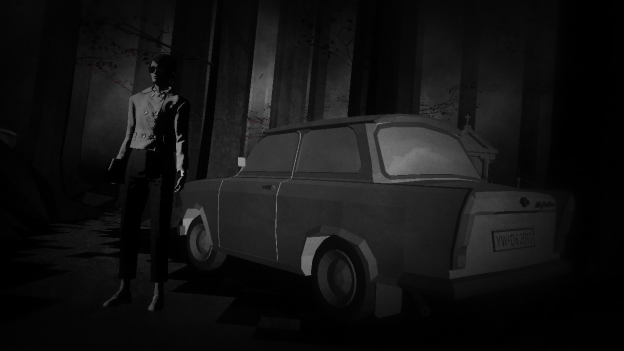


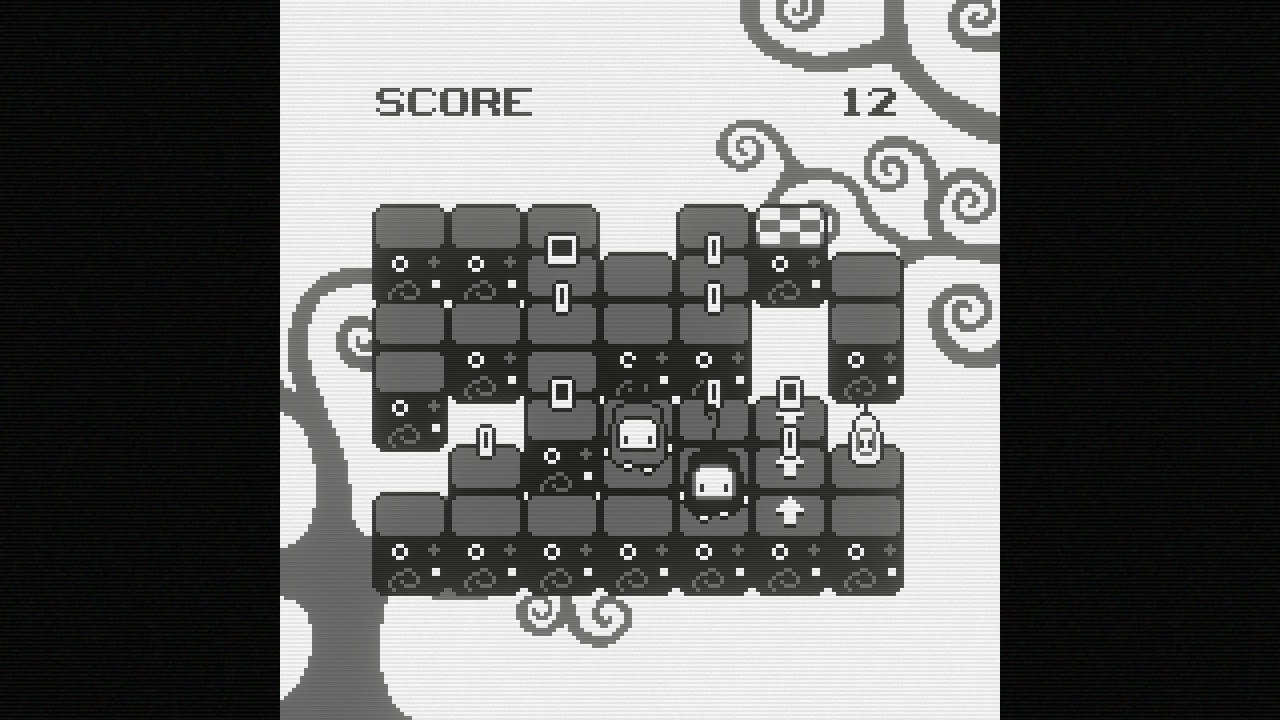
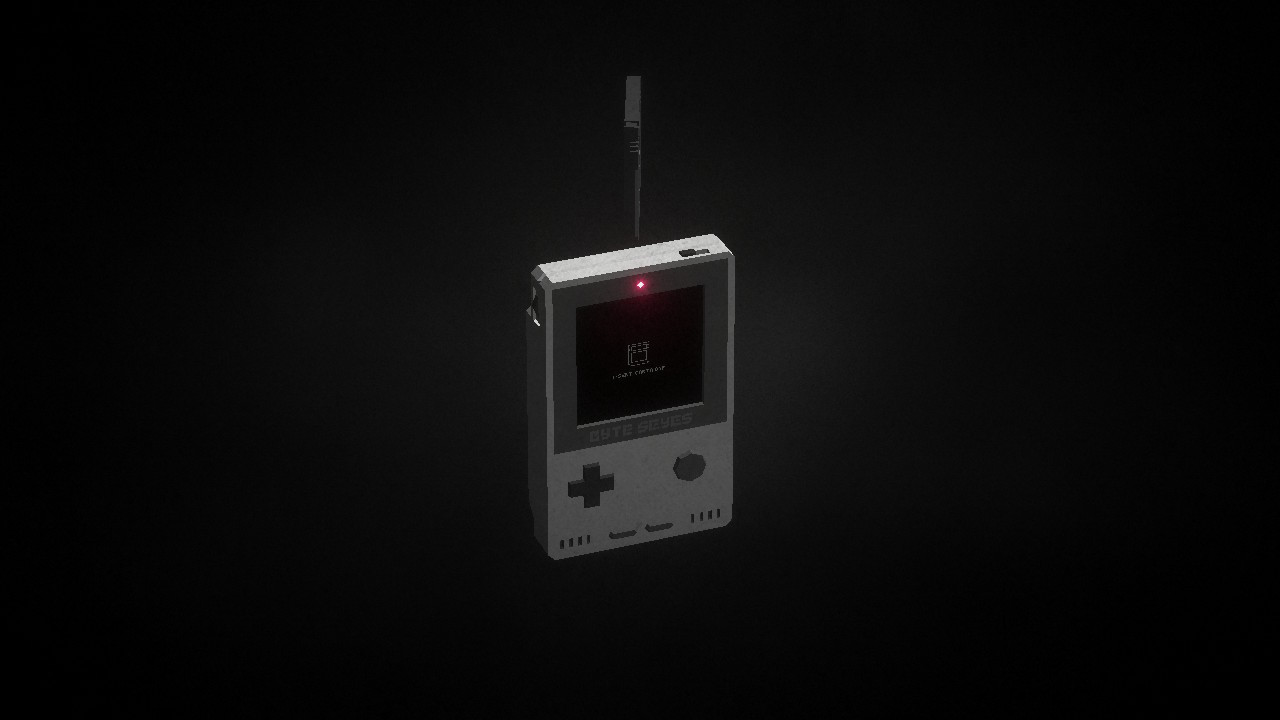


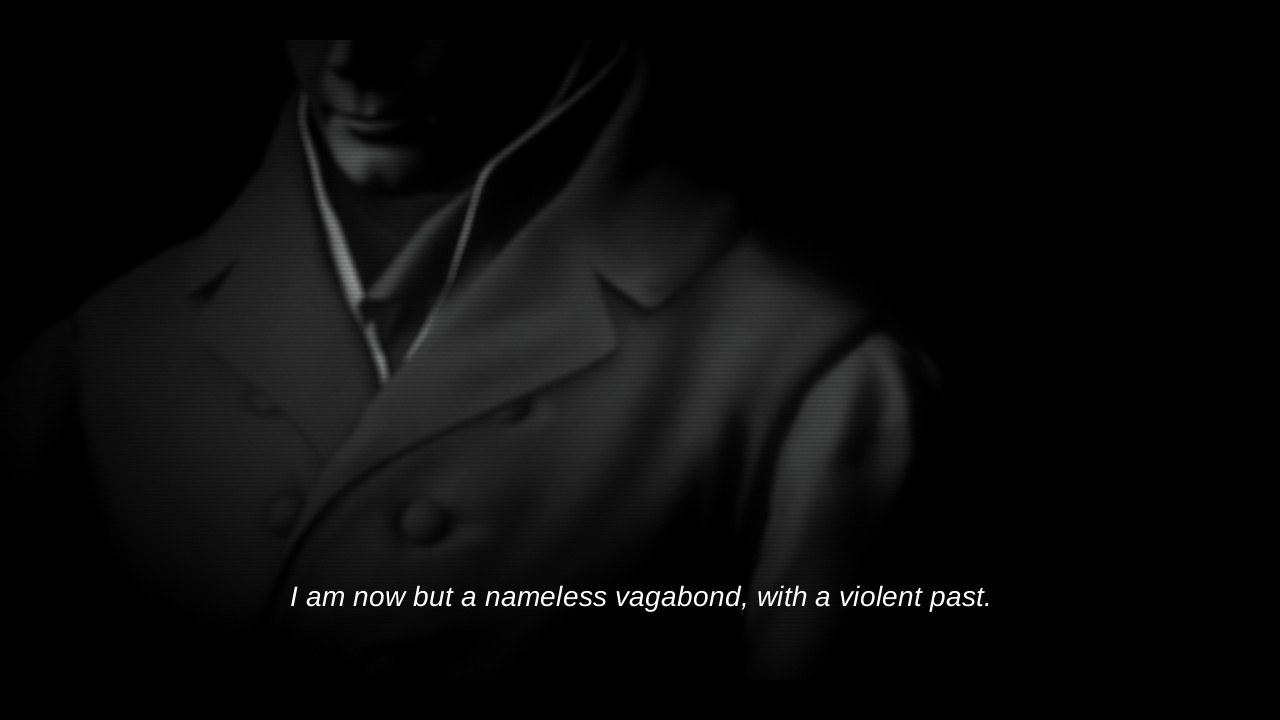

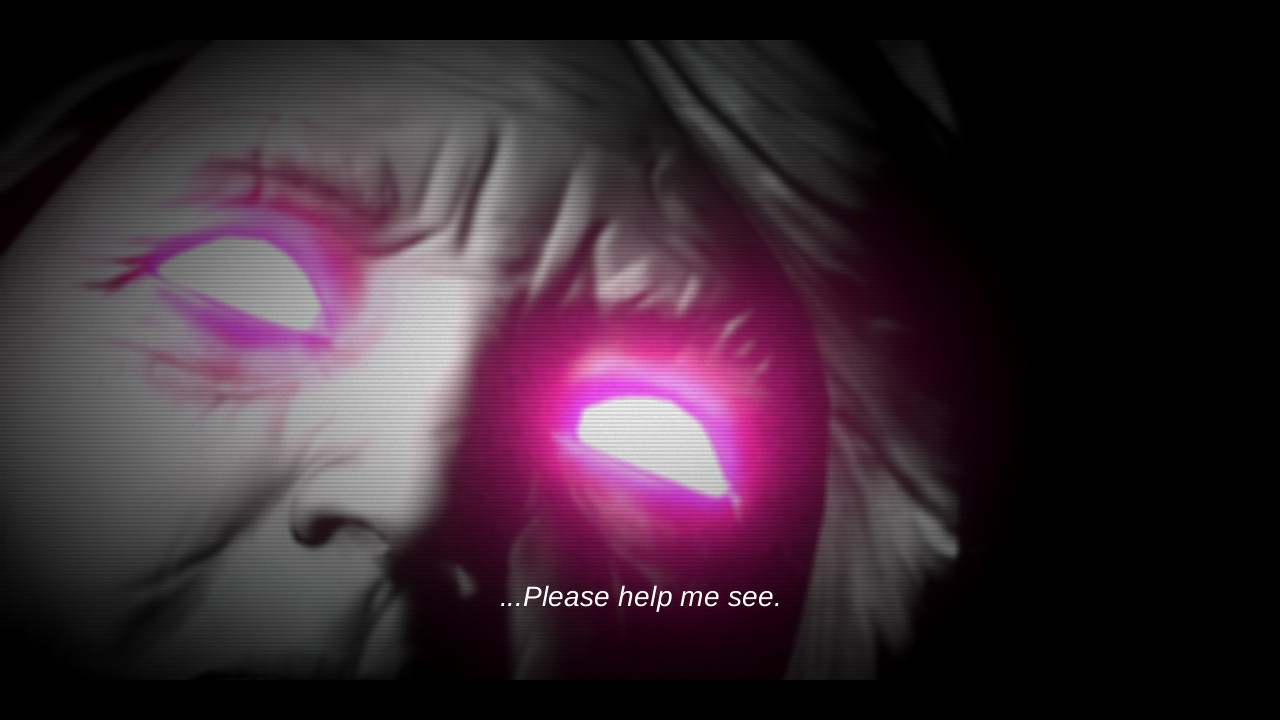

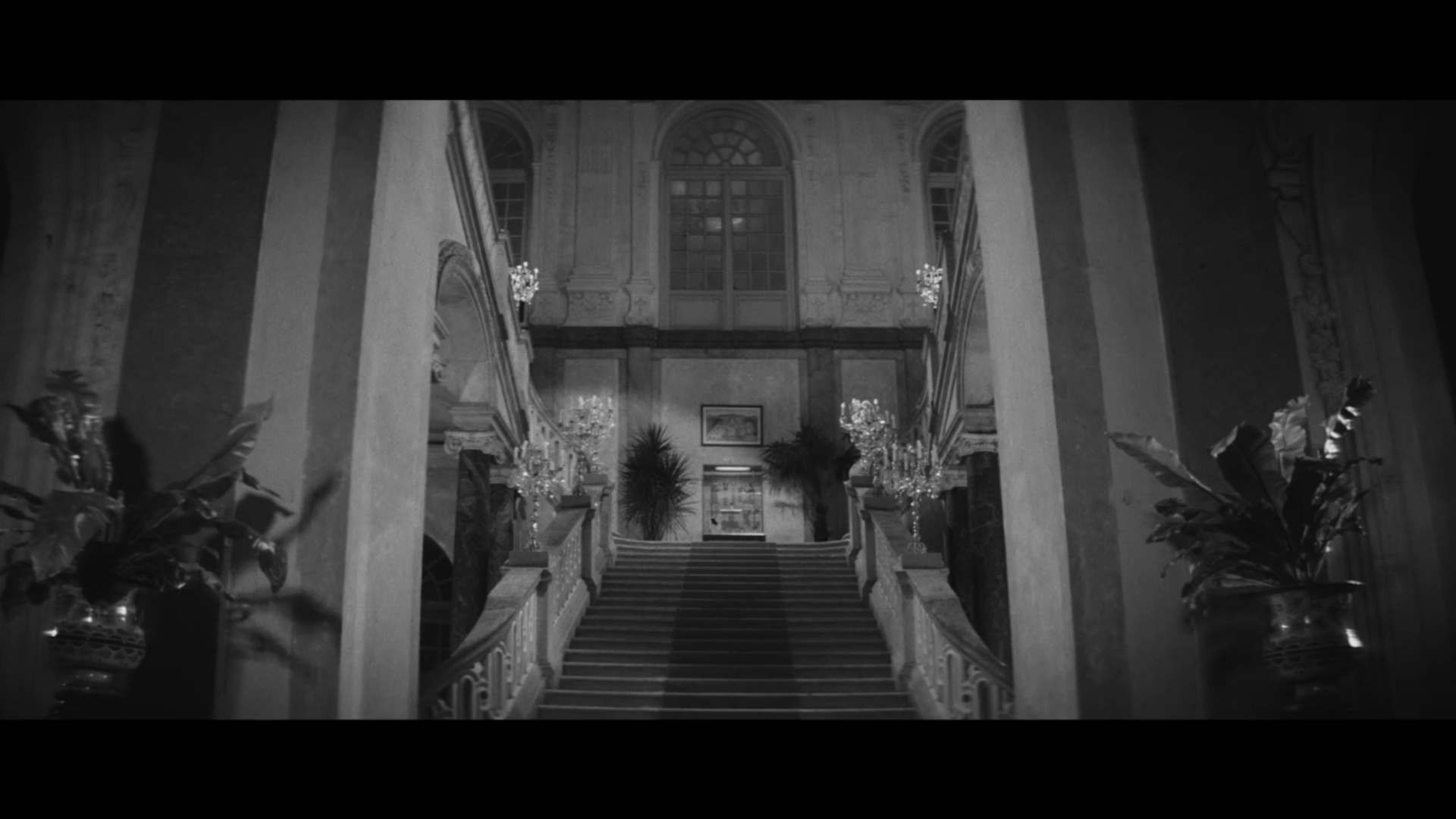


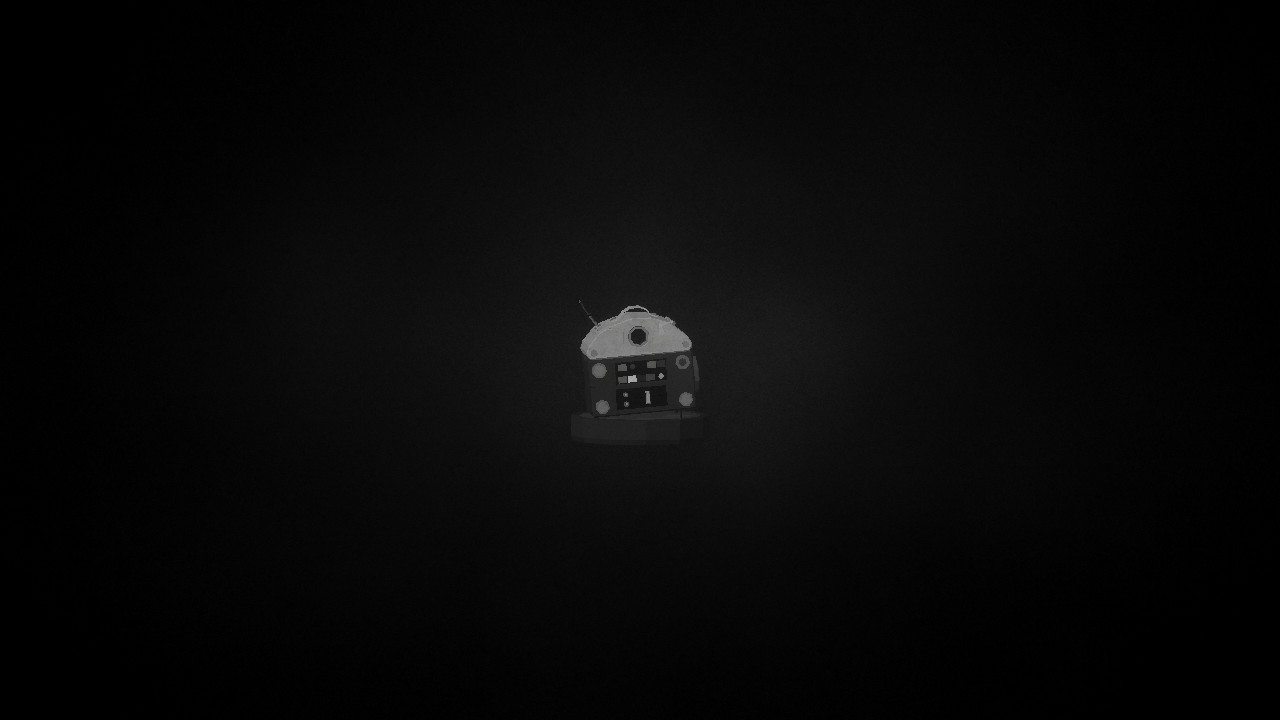

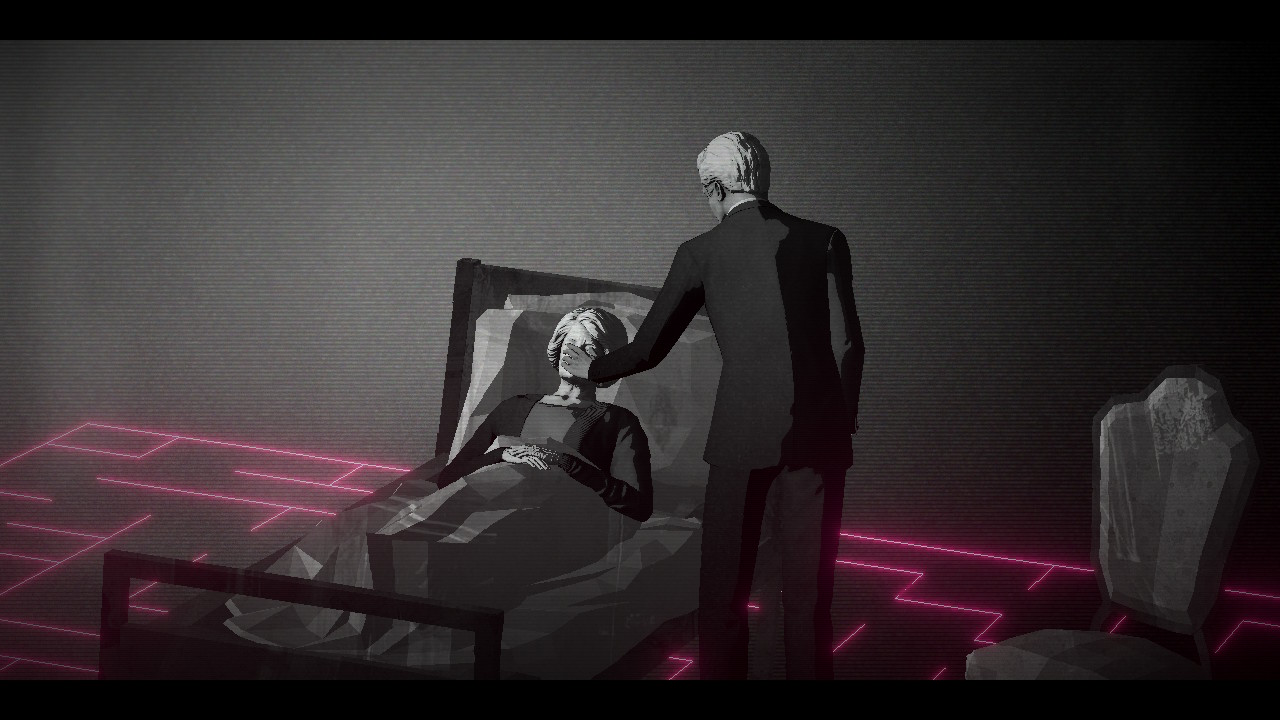


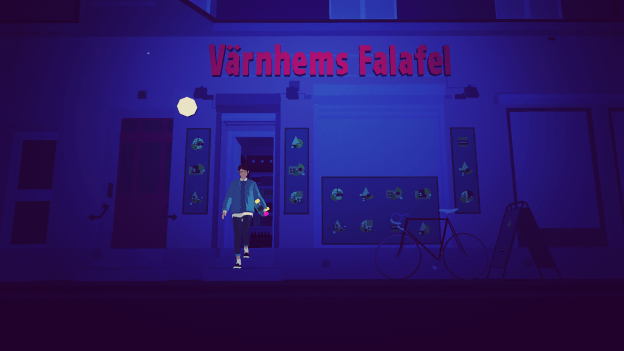

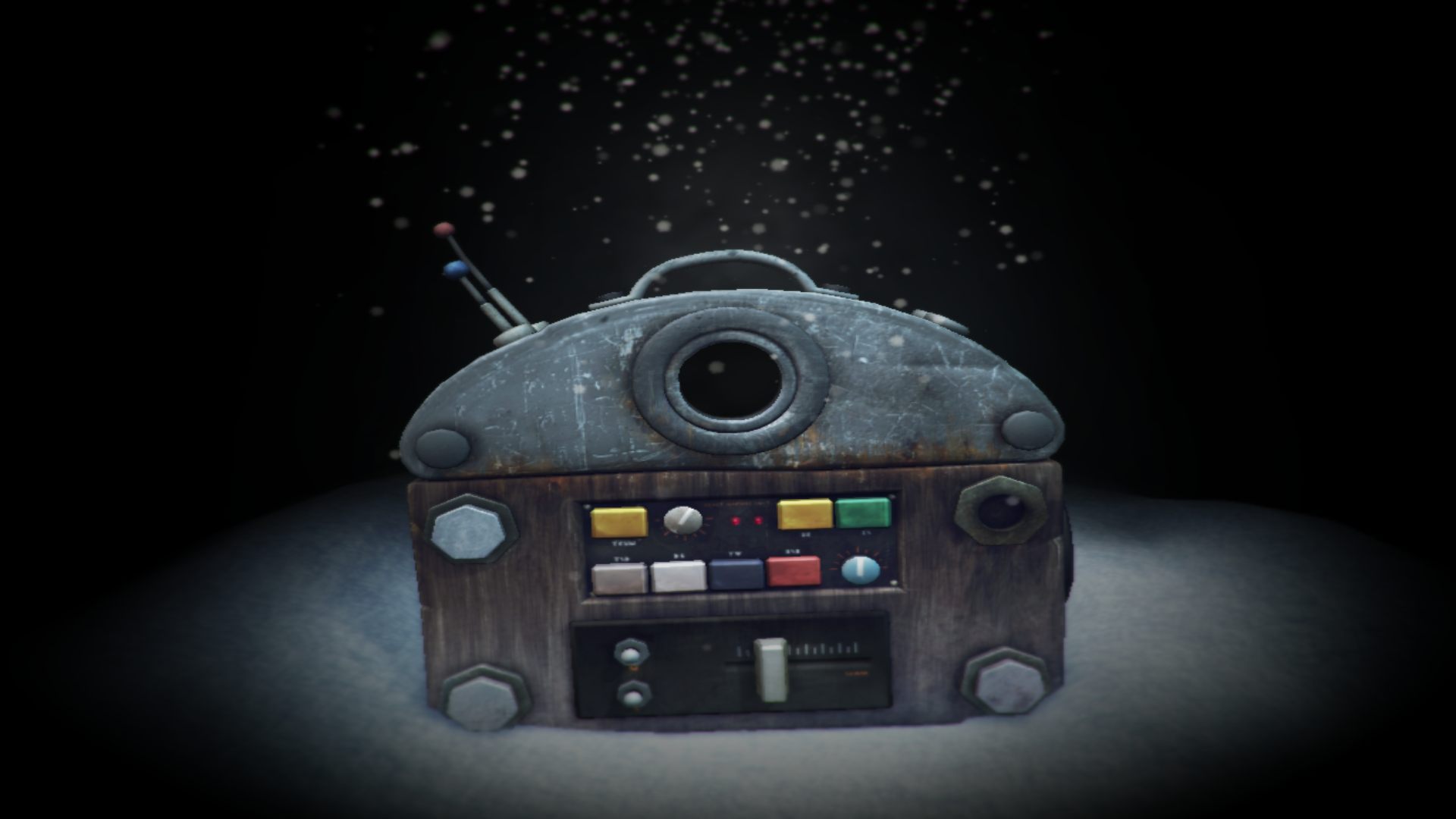


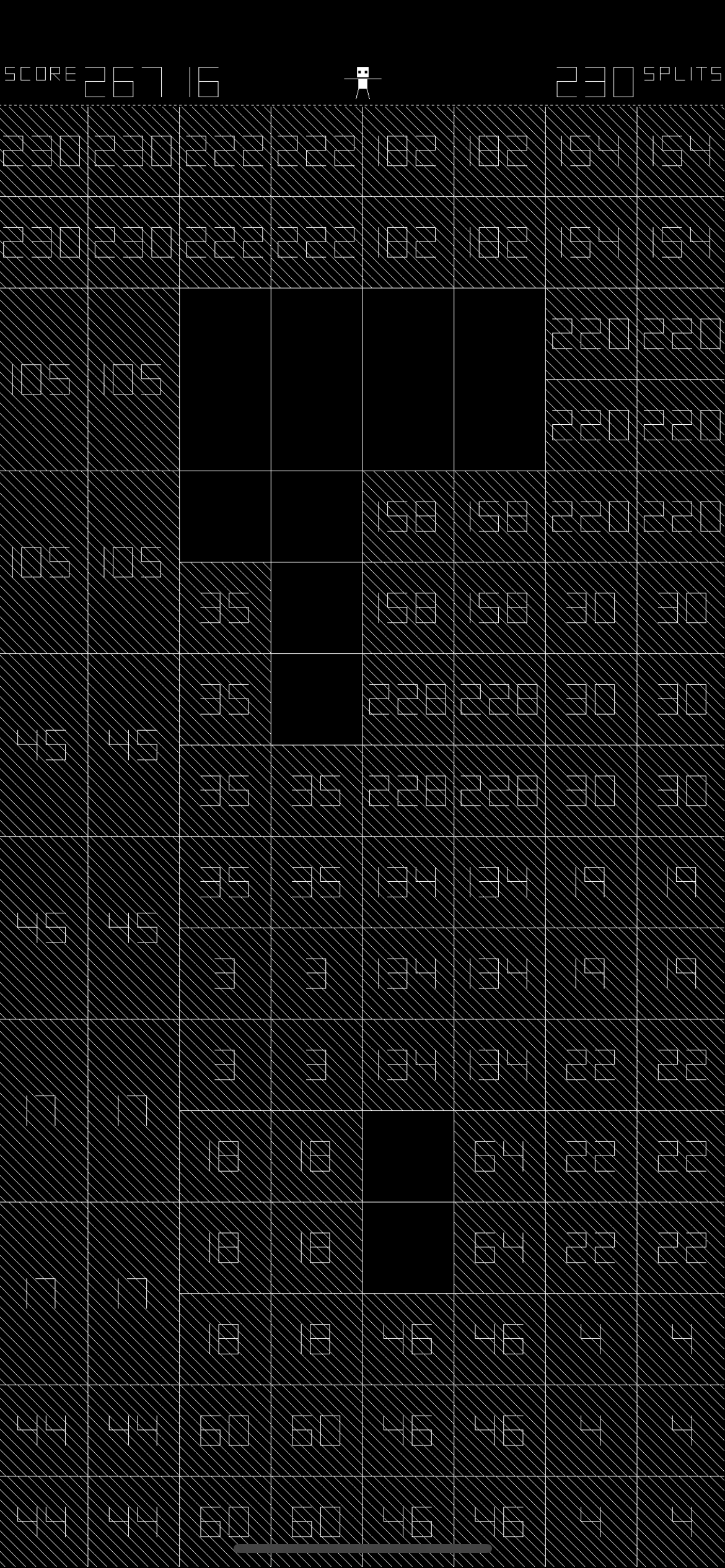




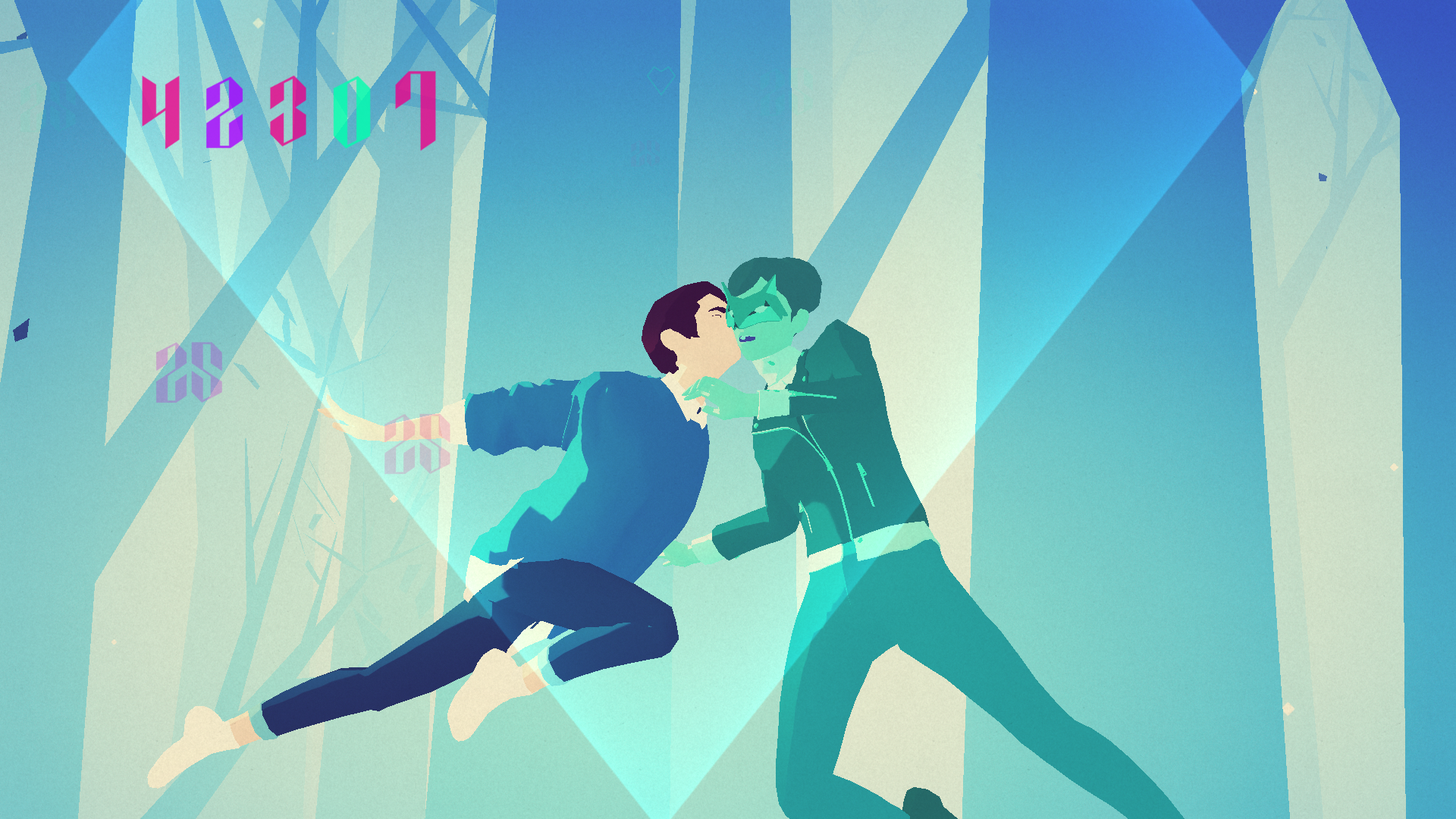
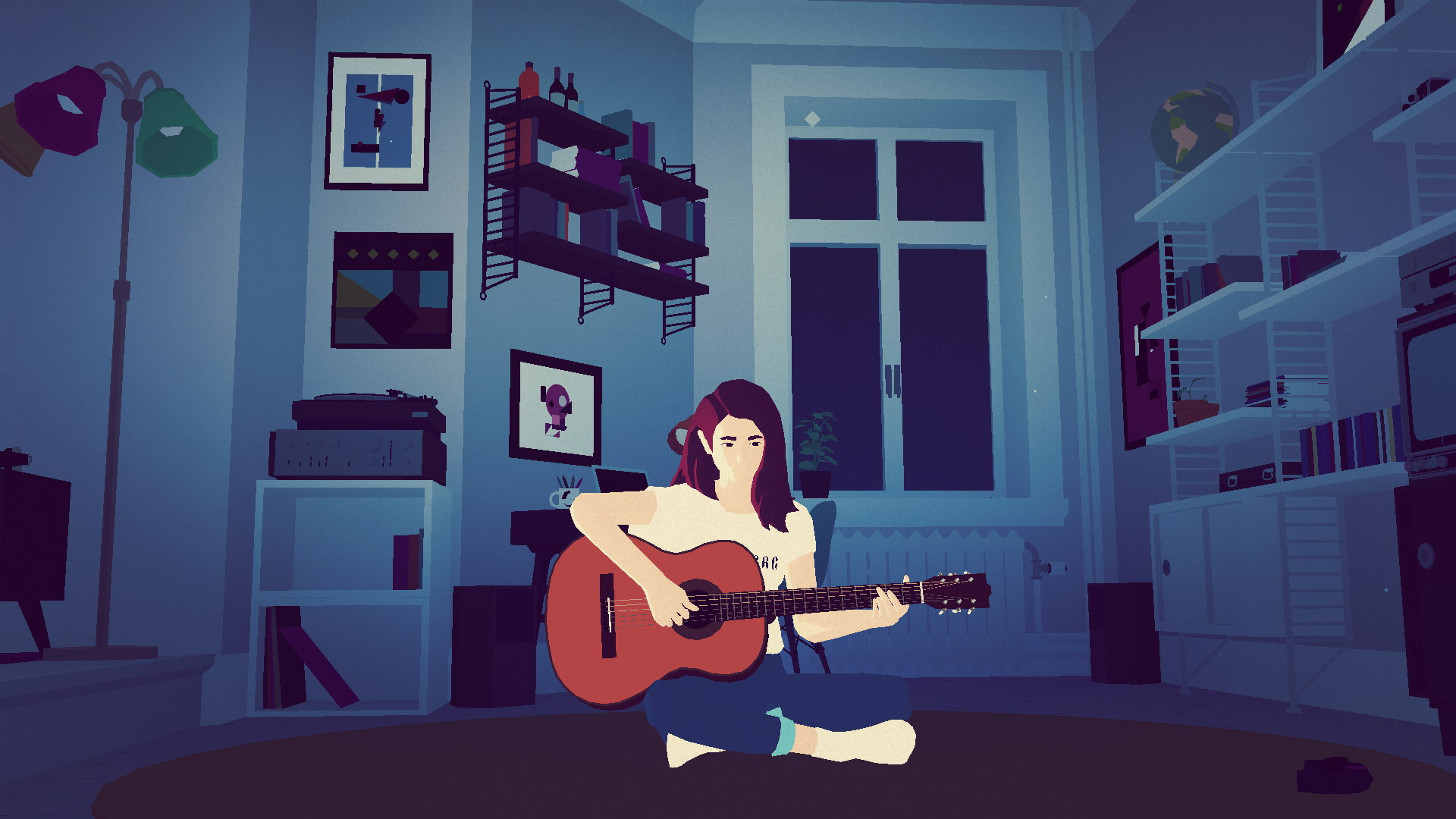
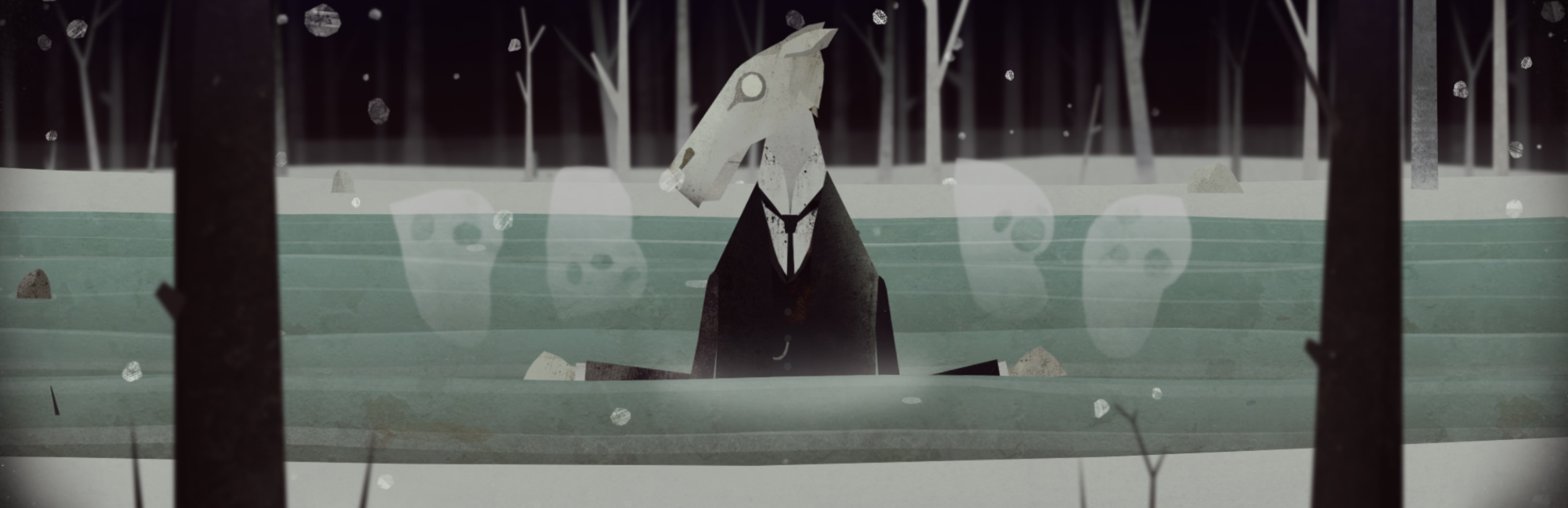


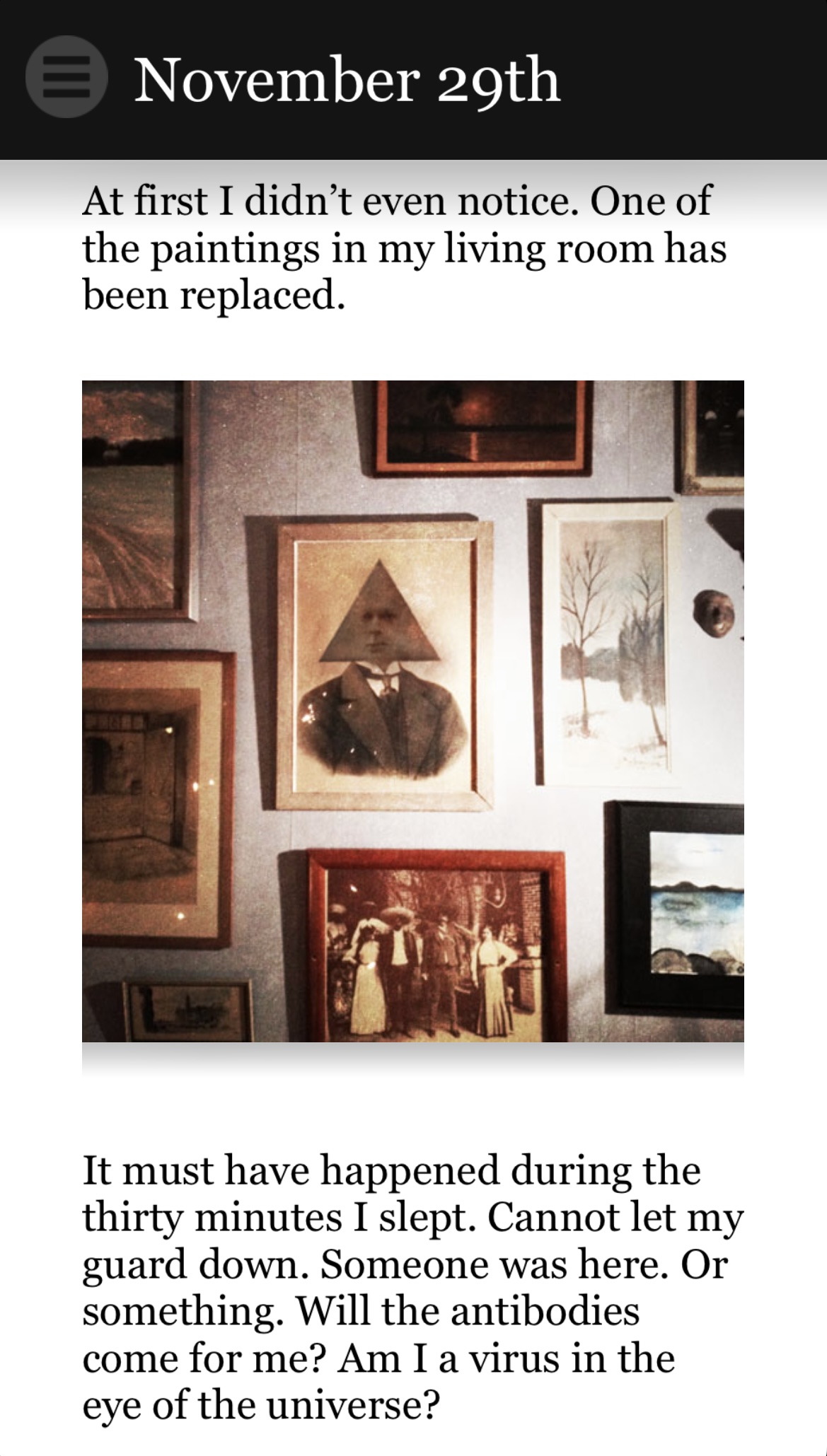









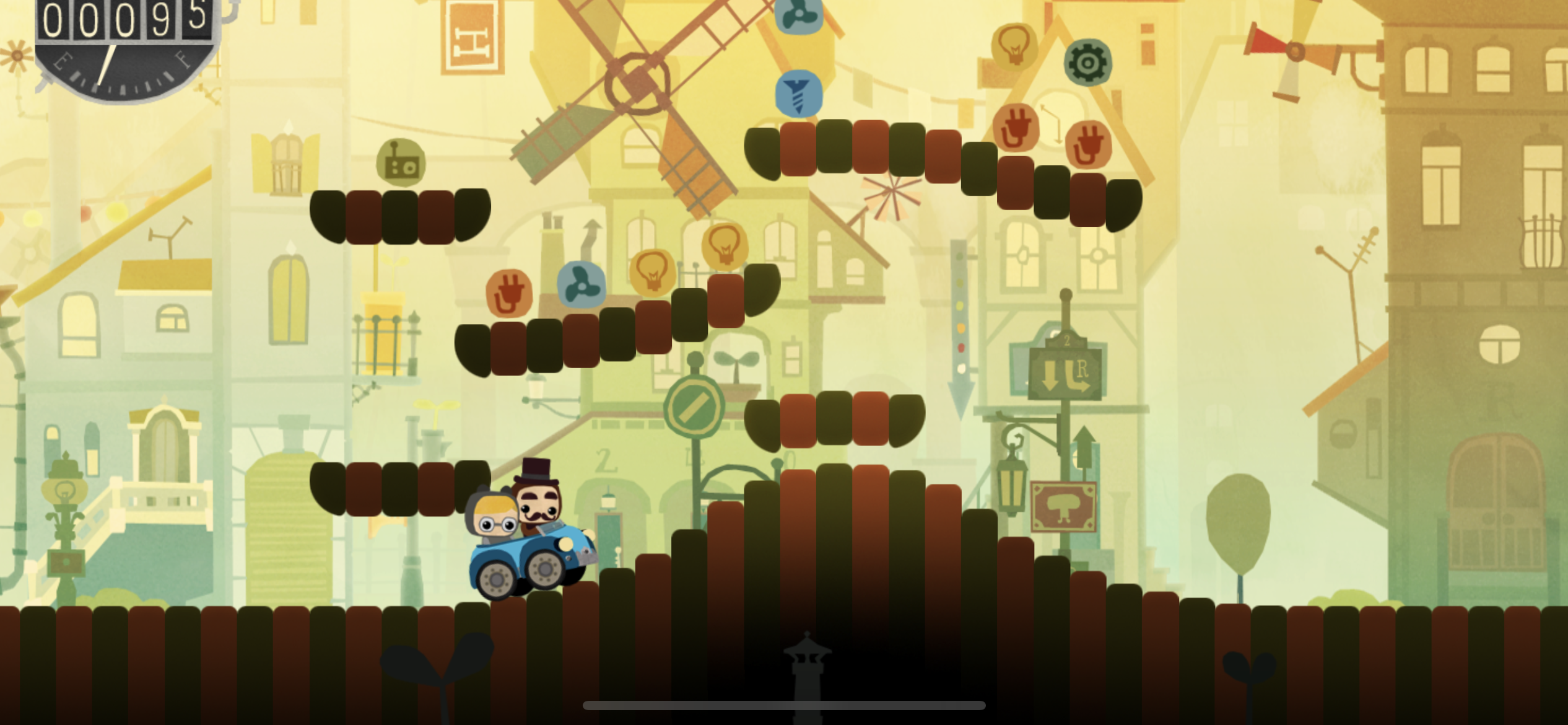


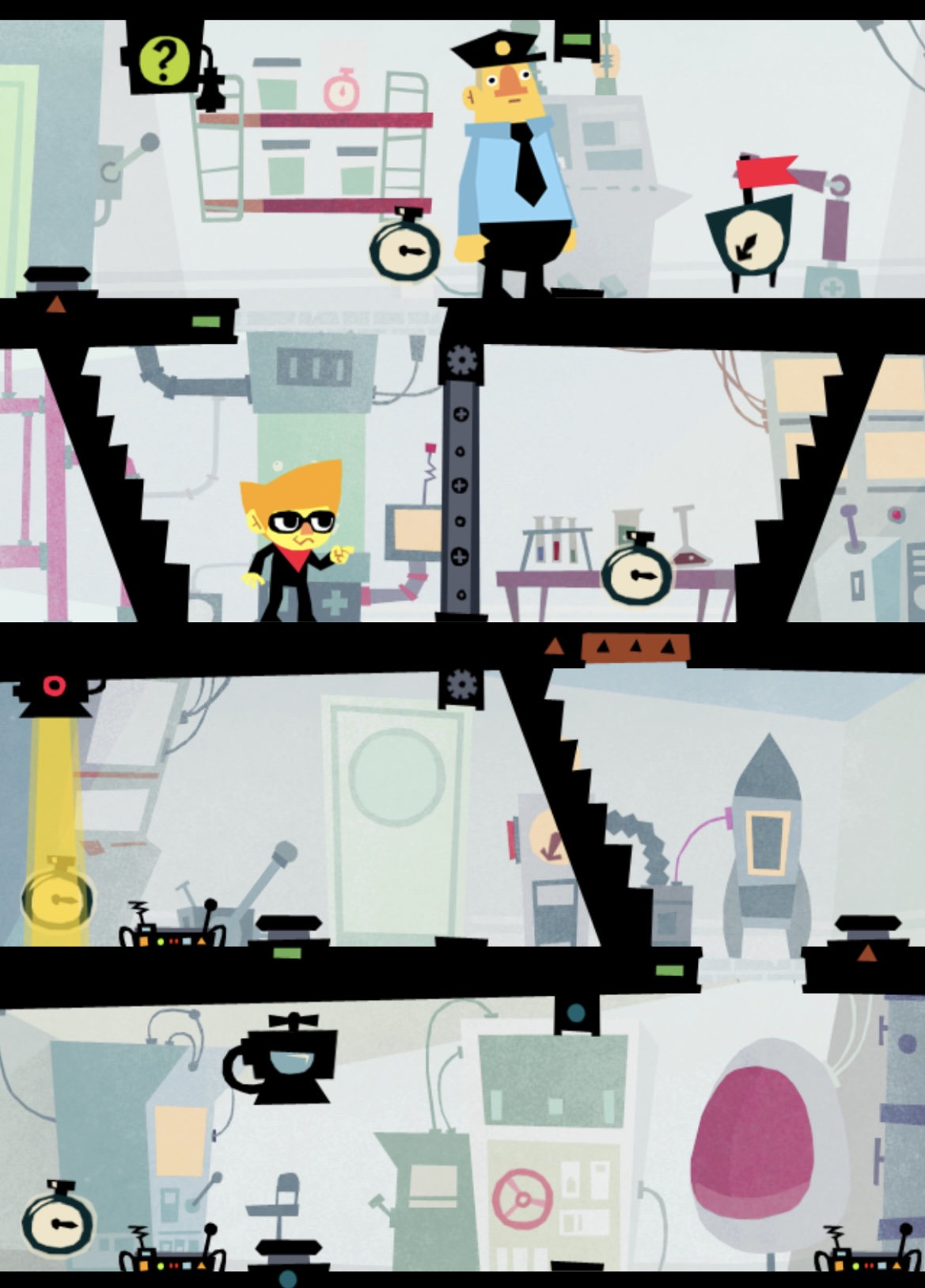
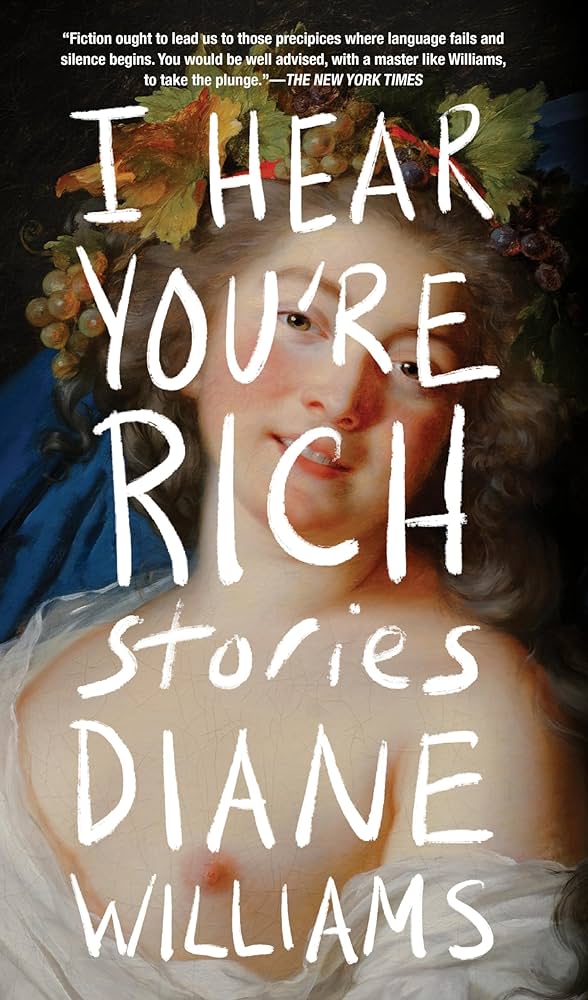
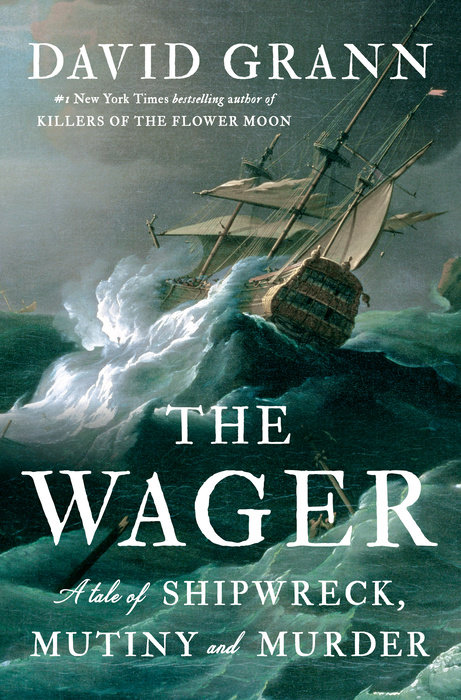






 The great and shameful archive