Author Archives: Matthew

Things I loved in 2015: Nos. 15-11

How do you follow up prison planets, drunk horses, West African minimalism, Jonathan Banks in a tollbooth, and BIG WIDE 70MM SUPER CINEMASCOPE? Like this:

No. 15 — Mystery Show

The twin notions that everything is connected and that there must be a conspiracy are classic engines for genre fiction, from Lovecraft to From Hell to Welcome to Night Vale. But I’m not sure that it’s ever been taken up in non-fiction with such total aplomb as on this podcast.

Mystery Show is ostensibly about actual, real-world mysteries with actual real-world solutions. But each story is told according to the semi-ironic non-logic of real-world Dirk Gently, Starlee Kine. So, the plotline of Must Love Dogs becomes crucially important to finding a forgotten video store. The life story of a guy who works for Ticketmaster customer service could yield crucial clues to discovering Britney Spears’ reading habits. And the members of the Phoenix Culinary Association could (and do) prove invaluable in the quest to find the owner of long-discarded belt buckle.

Mystery Show is funny, sure. And it’s presented with one eyebrow at least halfway raised. But, it also makes you feel like we all live in a world where there are amazing stories beneath every rock — as long as you take for granted that it’s the most important rock in the universe.

No. 14 — Unbreakable Kimmy Schmidt 

If you’re not completely sold on this show on the basis of its theme song, we cannot be friends.

Unbreakable Kimmy Schmidt is on this list primarily because it made me laugh and laugh like a big dumb idiot. It’s like Tina Fey and Robert Carlock decided that 30 Rock just wasn’t quite packed-full-o’jokes enough, and they’d have to do better next time.

But what I really remember most fondly about my embarrassingly fast binge of Unbreakable Kimmy Schmidt is the first two minutes. I don’t think I’ve ever seen a show establish its premise and characterize its lead quite so efficiently before. That theme song certainly does a lot of the heavy lifting, but really watch Ellie Kemper’s performance as she emerges from the bunker where Kimmy’s been kept for 15 years. There’s not a shred of anger or resentment about what she’s missed out on — just overwhelming joy that the world outside still exists.

I’m not saying it’s psychologically realistic, but in that moment you realize that this is a character you want to spend a lot of time with.

Even if Unbreakable Kimmy Schmidt hadn’t given us the profound gift that is “Peeno Noir,” it would still be my favourite new comedy in ages.

No. 13 — Kieron Gillen/Jamie McKelvie: The Wicked and the Divine, vol. 2

WicDiv2

Do you ever get the feeling that the intended audience for a thing is specifically you, and nobody else? It probably happens to me more than a lot of people, to be fair. But I’m not sure there has ever been a narrative premise that is such obvious Parsonsbait as “a pantheon of gods from various mythologies are periodically incarnated as rock stars.”

The first volume of The Wicked and the Divine bowled me over, but this second one, “Fandemonium,” is where things really seem to be picking up. We learn more about the history of the pantheon, our protagonist’s story takes some completely unexpected twists and turns, and — best of all — we meet a genderfluid incarnation of the Sumerian love god(dess) Inanna who dresses like Prince.

Also people trip out at a rave hosted by Dionysus.

This comic is bonkers and beautiful and I’m more invested in it than almost any other ongoing serial narrative. I’m picking up the third trade collection later this week, and will devour it immediately.

No. 12 — Inside Out

I tend not to watch kids’ movies — not out of a lack of respect for them, or out of self-consciousness; it’s just that my reaction is usually something like “Boy, I wish I could have seen this when I was ten.”

Not Inside Out. This movie hit me straight in the 25-year-old feels. First off, the premise of exploring the changing psyche of a young girl by way of personified emotions is brilliant. And the casting is spot-on. But it’s specifically the exploration of sadness’s role in maturity that makes Inside Out one of the most thoughtful children’s movies I’ve ever seen.

No. 11 — Björk: Vulnicura

Björk’s creative peak is lasting a ludicrously long time. Vulnicura is, to my ears, as good an album as she’s ever made. It’s certainly a mode we haven’t seen her in before. And with an artist like Björk, the best you can possibly hope for is yet another new direction.

Sonically, Vulnicura could be seen as a retreat to the barren, strings-and-drum-machines-only timbres of her acclaimed Homogenic. But this time, that timbre doesn’t make her seem tough: it leaves her exposed. Which is apropos, since this is Björk’s breakup album. I think it’s destined to become both a classic of that minor genre and of her discography.

“Stonemilker” is pure catharsis, and one of my favourite songs of the year.

More whiplash tomorrow, as we enter the top ten with a beautiful movie, a beloved show, a kaleidoscopic podcast, a disappointingly overlooked album, and the list’s first non-comic book.

Things I loved in 2015: Nos. 20-15

So far, we’ve celebrated gigantic-sounding candy pop, long takes of bear attacks, space eyebrows, journalistic integrity, and the quality of empathy as expressed through radio. We soldier on. Here’s more excellence in sound and screen, and also this list’s first instance of excellence in panels:

No. 20 — Kelly Sue DeConnick/Valentine De Landro: Bitch Planet, vol. 1

bitch-planet-1-deconnick-de-landro-image-cover-628x968

This comic is badass feminism 101. If I could force everybody I know to read it, I would, because for most of them it would be validating and triumphant, and for the rest it might disavow them of some dodgy notions.

Kelly Sue DeConnick’s brand of dystopian satire is a wonderfully blunt instrument. Aside from the literal existence of a prison planet where non-compliant women are sent for various crimes against the patriarchy, the world of Bitch Planet is essentially no different from our own. Its power comes from the fact that most of its characters’ struggles are stories you might actually have heard somebody tell from personal experience.

But aside from being merely (ha) progressive, Bitch Planet is also exquisitely crafted and detailed, right down to the zine-inspired design and 90s comics-style joke classifieds in every issue. As a trade-waiter on principle, the wait for the next volume is going to drive me insane.

No. 19 — BoJack Horseman

Has there ever been a more compelling unsympathetic loser on television than BoJack Horseman? In its far-superior second season, BoJack becomes the cartoon animal version of Don Draper: attaining his dreams, alienating everybody he loves, gradually self-destructing, and trying and failing and trying and failing to put himself back together. And everybody around him seems to be coming apart at the seams for their own particular reasons, as well.

But the fact that these plotlines are embedded in a show that’s this joke-dense and whimsical allows BoJack Horseman to do what lots of these trendy shows full of terrible people fail at: it can take for granted that people are often horrible and don’t deserve their good fortune, while still being compulsively watchable.

And on top of everything, this season gave us “Hank After Dark,” one of the most visually dense, funniest and also most chilling episodes of television of the year. As a response to the Cosby spectacle, it’s as powerful as anything. If the season has one weakness, it’s that “Hank After Dark” thoroughly eclipses even the second-best episode.

No. 18 — Africa Express: In C Mali

Even as a confirmed minimalism devotee, I couldn’t get into Terry Riley’s classic In C until I heard it performed by West African musicians.

Africa Express is a project started by the distinctly non-African Damon Albarn, with the participation of a couple other notably non-African people including Brian Eno, who is required by British law to be involved in everything.

The idea behind Africa Express was to forge meaningful connections between European and African musicians. Given that, you may well wonder whether it’s a tad suspect that Albarn’s second recording with these musicians is entirely focussed on a piece of Western classical music. But, just listen to the record.

The thing that’s immediately clear is that In C Mali is more than just another recording of In C. The music on this recording does not belong to Terry Riley nearly as much as it belongs to Africa Express. In C is freely structured to the point where every performance is slightly different, but this performance is entirely its own thing. The musicians own this music. Riley fades into the background.

I doubt I’ll listen to any other recordings of this piece for several years, at least.

No. 17 — Better Call Saul

Sometimes you see critics say things like “it was better than it needed to be” when a show or movie has a built-in audience from a beloved related property.

Better Call Saul was massively better than it needed to be.

The important thing that Vince Gilligan and Peter Gould realized is that they couldn’t, shouldn’t, and were under no obligation to replicate the successes of Breaking Bad. So, they made a show that fans of Breaking Bad would be sure to enjoy — it’s got that signature dialogue and all the stunning sights of Albuquerque, N.M. — but that is a fundamentally different show in terms of content and pacing.

Better Call Saul lacks its predecessor’s explosive plotline, allowing it to luxuriate in its characters and themes the way that Mad Men does, and the way that Breaking Bad didn’t. The greatest side effect of this is that it gives Bob Odenkirk and Jonathan Banks more space for multifaceted performances as Jimmy McGill and Mike Ehrmantraut, respectively.

This show didn’t just overcame the impossible expectations associated with being a Breaking Bad spinoff: it also staked out its own territory immediately. I suspect it’ll only get better.

No. 16 — The Hateful Eight

To some extent, Quentin Tarantino is a substance. Each of his movies is an additional quantity of that substance to be consumed. If you didn’t enjoy the last jar of Tarantino you ate, you’re not likely to enjoy any other ones either.

That said, there are things he does that I love, and things he does that I don’t. I could take or leave his action scenes and the more conspicuous exploitation movie tropes (I have zero time for Death Proof or Kill Bill: Vol. 1). But when he’s in talky mode, there’s nobody I like better.

The Hateful Eight is an entire movie’s worth of the Mexican standoff in Pulp Fiction, the barroom scene in Inglorious Basterds, or the final confrontation in Kill Bill: Vol. 2. It has an amazing cast full of people who clearly delight in saying the sorts of things that people say in Tarantino scripts. And, if you live in an opportune place, you can see it (as I did) in glorious 70mm projection, complete with the novelty of an overture and an intermission.

At this moment, it is my second-favourite jar of Tarantino.

Tomorrow, we’ll pick up from no. 15, with our most whiplash-inducing set of five yet: an album, a movie, a comic, a show and a podcast. 

Things I loved in 2015: Nos. 25-21

Being that this is the second time I’ve done this, I suppose we can call my year-end list an annual tradition. A key part of this year-end tradition is that it always happens well after the year has ended. Whatever. Timeliness isn’t everything.

I’m doing things a bit differently this year. First off, I’ve decided to rank the entries. This is, of course, foolish. It’s not so much that it’s like comparing apples to oranges; it’s more that it’s like comparing apples to oranges to kiwis to ribeyes to Chanel No. 5 to Chevrolets to ravens to clouds. But that is exactly the fun. Throughout this list, you’ll find things that have absolutely nothing in common, except that I enjoyed them. Their ranking is nothing more than an index of my goodwill towards them in the weeks immediately preceding this one.

And speaking of weeks, I’m ramping up the suspense by breaking my top 25 down into five separate posts: one per day until Friday. In practice, this is because I’m never going to have time to write the whole thing at once. But it may also be fun for the six of you who’ll read this.

Speaking of you six loyal Omnireviwer readers (bless you), you’ll have gotten to know my tastes by now. Specifically, you’ll know that they are capricious and semi-arbitrary, and that my experience of the year’s media, while extensive by normal person standards, is far from complete. This list is compromised and imperfect, but hopefully idiosyncratic enough to make for decent reading and introduce a few things you might have missed. 2015 was a good year, much like all the rest of them.

Today, we’ve got an album, two movies, a TV show and a podcast. Let’s begin:

No. 25 — CHVRCHES: Every Open Eye

This is the album that I was most disappointed to see overlooked on so many major year-end lists. I loved CHVRCHES’ debut album, as did everybody, but Every Open Eye is self-evidently a more assured and consistent record. I periodically go back to the singles on the debut, but I tend not to want to listen to the whole album. Whereas, Every Open Eye is a unified 42-minute catharsis. And Lauren Mayberry’s voice sounds even better this time around.

There are albums that I’m leaving off this list that I think are possibly more accomplished than this one, and certainly more important. But this is an album that I lived with, this past year. Don’t deny yourself joy. Go listen to CHVRCHES.

No. 24 — The Revenant

It’s big and ambitious and prestigious and self-serious and Oscary, and I loved it so much.

Common wisdom around The Revenant seems to be that it’s bleak and difficult — a movie you “should” go see, rather than one you “have to!” go see. And it is bleak, and it is graphic and visceral and painful at times. It’s Alejandro Iñárritu. But it is also a hell of an experience. I’d gladly see it a second time.

A lot of that is down to Emmanuel Lubezki, the most distinctive cinematographer alive, and the man who will once again prevent Roger Deakins from winning his Oscar this year. Lubezki’s immaculately choreographed long takes remove all of the artifice from the movie’s action scenes — that bear fight, and especially the battle at the start of the movie, which is one of the best battle scenes ever. His approach puts you right there. Plus, he has an unparalleled eye for a staggering vista.

Lubezki’s photography and Ryuichi Sakamoto’s beautiful score tone down the terrors of the story and Leonardo DiCaprio’s impressively committed performance. The Revenant is horrifying, yes. But it isn’t unrelenting. It’s watchable. Beautiful, even. If it won Best Picture, I wouldn’t be especially disappointed.

No. 23 — Doctor Who

The latest season of Doctor Who divides conveniently into its first half, an extended failure to ignite, and its second half, which blazes magnificently. If we were to separate those two halves, the first wouldn’t place on this list and the second would probably be a lot higher. In that latter string of excellence, head writer Steven Moffat, returning favourite Peter Harness and newcomer Sarah Dollard all offer top-flight Doctor Who scripts, and even the series’ longest-dangling dead weight, Mark Gatiss rises to the occasion.

Peter Capaldi and Jenna Coleman both give their best performances of the series in Harness’s Zygon two-parter, and they (especially Capaldi) keep it up through Moffat’s two-part season finale. And what a finale. First, in “Heaven Sent,” Moffat offers one of his signature high-concept scripts like “Blink” or “Listen,” which is a sort of drama that no other show can do. Then, in “Hell Bent,” he gives us the best episode of Doctor Who in giant, explosive, plot-heavy mode since “A Good Man Goes To War.”

Altogether, series nine is a lesser season than its predecessor, Capaldi’s debut series. But, there are at least five hours of the best Doctor Who since 2005 in here somewhere. It’s a shame that Moffat’s tenure has to come to an end, and a bigger shame that it’s not Harness replacing him. But Doctor Who has had 53 years to prove that it can weather pretty much any change in the long term. And there’s still one more series that’s bound to be a corker.

No. 22 — Spotlight

There’s no way to prepare yourself for how good Spotlight is. That trailer sure as hell doesn’t suggest it. No matter how many people tell you this movie is great, and no matter how many positive reviews you read, Spotlight still seems like it’s going to be a well-made, soft-spoken, mid-budget movie for grown-ups. It looks boring. Pedestrian. Sophisticated. But actually, I don’t think I’ve been so consistently excited by a movie that’s almost entirely talking since The Social Network.

The screenplay hits a perfect balance where it lets you be thrilled by the twists and turns of its journalism procedural storyline while also never forgetting that it’s a movie about child molestation. It’s sensitive to the details of the story that the journalists are telling, while also realizing that it’s own story is not that story — it’s the meta story: the story of the story.

The really great thing about this movie is that while it celebrates the extraordinary work these journalists did, it doesn’t shy away from also implicating the entire institution of journalism for letting the abuse in the Catholic Church go unexamined for so long. As much as anything, Spotlight is a movie about how systems turn a blind eye to themselves.

In that sense, it reminds me of The Wire. What more can I say?

No. 21 — Love and Radio

This podcast feels like a different show every episode, which makes each episode essential almost by default. The producers of Love and Radio episodes find people with stories and perspectives that fall outside most people’s experience and then say, “we’re just going to listen to this person for a while.” Host Nick van der Kolk and his team are generally present, but off-mic. It’s like every month, Love and Radio has a different host. It empowers voices that would otherwise never have that kind of power.

This totally changes the power dynamic of the radio interview — for better and worse. Sometimes, people say horrifying things on this podcast, which can be troubling given that the interviewer’s voice is made subordinate to the guest’s. (See this year’s fabulous and infuriating A Red Dot.) But, the underlying philosophy is that it’s better to listen to people than not to, and I agree.

The episode I’ve embedded above is certainly in my top three podcast episodes of the year. Hit play, and feel every feel you possess.

The countdown will pick up with no. 20 tomorrow. There’ll be two more shows, a movie, an album you might have missed and our first comic. 

Omnireviewer (week of Jan. 24, 2016)

20 reviews, and I seem to be gradually getting back on track with podcasts. Only 26 episodes to go before I’m caught up with my subscriptions. Also, I finally finished Three Moments of an Explosion and can now finally begin writing up my favourites of 2015. So, you know, look for that eventually. These things take time.

Literature, etc.

China Miéville: “Listen the Birds” — There are two or three tiny stories in Three Moments of an Explosion that are formatted as scripts for movie trailers. The trailer is a medium that Miéville is particularly adept at, it turns out. Because, a trailer introduces a premise and a sense of mystery or suspense, and leaves you with lingering uncertainties, so that you might like to see the film. And that’s kind of the same way that Miéville’s stories work. I don’t mean to say that they end unsatisfyingly, but there’s a sense in which resolution is sort of beside the point. The stories in Three Moments are all sort of like trailers, actually. But of the ones that actually go for that explicitly, this is far and away the best. I’d love to see the trailer produced. It would take a profound genius to actually make the movie, though.

China Miéville: “A Mount” — Occasionally, a writer manages to reproduce my own thought processes on the page, with added clarity and purpose. This guy does it an awful lot, including here. It makes me very, very jealous.

China Miéville: “The Design” — The final story in the collection, and one of the most remarked-upon in reviews. It is one of the most simple stories in its telling, but one of the most beautiful for the relationship between its narrator and its protagonist. It also contains one of the most beautiful sentences I’ve read recently, which will not spoil the wonderful premise of the story by my quoting it here: “I sat alone in the kitchen, in a world in which beautiful, elegantly wrought secrets lie hidden less than an inch from sight.”

Television

Mildred Pierce: Parts 4-5 — In its last two parts (which aired together on HBO), Mildred Pierce finally becomes one of those Todd Haynes works that makes you go, as Marc Maron put it, “Shit, I’ve gotta reckon with this.” Now that Veda’s grown up into an entirely different actor (Evan Rachel Wood), she’s an amazing character. Still deeply frustrating, but in a good way. Without revealing too much, there is a scene in this in which we watch several people listening to the radio, and it is the most compelling moment in the entire series. Mildred Pierce is a flawed television program, but since there are only five episodes, and two of them are these excellent ones, I’d recommend it for sure. Pick of the week.

QI: “Medieval and Macabre” — Apparently, Air Singapore has “corpse cupboards” on their planes to store people who die in-flight.

Doctor Who: “Paradise Towers,” episode 1 — It’s been a while since I sat down with some ropey old classic Doctor Who. This is unambiguously fantastic. Much of it looks like a crap 80s video, but the premise is super and the acting is frequently hilarious — and not in the way that classic Doctor Who sometimes is, where you expect that the actors aren’t in in the joke. As a general rule, the McCoy era is one of my favourites. For all of its shortcomings in terms of production (let me reiterate that this looks completely terrible), the writing was more consistently sharp than in any other era and its taxpayer-funded anti-Thatcherism is a wonder to behold. There will be more to say specifically when I’ve finished the serial. But for now, suffice it to say that it’s one of the funniest stories I’ve seen that isn’t “City of Death” or “The Ribos Operation.”

Podcasts

All Songs Considered: “New Music From Ray LaMontagne, Lucius, A Bowie Cover From Glen Hansard, More” — This is essential for Hansard’s “Ashes to Ashes” cover alone. It’s at the beginning. Just start listening to this episode to hear it, then keep it going, because there’s a bunch of awesome, huge sounding pop on it by people like Lucius and Theo and the Get Down Stay Down. I’d heard of neither of them, but loved both.

Pop Culture Happy Hour: “The Giant Foam Finger: How Do You Choose Your Favourite Team?” — This is PCHH’s occasional sports themed edition. I listen to these not because I’m a sports person at all, but mostly just because they show up in my subscriptions. I do enjoy them, though, because it’s not “sports people talking sports” — it’s an NPR music guy and the lead blogger for Code Switch talking sports. (Everybody go check out Code Switch. It’s NPR’s blog about race and culture, and it’s really good.) Stephen Thompson and Gene Demby are such culturey types that they’re more interested in sports as a phenomenon than as an actual thing with its own mechanics to discuss. This one’s basically about the concept of fandom, which I’m totally on board with. So basically, this is the proof that there’s nothing Pop Culture Happy Hour can do to lose me.

Fresh Air: “From ‘Lost’ To HBO’s ‘Leftovers’ Show Creators Embrace The Unknown” — Damon Lindelof is a thoughtful guy, but I’m still not going to watch The Leftovers. No matter how much awesome, moody Max Richter music there is in it.

Slate’s Culture Gabfest: “Lazarus Edition” — I think I’m just about through my Bowie mourning podcast playlist. (Though you may have noticed that I’m not reviewing any music lately. That’s because it’s still pretty much non-stop Blackstar.) This is the perfect example of how this podcast is less fun than PCHH. Everybody present has smart, interesting things to say — especially Carl Wilson: the best music journo in all the land. But they don’t seem to have any interest in what the others are saying, or what it says about those people’s tastes and personalities. This is fine. It’s really only ever fine.

All Songs Considered: “Our Top Discoveries At globalFEST 2016” — A solid 8/10 for picking interesting music from all over the world. About a 5/10 for having anything interesting to say about it.

The Memory Palace: “Below, from Above” — This starts off as “Nate DiMeo does 99% Invisible,” which actually works really well. But no podcast except this one could conjure the labour and misery of working for weeks at a time at the bottom of the East River, building the Brooklyn Bridge. Also, it’s nice to hear that DiMeo has been able to hire another producer the help out with the audio. The more time DiMeo can spend writing, the better. 

Song Exploder: “MGMT — Time to Pretend” — I don’t know this band, but the snippet at the end of the last episode pulled me in. This is fun. It’s especially interesting to see how the final version of the song evolved from an earlier version that the band made on a crap laptop in college.

99% Invisible: “The Fresno Drop” — This is a story about how credit cards started with an experiment in Fresno. It goes through a bunch of different early iterations of credit cards and why they worked and didn’t. It’s a lot more interesting than I’m making it seem. But if you listen to this show, you’ve learned by now that everything in the world is interesting.

The Heart: “The Wrath of the Potluck” — A charming, funny story of a dude getting what he wants at exactly the wrong moment. As always, trying to write about The Heart is making me bashful. Just, everybody go listen to an episode of The Heart.

99% Invisible: “Fish Cannon” — I think I’d heard about the Salmon Cannon on John Oliver, but I didn’t know about the opposition from anti-dam activists who claim that it’s treating a symptom of a larger problem. Really interesting. Although, Roman Mars does this thing sometimes where he starts an episode talking about a totally different thing than the episode is about, and when the episode is about shooting fish out of cannons, you wonder why he wouldn’t lead with that.

Reply All: “Raising the Bar” — I love this show’s “Yes Yes No” segment, and I also love how frequently “Yes Yes No” involves Alex Blumberg wading unknowingly into the most horrible, hateful parts of the internet and subsequently feeling dirty and awful about humanity. But the actual story in this episode is one of Reply All‘s best: the tale of why Twitter’s only black engineer in a leadership position quit. It’s for all the reasons you might expect, by the way, but this story (reported by the brilliant Alex Goldman) dives into the actual math of diversity in workplaces and emerges with an incredibly compelling conclusion. Pick of the week.

Reply All: “PSA: Hidden Trove” — Even when these guys don’t have a story and they’re just telling you about a thing they used to make for a couple of minutes, they’re still entertaining.

Serial: “The Captors” — I love that there is now a popular platform whereby a great journalist can go into way more detail on a story than journalists are normally afforded. But I can’t say that the details of Bowe Bergdahl’s story are interesting me as much as Adnan Syed’s. I’m sort of waiting for the part where he gets home and finds himself the subject of intense controversy. I guess it’s weird that I find that more interesting than the story of how he survived captivity, but I’m really starting to feel like the part of the story that takes place in Afghanistan has run its course, now. All the same, I got more out of this episode than the previous one because the Haqqani network is really interesting and I didn’t know anything about it.

Serial: “Announcement: New Schedule” — It’s no “PSA: Hidden Trove,” but what is?

Omnireviewer (week of Jan. 17, 2016)

It was a week of trains, busses and airplanes. That explains why there are more podcasts and stories than usual, and also why some of the reviews barely reviews at all. Regardless, there are 23 of them:

Movies

The Revenant — I was expecting this to be a joyless slog, and most of the people I went with seemed to come away from it with that impression. It is possible that I am a monster, because I actively enjoyed this from start to finish. It’s the second most visually stunning movie I’ve seen this year (next to another film with Tom Hardy in a supporting role). My initial reaction to the first few shots of this was “Well, here comes another year in which Roger Deakins will not win an Oscar.” But even through this movie is super dark, I found it totally thrilling. Part of that is just the effect of Emmanuel Lubeski’s long takes, but it’s also that the movie really puts you on DiCaprio’s character’s side — not through characterization, but just by making you a witness to his willpower and ruthlessness. I’m almost ashamed of how badly I wanted Tom Hardy’s character to bite it by the end. This is a big, messy, gorgeous, ambitious, singular sort of movie and you should see it in whatever format costs the most. Pick of the week.

Television

Mildred Pierce: Part 3 — It’s a rare moment in scripted television where there’s a fist-in-the-air moment that comes out of the intricacies of front-of-house restaurant management. In this, that moment comes courtesy of an actress named Mare Winningham, who I don’t think I’ve ever seen in anything but is my new favourite person. (Oh, wait. Apparently I’ve seen her in Torchwood and 24. I feel bad now.) Mildred’s daughter Veda is still intolerable and every scene with her in it is a slog. (I wonder if the direction “furiously plays the Can-Can” appeared in the screenplay anywhere?) Also, aside from Mare Winningham and Melissa Leo’s characters, Mildred lives in a universe of awful people. Truly terrible people. I am not one of those dummies who can’t watch anything that’s got unlikeable characters in it, but this is toeing the line, even for me.

QI: “Menagerie” — The average number of legs for an animal, when you take into account all of the animals is approximately none.

Literature, etc.

China Miéville: “Covehithe” — I’ve mentioned a bunch of times before how Mieville’s greatest strength is his premises. But the flipside of being able to come up with limitless unpredictable premises is the ability to make them not seem ridiculous. This is a story about decommissioned oil rigs coming to life and walking ashore to take their revenge. It’s a brilliant thought, but it shouldn’t work in a story that’s not played as broad satire. But Miéville makes it work through brilliant description, making the live oil rigs into impressively scary monsters. This seems to have been one of the stories from this collection that made the largest impression on the critics, and I can see why. Though I can’t say it’s one of my favourites.

China Miéville: “The Junket” — In which China Miéville impersonates a smug, mediocre magazine writer. He’s still fun when he’s slumming. Also, as usual there’s a clever structural trick. Miéville’s narrator talks about a controversial, fictitious movie for half the story without ever revealing its title or subject matter. When the penny drops, so much becomes clear.

China Miéville: “Four Final Orpheuses” — One of the shortest stories in the book: too short to make much of an impression. But the idea of posing alternate theories about why Orpheus looked back is a good one. Because it’s never made any sense.

China Miéville: “The Rabbet” — Nightmare-inducingly scary. Miéville doesn’t reveal his premise until about halfway through, so to say too much would be spoiling it. But this is definitely one of my favourite stories in the collection, even if it isn’t one of the most accomplished. Just because it’s so damn frightening.

Podcasts

Fresh Air: “David Bowie” — Not really a very good interview. It’s 2002, and Bowie isn’t in the mood to talk — especially not about the 30th anniversary of Ziggy Stardust, which is what he’s there to talk about. It’s a half-hour of Bowie rejecting the premises of Terry Gross’s questions, and Gross never quite catching on to the game he’s playing.

StartUp: “Disorg Chart” — Lisa Chow tries really hard to put Alex Blumberg’s feet to the fire in this, but he’s still her boss and it shows. Time for StartUp to move on to another new company. I don’t understand the people who actually think this show is better when it focusses on Gimlet. This mini-season has been fine, but the Dating Ring season is the best thing this show has done so far.

Sampler: Trailer — Normally I would think this is a bad idea. Shows that just stitch together bits of various podcasts the producers like have been done before by companies that shall remain nameless, and it’s dumb. But I already love Brittany Luse as a host, and I suspect she has sufficiently left-field taste that I’ll discover some crazy stuff through this that I’ll want to subscribe to. Or, maybe I’ll discover some crazy stuff that I definitely won’t want to subscribe to, but am glad I at least heard once. A sort of All Podcasts Considered, you might say. I am tentatively excited for this.

Reply All/Radiolab: “The Cathedral” —  Firstly, it’s about time Reply All got a plug on Radiolab. It’s been a better show than Radiolab for a year. This is a story about the making of That Dragon Cancer, a game that’s famous in some circles, about dealing with having a one-year-old son with cancer. The game sounds more emotionally draining than I’d like to deal with. But hearing the story of its development, and the story of how the family who made it dealt with their loss, is totally worthwhile. Sruthi Pinnamaneni is one of my favourite radio producers anywhere. I liked this enough that I listened to both cuts: the Reply All cut and the Radiolab cut. Which one you should listen to depends on whether or not you feel you need a crash course in the concept of “grown-up” video games. If so, go with Radiolab. If not, go with Reply All. However, the best line comes from Abumrad: “How do you finish a game where you don’t have many choices and you can’t win?” Pick of the week.

Pop Culture Happy Hour: “Small Batch: Comedian John Mulaney” — Audie Cornish is good at talking to funny people, and John Mulaney is one of the funniest. That is my review of this podcast.

The Heart: “Samara+Kelsey” — I’ve really enjoyed this season of The Heart. They’re technically incredible radio producers with an ear for great characters. But it’s kind of difficult to describe what makes it good. Just go listen to this, and you’ll either like it or not.

99% Invisible: “Best Enjoyed By” — News you can use, from 99pi. Basically, the dates on groceries aren’t related to food safety. Didn’t we kind of know that, though?

Pop Culture Happy Hour: “American Idol and People We’re Pulling For” — Two panelists I’d never heard before! This show does have new tricks!

Reply All: “Perfect Crime” — This is another of those clever things that only Reply All can do, where they tell a story that doesn’t actually have anything to do with their stated intent of making “a show about the internet,” but then present it in a way that says something to a web-steeped audience. This is ostensibly a story about an off-Broadway play that nobody likes, but it’s actually a story about our need for validation, on- and offline.

Pop Culture Happy Hour: “The Hateful Eight and the Evolving Theatrical Experience” — I love this podcast because it always forces me to pause it and talk to myself. Regarding The Hateful Eight, I’m totally on-board with Linda Holmes’s reservations regarding the treatment of Jennifer Jason Leigh’s character, but I’m confused by the fact that everybody on the panel seemed to find this movie a brutal slog of the “accomplished but difficult” persuasion. I don’t think Tarantino means for the violence to be difficult to watch, certainly. He takes a perverse delight in cinema violence. I normally don’t, but in Tarantino films (with some very notable exceptions) his delight tends to rub off on me. That was mostly the case with The Hateful Eight, which I found tremendous good fun. And as for “the evolving theatrical experience,” I felt the need to rush in and offer the “millennial perspective”: I don’t think that whole idea of the home movie experience getting better and better and thus cinemas becoming obsolete is really valid anymore. I know too many people who watch movies mostly on their computers to buy that.

Fresh Air: “Critics Pick The Best Film & Television of 2015” —  Yeah, I’ve got a lot of catching up to do with podcasts. The time has come to for god’s sake start running again. I recovered from my cold weeks ago, and my rolled ankle months ago, so really. Come on, Parsons. Anyway, when that eventually happens, there’ll be a lot of obviously old episodes of things showing up here. But for now there’s just this, which is really not that interesting and I’d skip it if I had my time back.  

Fresh Air: “Jennifer Lawrence” — I downloaded this before I learned Joy was bad. But Gross doesn’t dwell on it too much, and Lawrence is a totally fascinating person to listen to. She’s in a more businesslike mood here than we’re used to seeing her on late night shows, and whatnot. Because, I mean, it’s NPR. That makes it really worth listening to because she gets more of an opportunity to be thoughtful than she does elsewhere.

Radiolab: Year-end specials #2-4 — I have too many podcasts backed up to actually listen to these producer-chosen reruns, but I did scan through them to at least see which episodes the producers picked as their favourites: “Guts,” “The Bad Show,” and “Galapagos.” Of those, “The Bad Show” is certainly among my favourites. I can’t believe nobody picked “Inheritance,” “Stochasticity” or “Lost & Found” though. Those are three of the most sublime hours of radio ever made.

Song Exploder: “Courtney Barnett — Depreston” — I hadn’t loved a lot of what I’d heard of Courtney Barnett’s much-admired first album. But the thing about Song Exploder is that it really makes you pay attention. Isolating the vocal on this really brings out the (actually really obvious) fact that the lyrics are incredible. I think I’ll check out the rest of the album.

Theory of Everything: “Holy War” (parts I and II) — I really do appreciate that there’s someone as radical and willing to be divisive as Benjamen Walker in Radiotopia. If not for his incredible skill, he’d seem like the sort of person who would be kept away from mainstream podcast networks at all costs. That’s why I love him. This two-part speculative fiction satire of America’s Christian right is one of the outright angriest things he’s ever written, but Walker also actually engages with the specific faiths of his characters, especially in the second half. His critique of Christian America is stronger than his critique of religion more broadly — near the end of the first part, things veer uncomfortably close to Richard Dawkins new atheist territory, though he does pull back at the last minute. I used to sort of consider ToE just basically WireTap methadone. But stuff like this and “New York After Rent” would never have flown on that show. Benjamen Walker is more heretical than Jonathan Goldstein ever was.

Bullseye: “John Cleese and Dee Dee Penny” — I should really listen to more Bullseye. Damn, this is a good show. As for this specific episode: Cleese can be a real dick sometimes, but he’s in a good mood here. Jesse Thorn pulls great clips to facilitate the conversation, and they dive into Cleese’s early years. It’s amazing to hear how tentative his first steps into comedy were. He was on track to be a lawyer. Imagine. I admit I kind of spaced out during bits of the Dee Dee Penny interview. But I love some of the tracks Thorn pulls.

Omnireviewer (week of Jan. 10, 2016)

Here’s the non-Bowie portion of my week. The Bowie portion is here. 10 reviews. No picks of the week. Nothing stood out. (Scan down to the fourth item on the list and decide for yourself if this is a deliberate provocation.)

Television

Mildred Pierce: “Part 2” — Oh my god the children in this are insufferable. It’s not just the acting, it’s the way the roles are written, too. If Haynes’s next movie is going to be starring four children, as he recently told Marc Maron, I’m genuinely concerned. Not sure he knows what he’s doing. Everything else about this is pretty much fine. It’s certainly the least remarkable thing I’ve seen of Haynes’s so far, but even his worst work is still pretty great.

QI: “Making a Meal of it” — I cannot unknow the fact that one time, five drunk royalists cut their own butts off.

QI: “Incomprehensible” — Sometimes you just have to sit down and watch two episodes of QI. I will say, though, if there’s one episode of this show that demonstrates what’s good about it, it might be this. Watching Ross Noble and Brian Cox (the professor, not the actor) riff off of each other is completely wonderful.

Movies

Star Wars: The Force Awakens — I liked this exactly as much as I expected to, which is to say, about as much as the original trilogy. A good Star Wars movie takes you on a grand romp, delivers some laughs, tugs at the heartstrings a bit, and lets you get on with your week. This did that. And I got to see my cherished C-3P0 again, if only for a few precious moments! Though I must say, Anthony Daniels is really giving a folk memory performance of his character in this. And to be fair, the writers pretty much wrote a folk memory version of C-3P0. His bluster seems more caricatured than before.

Die Hard — Alan Rickman will be dearly missed. But Die Hard is not a good movie.

Games

SOMA — I’m struck by the extent to which SOMA’s story is Stasis done right. (You’ll recall I spent many weeks playing Stasis, all the while strongly disliking it.) As with that game, this one is structured into a number of related areas, all of which have been affected differently by the same disaster. But where Stasis strained credulity by having its entire backstory told through diaries left scattered about for all to read, SOMA embraces unreality and just lets you hear the final moments of the corpses you pass by touching them. It’s genre fiction: you can make the rules up as you go. If a ludicrous convention allows you to tell better stories, go for it. But mostly, SOMA is better than Stasis for a really obvious reason: the writing is of an entirely higher order. This game is a blunt instrument at times — it is horror, after all. It needs to be scary, and dammit, it is. But it’s also quite thoughtful a lot of the time. For instance, it doesn’t mind slowing down the pace to let you piece together the story of a man who refused to abandon his post in the face of disaster, even after his entire crew had deserted, and gradually lost his mind. It’s a familiar-seeming story but it’s told piecemeal, one poignant discovery after another: like a log on his PC, noting that he’d just won his 1000th game of computer chess. Then, before you know it, you’re being chased by terrifying electromagnetism zombies again. I’m quite taken with this.

Literature, etc.

China Miéville: “A Second Slice Manifesto” — Another short thing, quite excellent. It isn’t served well by coming after “Keep,” which, if I didn’t make it clear last week, is definitely one of the three-or-so best stories in the collection so far. What’s interesting about this is that it’s not even a story. It’s really more of a thought: one that starts off intriguing and gradually becomes disquieting.

Podcasts

All Songs Considered: “16 Number One Songs From Our First 16 Years” — I’ve decided I really like this show. I knew a surprising number of their picks, actually. I’ll probably never understand Arcade Fire or Bon Iver, but everything else here was awesome. That Radiohead track really took me back. It occurs to me that In Rainbows might have been the first album that I bought when it was new, ending 16 years of thinking there was nothing worthwhile in modern music.

Pop Culture Happy Hour: “Small Batch: Star Wars (The Force Awakens)” — The best thing about finally having seen Star Wars (aside from finally having seen Star Wars) is being able to read/listen to all of the spoilery stuff I’ve been avoiding for nearly a month. This was basically just ten minutes of companionable enthusiasm, but I certainly agree with Holmes and Weldon (has Linda Holmes ever said “elementary, my dear Weldon” on this podcast?) about the miracle of magnetism that is John Boyega.

Imaginary Worlds: “The Expanded Universe” — At long last, I get to finish Molinsky’s five-part series. This made the movie better, actually. As ever with Star Wars, I find the discussions in the fandom more interesting than the actual movies. And in this case, I got more feelingsy hearing fans react to [GIANT BUT INEVITABLE PLOT POINT THAT MUST GO UNSPOILED in spite of me being the last person alive to see this movie] than I did when it actually happened in the movie.

Omnireviewer (David Bowie edition)

Ugh, what a week. David Bowie was a totally inspiring person and I’m gutted. I’m splitting this week’s reviews into two posts: the Bowie edition and the standard one. This is the larger of the two. I’d figured early on that this week was mostly going to be Bowie, but I’ve basically stuck to old favourites rather than seeking out any of the stuff I haven’t heard. I’m in no rush to get through it all, now that the number of David Bowie albums in the world is finite. It’s nice to still have some of the really acclaimed ones to look forward to.

So, here are this week’s 14 Bowie-related reviews, hopefully without too much goop, under one subhead:

A category of his own

David Bowie: Blackstar — Just before I started writing these weekly posts, I was listening to almost nothing but Bowie, and had been for the better part of three months. What’s more, I’d been listening to only about three or four of his albums, over and over. That’s how much there is in his best albums, which seems to account for a fairly large percentage of them. They bear limitless repetition. When I finished my first listen of Blackstar, I immediately put in on again. I’ve been living with it all week. It’s good that this was released before Bowie passed, if barely. In 2016, critical consensus comes together fast enough that we know this album was beloved before it became loaded with the sentimental baggage it now carries. Now, we can see that Blackstar was built to take on that baggage from the beginning. But, it’s good to know that it didn’t need the extra push. I’m glad that I didn’t personally get around to listening to it until after Bowie’s death, though. Many of these tracks — particularly “Lazarus” — pack an extra punch when you know that Bowie intended them as a farewell. Also, you can’t help but feel like it adds a couple more layers to the riddle. I wrote elsewhere this week about how “Station to Station” encourages paranoid readings: where even the most minute details seem like they could be deeply meaningful. There are only a few artists who can pull that: James Joyce, Bob Dylan, David Lynch. And David Bowie. And on the title track of Blackstar, he leaves us with another tangled web of symbols to unravel. I expect that a hundred million conspiracy theories are immediately forthcoming. Think of these lines: “Something happened on the day he died/Spirit rose a meter then stepped aside/Somebody else took his place and bravely cried:/I’m a blackstar.” Who’s he talking about? Who’s the blackstar? Regardless of the specifics, here is my working theory: David Bowie’s final opus stands as a coded warning to anybody in the future who would dare revere him above the artists of their own time. This is what I choose to believe, because there’s a certain amount evidence in the text pointing there, and because Bowie’s always had the future in mind: I’m thinking of “Changes,” “Oh, You Pretty Things” and “All The Young Dudes,” especially. I believe it because I’ve also got the recently departed Pierre Boulez on my mind, who famously articulated a similar view. And I believe it because it’s such a positive message that we need to hear so badly. But of course, all theories of this sort will remain working theories forever, because as Bowie sings on the last track of his final album — “I can’t give everything away.” Nobody ever died with more panache.

David Bowie: The Next Day — It’s good that Bowie had time to make Blackstar. This would have been a perfectly fine final album, but it would have been an accidental one. An artist like Bowie deserves an Abbey Road: a swansong by design. But also, you can’t imagine that Bowie would have been content with this being his final statement, because The Next Day captures Bowie in an uncharacteristic moment of nostalgia. The album cover looks backwards; the lyrics to “Where Are We Now?” look backwards; the style of the music is neoclassical rock ‘n’ roll. Ending his career with The Next Day would have been a tacit endorsement of an attitude that the young man who wrote “Changes” would never stand for. Far better to explore entirely new sonic territory and sing about brave young artists who will take your place when you die.

David Bowie: Stage — I feel like a lot of music geeks today don’t appreciate live albums enough. In the case of somebody like Bowie, they might seem a little bit beside the point. Isn’t it really mostly about the songs? Well no, actually. One of the things that’s best about Bowie is the incredible range of musical personalities that he hired as members of his various bands. And live albums are the best way to really hear a band’s collective sound. The Bowie band on this recording is a particular favourite of mine, featuring the mighty two-guitar tag team of Carlos Alomar and Adrian Belew. It’s worth the price of admission just to hear those two take on the opening of “Station to Station.” Some of the Spiders From Mars era stuff sounds a little thin without Mick Ronson, but it’s great to hear the Berlin Trilogy material played for an audience. Imagine starting a show with “Warszawa.” Don’t overlook Bowie’s live records.

Alex Pappademas & Chuck Klosterman: “The Nobituary: David Bowie” — This is a 15,000 word email correspondence between two of the cleverest culture writers around. It was intended to generate thoughtful obituary material when Grantland got a tip three years ago that Bowie was on death’s door. Obviously, he was not. But they ran this anyway, and it’s a fantastic read that ended up having more to do with the deaths of celebrities in general than Bowie specifically. Some of the specifics seem prescient in the wake of the actual event this was supposed to follow. At one point, Klosterman refers to “Where Are We Now” as “a song a bedridden Bowie might have recorded just before his secret death.” Um. I have to say though: there’s a thread running through this about how people grieve celebrities on social media as a matter of personal image management. And, I think they’re probably right to observe that this is a thing that happens. But it made me realize that one of my least favourite things about social media (and I have many least favourite things about social media) is that cynics are constantly calling bullshit on people’s genuine emotions. I’d much rather see the outpouring of appreciation that followed Bowie’s death as an actual reflection of how much he was loved than a collective act of branding by an image-conscious world.

David Bowie: Hunky DoryHunky Dory is the album to go with to demonstrate to somebody the concept of “David Bowie: preternaturally gifted songwriter.” It’s probably the Bowie album with the highest density of novel musical and lyrical ideas. You get a new appreciation for “Changes” when you try and figure out the chords. “Life On Mars?” is one of those songs that manages to live up to its acclaim, against all odds, like “A Day in the Life” or “Like a Rolling Stone.” I can’t think of any other work of art that captures that feeling when the world feels less excellent than it should and you crave escape. It’s a miracle that it doesn’t eclipse the entire album. But everything on this, from iconic anthems like “Queen Bitch” on down to album tracks like “Andy Warhol” and “Bewlay Brothers” is pretty much classic.

David Bowie: The Rise and Fall of Ziggy Stardust and the Spiders from Mars — Never one of my favourites. Call it perversity; call it hipster contrarianism. It may be either or both. But the truth is, when I start listing the songs on the album that I do really like, I end up pretty much listing them all. There’s no resisting. Ziggy is an immortal force of nature.

David Bowie: Aladdin Sane — Some days, I like this better than Ziggy Stardust, even though the songs aren’t as good, on average. But it’s a far better-made recording, with better instrumental performances — and the introduction of Mike Garson on piano, who is totally wonderful. This is Bowie with the glam turned all the way up. “Lady Grinning Soul” is possibly his greatest vocal performance.

David Bowie: Diamond Dogs — I take it back. “Sweet Thing” is his greatest vocal performance. Diamond Dogs is perpetually underrated because it is fragmented and incohesive — it’s made of bits of three separate abandoned stage musicals. But the parts that make it up are among Bowie’s strongest work. There are no bad tracks on Diamond Dogs; it just sort of doesn’t work as an album. But that’s better than being cohesive and bland. I love this.

David Bowie: Young Americans — To me, this is the least essential Bowie album of the ‘70s. But that’s what you could call praising with faint damns. The important thing about this is that it was the most extreme about-face in Bowie’s career thus far. It’s one of those moments like George Washington not running for another term as president, or William Hartnell being replaced by Patrick Troughton as Doctor Who: these are moments where it becomes clear that the thing we’re dealing with might be infinitely sustainable by way of regular shake-ups. So, if Bowie’s plastic soul isn’t one of his most successful directions in its own right, it’s still essential because it paved the way for, in my opinion, Bowie’s best music in the next several years.

The Man Who Fell To Earth — This is the first feature in the Bowie movie night I wrote up elsewhere, this week. In practice, the Bowie movie night I went to ended up being a combination Bowie/Rickman tribute, because it really has been a hell of a week. This was the first time I’d seen this movie, which I kind of can’t believe. I mostly knew what to expect, having seen a couple of other Nicolas Roeg movies (Performance and Don’t Look Now, both incredible). But I didn’t really know what to expect from Bowie. I read in Roeg’s memoir that he cast Bowie after realizing that he was so totally isolated from the rest of humanity (and in the throes of cocaine addiction, Roeg declines to mention) that he could basically just tell him what to say and point a camera at him, and Bowie wouldn’t really even have to act. His character, Thomas Newton is an amoral alien. For all intents and purposes, so was Bowie in 1975. He is totally fascinating to watch in this, and carries the movie. I loved this and will probably watch it again fairly soon. I feel like seeing this is absolutely key to understanding where Bowie was at during this phase in his career. On which note…

David Bowie: Station to Station — These days, this is my favourite Bowie album. Having now seen The Man Who Fell To Earth, it’s amazing how much this could have been recorded by Thomas Newton — if Newton could sing. There is much of this that I like even better in various live renditions, but there are also moments on the record that are totally inimitable: the transition in “TVC15” from barrelhouse piano in the verse to an ad jingle in the chorus, the propulsion of Earl Slick’s solo on the outro of “Stay,” Bowie’s vocal in the chorus of “Word on a Wing.” Hunky Dory might have more inventive songwriting, but Station to Station is probably a more well-rounded picture of Bowie’s art. It’s full of riddles, mysteries, science-fiction pastiches, funk beats, incredible vocals, great performances from a killer band, and the side-effects of the cocaine (or possibly love). Everything you could want.

David Bowie: Live Nassau Coliseum ’76 — This is the bonus concert on the special edition of Station to Station. It’s an interesting companion to both that album and to Stage. It’s from Bowie’s deliriously coked-up period, but he’s totally on point here. So is the band. Stacey Heydon is a through-and-through blockhead rock ‘n’ roll guitar player (the opposite of Adrian Belew), and there are moments where you kind of want him to just go away and let Alomar play the riffs. But, it’s interesting to hear “Fame” and “Station to Station” approached as flat-out rock. This is to the era from Diamond Dogs through Station to Station as Stage is to the era from Station through “Heroes”.

David Bowie: Low — David Bowie was a whole bunch of my favourite musicians: a composer of interesting novelty songs, an idiosyncratic folk rock one-hit-wonder, a glam rock alien, a gaunt paranoid in a fabulous white suit, a clever jazz fusion dilettante… but the one I’ll miss most is this detoxing depressive on this album, trying as hard as he can to get his life back in order. To be fair, that guy been largely absent for a long time, because he did actually get it together in the end, and he disappeared into a happier life. He’s reared his head now and again, on parts of The Next Day, for instance. But Low will always be his high-water mark: his turning point. Low’s reputation as a dark, brooding masterpiece is only halfway founded; it is just as frequently hopeful and generous, in the face of truly dire circumstances. There aren’t many songs that can make me as instantly happy as “A New Career in a New Town.”

David Bowie: “Heroes” — The thing that really gets me about “Heroes” is those quotation marks. The title track famously tells the story of two lovers from opposite sides of the Berlin Wall having an affair and getting killed by guards as they try to meet up surreptitiously. These people aren’t heroes — they’re just going about the usual, sordid business of being human. But, due to the confluence of personal and political factors, they briefly become something larger than themselves. If these two can’t be heroes, they can at least be “heroes,” just for one day. Even Bowie’s punctuation was astonishing. We ought to all try to heed the warning implicit in “Blackstar” (see above), but Bowie doesn’t make it easy. This man was singular.

DAVID BOWIE, 1947-2016. Pick of the week.

Omnireviewer (week of Jan. 3, 2016)

I suppose I should start putting the year in the titles of these things. I guess when I started this I didn’t think I’d still be doing it in 2016. But here we are. My weekly exorcisms continue. So, here’s the first fully 2016 edition of Omnireviewer, with 19 reviews.

Movies

The Hateful Eight — On first viewing, I think this is Tarantino’s second-best movie. I adored this. It’s slow and talky (until it’s not) and made up almost entirely of the sorts of scenes that are my favourites in other Tarantino movies. That scene in Inglorious Basterds in the bar, with the three fingers? That’s this whole movie. Sam Jackson and John Travolta in the diner at the end of Pulp Fiction? This whole movie. It’s worth seeing in 70mm, because it’s just the kind of movie that deserves a lavish presentation, with an intermission and an overture. Speaking of which: apparently Ennio Morricone is still alive and writing brilliant movie music. In terms of satisfying cinemagoing experiences of the last 12 months, this is second only to Fury Road for me.

Literature, etc.

China Miéville: “The Bastard Prompt” — This is certainly one of the more twisted stories in this broadly speaking fairly twisted collection. What’s best about it is that it’s the story of something that happened to someone close to the narrator, but not to the narrator himself. All the same, the narrator has his own interests that don’t directly involve the story at hand, but do influence his telling of it. This is the sort of thing that’s just par for the course for Miéville, I’m learning. Even if you don’t respond to his stories, you can’t help but be dazzled by his technical capacity.

China Miéville: “Rules” — Another tiny story, and a very enigmatic one. You can read it in two minutes, and you should, if you happen to see Three Moments of an Explosion on a shelf in a store. If you like it, you’ll like all of these stories and should definitely buy the book to read larger more wonderful stories like “The Bastard Prompt” and “The Dusty Hat.”

David Day: Alice’s Adventures in Wonderland Decoded — I always like to have something in the vein of cultural criticism on the go, and now that Good Night and Good Riddance is done, this seems like just the thing. It’s a large, handsome hardcover volume that I got for a good price at the Indigo hardcover sale (Jesus Christ, I’m out of control). Each page contains a segment from Lewis Carroll’s children’s classic (one of my favourites as a kid, and still), and the text is surrounded by David Day’s entertaining analysis. His argument is that Alice’s Adventures in Wonderland is essentially a full classical education delivered in code. Aside from being a marvellous read, so far, this is such a beautifully designed book. It’s filled with paintings and photographs referenced in the text. I feel like this is one of those rare books that I probably won’t be constantly putting down to Google stuff, because it’s basically the internet in paper form.

China Miéville: “Estate” — This is one of those stories I feel like there’s a definitive “point” to, but I missed it.

China Miéville: “Keep” — Another fabulously counterintuitive premise from Miéville. This is a story about people with a disease that causes trenches to form in the ground around them when they stand still for too long. This guy writes amazing stories out of the sorts of random thoughts that I discard three or four times a day. Would that we all followed through like he does.

Games

Kentucky Route Zero: Act 2 — Even better than the first act. I still don’t know what this game’s on about, but I’m becoming increasingly invested in the story, which is basically just some guy’s quest to get a shipment of antiques to an address that isn’t real. I feel like there was a lot more to see in this act than I actually saw, which is not something I can usually say. I’m one of those slow, deliberate gamers. It often takes me twice as long as average to make it through a game. But with this, I felt an urgency to the story that compelled me to keep going. I’ll probably play all three available acts again before Act 4 comes out, though, so I’m not worried about missing anything. As with the first act, this is full of wonderful strange details My special favourite is an office building that has an entire floor occupied by impassive bears.

Papa Sangre — I don’t think I’ll be finishing this. I bought it weeks ago, played it for about twenty minutes, and another twenty just now, and it really doesn’t seem like it’ll ever be anything other than a game of hide-and-go-seek-in-the-dark. Which is a shame, because the possibility for storytelling and world-building in a game that’s all sound, no visuals is immense. I got this for cheap with two other games from the same developer, so I suppose we’ll see if those are any good, then possibly wash our hands of the whole thing.

Kentucky Route Zero: Act 3 — This remains mysterious and obscure, but in this act it always feels like it’s about to tip its hand. An offhand reference to mold and transistors back in the first act now feels like it might be the key to the whole thing. Meta-references to digital narratives abound. (One scene may simply be an extended riff on Adventure and/or Zork or it may be something more. An elegy to the limitless vistas of parser-based interactive fiction? Hard to say. There might even be one character who’s meant to stand in for the guy who wrote Adventure. There’s a resemblance.) Samuel Taylor Coleridge is important, somehow. There are frequent allusions to the effects of the 2008 economic crisis: homes being reclaimed, people not buying consumer goods anymore, that sort of thing. As fantastical as this is, there remains some thread of connection to the real Kentucky. So, much like Lost or The Shining (or, I suppose, Alice’s Adventures in Wonderland), this game actively encourages not just close readings but paranoid readings: where every detail, however minute, seems like it could be significant. This isn’t just rote surrealism. Whatever’s going on here, it’s not nothing, and better yet it’s not one specific thing. Apparently Act 4 is nearly done. It had damn well better be. Pick of the week.

Screen Shot 2016-01-03 at 9.29.03 PM.png

The wonderful bleakness of Kentucky Route Zero.

SOMA — My computer can pretty much run this, when I turn the graphics options down to the lowest settings the game has. So, yay! Anyhow, I’ve written before about my ambiguous thoughts on horror. I think that, in the same way that comedy succeeds if it makes you laugh, horror succeeds if it actually scares you. I think both of those standards are perfectly acceptable for those genres. There’s plenty of comedy and horror that has other goals as well (more “literary” goals, we might say), and that’s great and I personally tend to like that stuff best, but it’s not fair or right to critique horror or comedy on the grounds that it’s merely funny or merely scary. If it’s that, then it’s fine. But the trouble with horror movies that aim primarily to frighten you in the moment is that they don’t work on me. I just don’t get scared watching movies. But I do love being scared. And that is why I like horror games. Because, for whatever reason, horror games scare the living crap out of me. I guess it’s just that in games, you have to actually respond to a threat. So, you can’t just passively accept an outcome and move on like you have to do in a movie. Horror games leave you scrambling to come up with a solution to a problem under pressure. They engage you in a way that almost no other medium does. But then, the issue with horror games is that they have all of the problems associated with games more broadly: most notably, the caliber of writing and voice acting in games is just lower than it is in movies. That’s not to say that there isn’t any top-shelf writing in games, just look at Kentucky Route Zero, for Chrissakes. Also Sunless Sea, 80 Days, The Stanley Parable, anything made by Simogo, tons of Twine stories and parser games and probably a bunch of more conventional stuff that I’m overlooking. Likewise for acting: The Walking Dead game has better acting than the show. But you can’t play an acclaimed game and have the same level of assurance that the writing and acting will be good as you can when you see an acclaimed film. The art form hasn’t gotten there yet, and don’t let any videogame boosterists try to convince you otherwise. It’s a bit too early to judge SOMA on these criteria, but the few bits of sustained story I’ve seen so far have been pretty solid. The voice acting for the player character is excellent, which is a great mercy. Nothing worse than being trapped inside a crap actor’s head. A promising start, and already pretty spooky.

Television

QI: “Messing with your Mind” — This Tommy Tiernan fellow, I dunno.

The Daily Show With Trevor Noah: “Wednesday, January 6, 2016” — I meant to check out Noah’s Daily Show long before this, but this episode seemed essential. And it was good. Not outstanding, but good. There are moments in this where you kind of go “that’s a joke.” And Noah’s monologue about Obama’s gun control executive order finishes with an inadequate kicker. But it’s definitely, on balance, good. Which is nice, because towards the end of Jon Stewart’s tenure, that’s pretty much what you could say about his Daily Show as well. (On the other hand, the correspondent piece about the Nike resale market is insane.)

Mildred Pierce: “Part One” — So far, Kate Winslet makes this. It’s a gorgeous-looking series, as you’d expect from Todd Haynes, but the drama isn’t taking off yet. Every scene with Melissa Leo is gold, though. Almost makes up for the children in this, who are difficult to take. Actually, if the whole series were just Kate Winslet and Melissa Leo talking to each other, that’d be fine.

Podcasts

All Songs Considered: “Viking’s Choice 2015: The Year In The Loud And The Weird” — This is what I’m talking about. I’d heard none of this music beforehand, and I think the only artist featured that I’d heard of was Iron Maiden. I suspect it would be the same for most people. Which is a shame, because people need more weirdness and extremity in their lives. I sure do.

Pop Culture Happy Hour: “Melancholidays, Sisters and 2015 Highlights” — Not much to say except that it’s always nice to see an indication that there are others equally obsessed with Hamilton as I am.

Radiolab: “Year-End Special #1” — The opening of this show reminded me that there really were some spectacular episodes of Radiolab this year. I’m thinking specifically of “The Rhino Hunter.” But the rest of it — which consists of Radiolab’s top three most downloaded segments ever, all from the last two years —  reminded me how much I miss the version of Radiolab that did shows like this.

Pop Culture Happy Hour: “Ciao 2015, Hello 2016!” — Everybody who loves pop culture should listen to this if only to hear a recap of Linda Holmes’ predictions for 2015, which are a fabulous indictment of the entire culture industry. She literally just wrote a huge rant and read it into a microphone and it’s entrancing and forceful and fantastic. I should really read her blog more.

Fresh Air: “In ‘Carol,’ 2 Women Leap Into An Unlikely Love Affair” — Terry Gross’s interview with Todd Haynes and Phyllis Nagy is a quiet thing of spectacular virtuosity. I came for Haynes, but it’s Nagy that Gross gets the most interesting stories out of. Nagy wrote the screenplay for Carol, which I loved, based on Patricia Highsmith’s novel The Price of Salt. Nagy and Highsmith knew each other well, and Nagy is keen to portray her late friend as the real-life Therese Belivet, Rooney Mara’s character in the movie. But, without ever becoming indelicate, Gross prompts responses from Nagy that imply there may have been a certain amount of Carol Aird (Cate Blanchett) in her as well — though Nagy is careful to clarify that she herself was never Therese to Highsmith’s Carol. I have never heard Terry Gross more artful than this. Also, there was unexpectedly a snippet of Gross’s 2005 interview with the recently deceased composer/conductor Pierre Boulez, who’s always been an interesting figure to me, and made some of my very favourite recordings. I never anticipated he’d be so charming. So that’s a bonus. Imagine: Todd Haynes being the least interesting part of a podcast. Pick of the week.

WTF With Marc Maron: “Todd Haynes/Sarah Silverman” — Thank God this exists, then. Maron is nearly as much of a cinephile as Haynes is, so this pretty much turns into two film geeks babbling. In the process, they appear to confirm everything I assumed about Haynes in my review of Carol a couple weeks back. Haynes explicitly talks about how this movie is concerned with which character is looking through the camera at any given point (especially pointed since Therese is a photographer), which I’m taking as total validation of my interpretation of Carol as a vast, all-encompassing metafiction. Say what you like about Maron, but he’s not afraid to go deep with his interview subjects. 

Omnireviewer (week of Dec. 27)

My best of 2015 list will be ready by, oh let’s say the end of January. That’ll give me time to finish Three Moments of an Explosion and see Star Wars. In the meantime, I took advantage of the holidays to take in all sorts of fun stuff. And since podcasts make up a comparatively small amount of it, I’ve taken the liberty of awarding my picks of the week to two non-podcasts. Here are this week’s 27 reviews.

Television

Doctor Who: “The Husbands of River Song” — Well. In two consecutive episodes, my two favourite supporting characters in Doctor Who get marvellous sendoffs. The comedy in this plays wonderfully, but it’s the character drama between the Doctor and River that really sells this. That scene at the dinner table midway through really got me, though I’m not sure if it was the script and performances or just Wagner’s Siegfried Idyll playing in the background. Even if the resolution is a bit of a deus ex meteors and everybody ends up a bit in meteors res, it’s still a delightful romp. My only regret is that this is the first and last time we’ll see Peter Capaldi and Alex Kingston in these roles together. Because they are every bit the pair that Kingston and Matt Smith were. Lovely.

Deadwood: Season 1, episodes 11-12 — Firstly, I’ve really been enjoying Todd VanDerWerff’s essays on Deadwood from his days at the AV Club. In spite of being bundled up into sets of three episodes, they’re among his best writing: up there with his Sopranos reviews and the few seasons of Mad Men that he covered. Anyway, these last two episodes of Deadwood’s first season are outstanding. If the second season keeps the pace of these last three episodes, I’ll be a happy viewer. But I’m going to take a break from this before diving into that season, to watch Mildred Pierce as part of an ongoing Todd Haynes pilgrimage. But I’m really looking forward to seeing how the second season manages to be more acclaimed than the first.

QI: “Merriment” — Bill Bailey is dressed like Paul McCartney on the Sgt. Pepper’s cover!

The Graham Norton Show: “David Beckham, Carrie Fisher, Daisy Ridley, John Boyega & Kylie Minogue” — I could not love Carrie Fisher more. Also, why don’t more late night talk shows have multiple guests at once? Not many shows could give us David Beckham and John Boyega fighting with toy lightsabers and narrowly missing Kylie Minogue’s head.

Comedians In Cars Getting Coffee: “President Barack Obama” — Certain parts of this are a bit stagey, as you’d expect. But I’m always quite impressed by Obama’s ability to play himself in stuff. Really, though, you should watch this to see a president in a frame of mind where he doesn’t feel the need to pitch messages all the time. It’s not the Marc Maron interview, but it’s in the same vein and it’s got some funny moments.

Doctor Who: “The Eleventh Hour” — This was the first piece of media I consumed in 2016. It’s a great start, really. To my year, and to the Steven Moffat era of Doctor Who. By the end of this episode, any attentive viewer has Moffat’s game pegged, at least on a metafictional level: Amy is introduced as a diegetic insert of a Doctor Who fan, so we can assume even at this point that her story will be about what it means to love Doctor Who. As fresh starts go, this is one of the greats.

Sherlock: “The Abominable Bride” — And so would this be, if it hadn’t turned out to be something else entirely. I shall say no more, because spoilers. I will say this: I love that Benedict Cumberbatch plays a substantially different Sherlock in Victorian garb than he does in the modern stories. The other characters in Sherlock have always been fairly consistent with their portrayals in Conan Doyle. But the moody sociopathy of Cumberbatch’s modern Holmes is straight out of contemporary anti-hero television. It was a canny choice by Cumberbatch (and by Moffat and Gatiss) to strip back that element of his character and allow this Holmes to be the dour Victorian eccentric that he started off as. I had as much fun watching this as I’ve ever had watching Sherlock, no doubt partially because Moffat and Gatiss write Victorian witticisms with spectacular aplomb. But somehow, I’m left wondering if the fun that I had actually reflects the quality of the episode. There’s a sort of messy gratuitousness to this that almost matches that insane wedding episode from the last season. Still, there are enough bon mots and meta-critiques in this that I remain quite positively disposed to it.

Music

Frank Sinatra: Nothing But The Best — This is a compilation of Sinatra’s best singles for Reprise, which is not where he did his best work. His earlier Capitol recordings are the real reason he’s a legend. But still, there something about this more relaxed version of Sinatra that’s just better for putting on and pottering about doing other things. You can’t do that with In The Wee Small Hours, because it’ll make you cry all over your laundry.

Hawkwind: Hall of the Mountain Grill — I’ve never actually gotten around to listening to a full Hawkwind album, but the recent death of Lemmy seemed like it necessitated a spin of this. It took me back to a time when I was discovering music like this regularly. In spite of never having heard it, this fits right into the established grooves in my brain. “You’d Better Believe It” is a serious jam. More Hawkwind to follow, probably.

Caroline Shaw/Roomful of Teeth: Partita for 8 Voices — There’s something about vocal music that has the capacity to inspire sheer, giddy joy more easily than other idioms. I’d heard the Passacaglia from this spectacular piece many times, but I figured it was time I checked out the other three movements. They’re playful and emotive and hold the hell out of your attention. Roomful of Teeth is a vocal ensemble unlike any other and Shaw, being a member, knows what they’re capable of. She takes full advantage of the group’s technical capacities to the point where listening to the music becomes both an emotional experience and something like watching a really impressive high-wire act. A Pulitzer is not praise enough. Pick of the week.

Lou Harrison/Dennis Russell Davies et al: Symphony No. 3 & Grand Duo for Violin and Piano — Why Lou Harrison’s music isn’t at the centre of the repertory by this point is a mystery to me. His third symphony is one of the loveliest and most accessible pieces from late 20th-century America. If the classical music world made sense, conductors would be scrambling to put out full Harrison cycles rather than more goddamned Mozart.

Rush: Grace Under Pressure — I tend to make a lot of the first music I listen to in a given year. This time, I finished 2015 off with what was once the first side of this (with “Headlong Flight” thrown in for good measure — the perfect song to end a great year). On the walk home after midnight, side two rang in 2016. Given that this is one of the darkest Rush albums, I’m choosing to interpret my choice as a cautionary tale: I’d best not initiate any nuclear wars this year.

Rush: Permanent Waves — A perennial favourite. I love Permanent Waves so much that I have trouble listening to any other Rush album without immediately following it up with this.

The Chemical Brothers: Surrender — This really feels like Daft Punk in places. Which certainly isn’t a bad thing, but given the choice between psychedelia throwbacks (more prominent on both Dig Your Own Hole and Further) and French house, I’ll go with the former every time. “The Sunshine Underground” is a jam, though.

Literature, etc.

David Cavanagh: Good Night and Good Riddance — Finished! God, I loved this. Maybe it ended a little abruptly, but it’s such a minor problem in the face of everything that comes before that I don’t actually care at all. More shall be said about this in my year-end list, I’m sure. (Fated to be more of a “year-beginning list,” it would seem.)

China Miéville: “The Dusty Hat” — Do you ever read something, or see something that you don’t understand and that makes you like it more? It sort of pulls you in by its sheer incomprehensibility? That doesn’t happen to me all that much, but when it does, the thing in question often becomes an all-time favourite. It happened with Mulholland Drive, At Swim-Two-Birds, Trout Mask Replica, and a bunch more I’m forgetting. On first read, “The Dusty Hat” is very much like those things were. It has far and away the most adventurous and best prose of the stories in Three Moments of an Explosion so far and is immensely imaginative in its details. (A particular favourite: “I was glad I didn’t have a cat or a dog because I thought they’d die from being in the room with him.”) Overall, I kind of don’t know what even happened in this story. But I definitely enjoyed it more than any of the others in this collection, with the possible exception of “The Buzzard’s Egg” — which was immediately comprehensible and thus in a strange way less promising. If I remember, I plan to read this again right when I finish the book. Pick of the week.

China Miéville: “Escapee” — One of the pleasures of Three Moments of an Explosion is these little tiny stories of fewer than five pages, which often follow the larger stories like “The Dusty Hat.” This one’s an outline for a movie trailer — the second one of those in the book — for a movie about a man with a large hook embedded in his back. I actually wouldn’t mind seeing that movie, provided it were written by Miéville and directed by Robert Rodriguez.

Movies

Captain Phillips — My impression from the reviews was that this was only okay and mostly notable for being super Oscary and having a great performance by Barkhad Abdi. Both of those things are true, but I thought this was terrific overall. Paul Greengrass is a meat and potatoes director, who just gets out of the way of the story. That approach makes this totally gripping. The screenplay flags in scenes that aren’t ruthlessly procedural and full of people making decisions, i.e. the very beginning of the movie, where we meet Phillips’s family, and the quick pep talk he gives to his crew about a half-hour in. It would have been a better film with those two scenes removed altogether. But once the action starts, there are no weak points. Near the end of the movie, Tom Hanks’s performance is so good that I almost understand why he’s so esteemed.

The Hunting Ground — I watched this at a New Year’s Eve gathering. Yeah, I say “gathering” advisedly, because this is not a documentary you watch at a “party.” It is appalling, and not especially surprising to anybody who pays attention to these things. It is worth seeing. There are moments in this where a simple fact will appear onscreen as an intertitle, with seven or eight studies cited as sources for that fact. Those moments are surprisingly powerful, and bolster the personal narratives related by survivors of campus sexual assault, which are really difficult to take.

Vertigo — Yeah, I’d never seen Vertigo. It’s great, obviously. Maybe a little dated. It has a particular sort of expository writing that you don’t see much of anymore. Plus, Jimmy Stewart is definitely an actor from the 50s. And his character is probably the most conspicuous private eye in cinema history. Seriously dude, there’s no way she doesn’t see you there behind that pillar. It’s stuff like that that kept me at arm’s length, a bit. I suppose you’ve got to approach these old masterpieces on their own terms, but there are plenty of movies older than this that I find completely fresh and immediate even today: The General, Citizen Kane, The Rules of the Game, Sunset, tons more. On first viewing, the fact that this has now surpassed Kane in the estimation of the world’s critics (as per the last Sight and Sound poll) seems totally ridiculous to me. But I certainly wouldn’t argue with anybody who claims that Bernard Hermann’s score is the best in film history. Favourite line: “I’ve been right here all the time putting olive oil on my rubber plant leaves.”

Games

Undertale — Okay. So, if my last note on this made it seem like I’d finished the game… I hadn’t. I assumed I was close enough that I could basically offer a final assessment, but at the very last minute, Undertale turns into something dramatically different from and stranger that what it sets you up to think it is. I won’t spoil it, but I will say that the ending of Undertale is a complex metafiction of the sort that never fails to pull me in. I’ve seen these themes explored more effectively in other games (to say which ones would almost be a spoiler), but this is going to stick with me for a bit. Last week, I had this pegged as “worthwhile.” Now, I daresay it’s closer to essential. I had it pegged for a pick of the week until I got blown away by “The Dusty Hat.” Interestingly, they’re both things I don’t entirely understand.

Kairo — There are basically two things I’m looking for in a video game: a great story, and/or an interesting world that I can explore freely. If a game doesn’t have at least one of those things, I’m unlikely to be that interested. Steam has been recommending Kairo to me for ages, but I’ve been hesitant because it seemed like a game with no discernable story and a very minimal sort of environment with lots of puzzles. (I’m queasy about puzzles.) But it was on sale for a dollar this week, so why not. Turns out, it’s kind of the platonic ideal of a game. By that, I don’t mean that I’m blown away. More “pleasantly satisfied,” really. But you could easily point to Kairo to demonstrate what’s valuable about video games, and why they’re unique from every other medium. Kairo has nothing in it that could be done in a movie or a novel or a radio play. It’s purely the experience of “play” that makes up the content of Kairo. You explore and interact with your surroundings, and if you see something that suggests a story might have taken place here at some point (and you do) you can certainly surmise about it, but you’re not actually part of it. Kairo doesn’t require narrative conventions to make you feel stuff. Instead, it keeps a firm hold on its pacing and mood to make you feel by turns placid, proud and creeped out. Considering that it’s the most abstract game I’ve ever played aside from possibly Tetris (or SPL-T, I guess), it’s enormously effective. If you like this sort of thing, grab it while it’s still a dollar and spend a pleasant afternoon.

Kentucky Route Zero: Act 1 — Yeah, there’ll be more games than usual in the near future, since I can’t control myself during the Steam holiday sale. I’ve been meaning to play this for ages, but I’ve been waiting for the much-delayed Acts 4 and 5 to come out so I can down it in one big gulp. But then, you know, Steam sale. Kentucky Route Zero is the kind of game that I’m obviously going to like, in exactly the way that Kairo wasn’t that. It’s text-based to the point that it’s basically a Twine story with graphics — gorgeous, moody graphics. It’s mysterious and uncanny without being outright scary (which will almost certainly make it more preoccupyingly frightening to me in the end). And it wears its structural gimmicks on its sleeve. This was made for me. My favourite moment so far was something I stumbled upon by accident: an area where you can’t actually do anything except watch two men push a broken airplane down a road. It’s like something out of Beckett. Seems to bear no relation to anything, but it’s been sticking with me. I can tell already that this is going to be one of those games where the actual gameplay is only half of the interactive experience and the other half is trying to work out what the hell it all means. To be fair, we shouldn’t hold a game in higher esteem for being this way: this is a kind of interaction that comes attached to every medium. There’s a quote I heard once but can’t quite place — I think it might be Hitchcock — something like “the most important act in a movie is the fourth one, where you’re talking about it on the drive home from the cinema.” In that sense, all fiction is interactive fiction, Kentucky Route Zero is not significantly more interactive than Vertigo, and is thus fundamentally different from Kairo. I don’t know where this game is going. But I’m super excited about it.

Podcasts

Mortified: “Boys DO Cry (w/ special guest CHVRCHES)” — It was the “special guest CHVRCHES” bit that sold me, but the two stories of sensitive teenage boyhood are worth the price of admission. (What a strange expression to use about a free podcast. Never mind, I’m done with this.)

99% Invisible: “Bone Music” — In the Soviet Union, western pop records were bootlegged on exposed x-rays. They sound ghostly and ethereal. This podcast tells the story (which includes an interview with Nikita Khrushchev’s son) and also plays sound from some of the records. It’s produced in collaboration with the Kitchen Sisters. So basically, everything about this makes it worth a listen.

Serial: “Escaping” — The first really interesting episode of this season. And, it’s interesting because of the tape of Beau telling his own story. Looks like we’ll have less of Koenig explaining stuff from here on out, which in general is a good thing.

Radiolab: “The Fix” — Stories about addiction can get a bit heavy, and Radiolab can sometimes take heavy stories and make them oppressively bleak. But this isn’t like that. It’s interested in the personal stories of addicts, but it’s more interested in the story of how our perception of addiction has prevented us from taking known medical steps that can help some addicts recover.
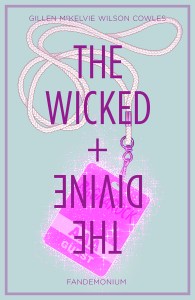
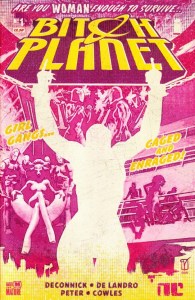
Omnireviewer (week of Dec. 20)

Merry Christmas! I’ve been compiling my favourite things of the year for a list that I’ll have up soon. But as usual, a lot of the stuff I spent my time on this year wasn’t from this year. I sometimes wonder what the major year-end top music lists would look like if they included everything that the critics were actually listening to, regardless of release date. It wouldn’t be an effective way to assess the year’s music, obviously. But it would make for a sort of index of continuing relevance. That could be fun.

Anyway, a couple of the major things I discovered this year that weren’t new are discussed here. Here are your 24 reviews for the week.

Television

Deadwood: Season 1, episodes 9-10 — “Mister Wu” is probably my favourite episode so far, which is inevitable, given that it focusses more on Al Swearengen’s machinations than any other episode, and when it comes down to it that’s sort of what I’m in it for. But it also has a great plotline for the increasingly ill and increasingly interesting Reverend Nickelback.

QI: “Middle Muddle” — Much ado about unfair medieval sports.

South Park: “Margaritaville” — I have trouble with South Park because of its tendency to pay too much respect to both sides of any given issue. But this is pretty brilliant, because for the most part it’s too caught up in the inherent bafflement of the crashing economy to take a side other than “how does this make sense?” It even manages to juggle two separate, unrelated ongoing analogies side-by-side without getting bogged down. I see why this is regarded as a classic, even if I don’t generally like this show.

Music

Björk: Vulnicura — I’ve already nailed my colours to the mast by putting this in my top five albums of the year. But I don’t think there’s any understating this: Vulnicura is not just a return to form for Björk, it’s as good an album as she’s ever made. I’d take this over Homogenic, and it would be a legitimately difficult choice between this and Vespertine. It’s less immediate than either of those. There’s no “Jöga” or “Pagan Poetry” to offer respite from the album’s more out-there moments. (“Stonemilker” comes close, but it’s the first track of the album, so…) But in all of its lugubriousness, Vulnicura still manages to be an impressively kaleidoscopic musical response to the end of a relationship. As breakup albums go, this is as good as In The Wee Small Hours and within shouting distance of Blood on the Tracks. Though naturally, it sounds no more like either of those than they sound like each other.

Brian Eno: Taking Tiger Mountain (By Strategy) — Before 2015, I knew and loved Another Green World, and to a lesser extent (No Pussyfooting), and much of Eno’s work as a producer. But this was the year when I listened to the rest of his gigantic discography. All of it is interesting, most of it is good; but the albums I keep coming back to are the four rock records he made before dedicating himself to ambient music. Of those, Another Green World is still my favourite, and one of the best albums of the ‘70s. But there’s a sense in which that album’s flawlessness keeps it at arm’s length. Think about this: what would be the point of hearing Another Green World performed live? It’s a bespoke object: those songs aren’t things that can or should exist elsewhere in the world. They are the recordings that were made of them. (In a sense, literally: Eno wrote almost nothing ahead of time for the Another Green World sessions. It’s all just what happened in the studio.) Everything that is good about “Spirits Drifting” is good because of the way it turned out on the album. Performing it would be beside the point. The two records that precede Another Green World, on the other hand, are totally different. (So is Before And After Science, but it just isn’t quite as good.) When I listen to Taking Tiger Mountain or Here Come the Warm Jets, I can imagine myself playing that music, which sometimes makes those albums more enjoyable. I tend to prefer whichever of the two I’ve listened to most recently, but they really are totally different albums. Here Come the Warm Jets is a record like Robert Fripp’s Exposure or the first Peter Gabriel album: a rotating drum of disparate sounds and personalities, guided into some semblance of cohesiveness by a strong central creative sensibility. Taking Tiger Mountain is a band record. It’s mostly the same people playing on each track, so cohesiveness arises naturally (as on the second Peter Gabriel album). This is not my pick of the week, but along with the rest of Eno’s catalogue, it’s probably my discovery of the year.

Literature, etc.

China Miéville: “After the Festival” — Well, that was gross. This is a story about a person whose best friend starts acting strangely. The interesting part is that rather than being confident that she’s the one person who can get through to him, as would often be the case in a narrative like this, she knows him well enough and sees the situation clearly enough to realize how unlikely that actually is. It’s a really good story, and also totally disgusting.

David Cavanagh: Good Night and Good Riddance — Picked this up again. I’m into the early ‘90s now, at which point Peel was playing Nirvana in England over a year before they broke into mainstream American success and recognizing the brilliance of Aphex Twin well into his 50s. This guy.

Games

Undertale — I warmed to this immensely. About halfway into the game, the fight sequences start getting esoteric and character-driven and start telling stories in themselves. The writing is patchy, but there are great moments, and the whole thing has a lot of heart. No masterpiece, but I’m certainly glad I played this.

80 Days — This, on the other hand is a masterpiece. I’ve played it about six times through, and I’ve seldom seen any of the same stories twice. This would have been my favourite game (and probably my single favourite thing) of last year, if I’d actually played it that year. There’s so much to admire, but the real clincher is that it takes on the task of adapting Jules Verne’s Around the World in Eighty Days as a game and ends up being a far superior work than its source. Meg Jayanth’s prose is superior to Verne’s in translation, and she even goes out of her way to challenge the notions of colonialism that Verne’s original novel propped up. She pushes the fantastical elements of the original even further, so that there are armies of automata to contend with, and cities atop giant walking machines. This offers what’s probably a more emotionally true perception of what the 19th century’s technological marvels must have felt like at the time than Verne’s novel would to contemporary readers. And, of course, there’s the fact that Jayanth’s rendition is a gigantic branching narrative with a 750,000 word script that you see about three percent of on any given playthrough. So, there’s just more of it. I’m actually struggling to be adequately effusive about this truly magnificent marvel of modern storytelling, so here’s this: 80 Days is easily in my top three games ever, and it is the only game that I would comfortably recommend to anybody, regardless of their interests. It is magic and wonder incarnated as an iOS app. I just dipped in for a quick jaunt this time, so this isn’t my pick of the week. But, as with Eno, you may rest assured that it is one of my most treasured discoveries of the year.

Movies

The Danish Girl — I’m mixed on this. Both lead performances are good, though Alicia Vikander manages to steal the movie from Eddie Redmayne’s stunt performance. The story is worth knowing, but it’s badly served by the movie’s script, which is laden with obvious metaphors and clunky dialogue. It’s got some nicely composed shots, but Tom Hooper is still basically a purveyor of blandness, to me. At least The King’s Speech had a great screenplay.

Inside Llewyn Davis — Not one of the Coens’ best, but it’s got lots of those wonderful understated comedic moments like they’re so good at. Plus, excellent performances by Oscar Isaac, John Goodman and Carey Mulligan.

Carol — This is as obsessive a throwback to an earlier style of cinema as The Artist was. But, like The Artist, it is very much a contemporary film dressed in the trappings of the era in which it is set: everything from the beautifully grainy 16mm filmstock to Cate Blanchett’s exceptionally mannered performance is from another era, but the narrative sensibility is from our own. I adored this as much as I knew I would, Todd Haynes being probably one of my top three directors. (Now that I’ve written that, I really ought to go watch all the stuff he’s done that I haven’t seen.) There’s a line near the beginning of this that rings especially true, something like: “I have a friend who says I should take more of an interest in humans.” Haynes’s movies have always been as much about the film conventions that they employ as they are about the stories they tell and the people in them. Velvet Goldmine is about glam rock and David Bowie, but it’s just as much about what happens when you nick the frame narrative of Citizen Kane in the service of a totally different story. Carol is about an affair between two interesting women, but it’s just as much about those flawlessly decorated period-accurate sets, and about how you can’t quite make out the details behind a fogged-up car window when it’s shot on 16mm. Haynes is a stylist. You can imagine that his brain is basically a movie camera, and that movies work as his interface with the real world around him. He’s a filmmaker for people who marinate themselves in pop culture and assay their own lives primarily in relation to what they consume. Pick of the week.

Podcasts

Pop Culture Happy Hour: “Frank Sinatra with Sonari Glinton” — 14 minutes really isn’t long enough for a Sinatra primer, and as engaging as Glinton is, Stephen Thompson doesn’t sound that convinced. Eminently skippable.

StartUp: “Diversity Report” — The white boss of a super white company talks to the few employees he has who aren’t white about what he’s doing wrong. This is a great listen.

Slate’s Culture Gabfest: “The Room Where it Happens Edition” — This is to me a lesser podcast than NPR’s Pop Culture Happy Hour because it sounds so distinctly like a bunch of people who are in the same room together because it’s their job to say smart things into microphones, rather than a group of people who would and probably do have those conversations anyway. But this was about Hamilton, so I just had to. Stephen Metcalf’s analysis of why the musical is great is basically the same as my own. But, I do wish somebody had dove in a little more when the point “I’m 40 and white and don’t like hip hop and even I loved this hip hop musical” came up. On the face of it, that sounds like a way into a legitimate critique of Hamilton, which is otherwise being rightly marvelled at by all and sundry. On the other hand, I do appreciate that this podcast will discuss people like Judith Butler, who wouldn’t necessarily fit with the general tone of PCHH.

Pop Culture Happy Hour: “Star Wars: The Force Awakens and Movie Merchandise” — OKAY FOR GOD’S SAKE I’LL GO SEE STAR WARS. (I was always going to see Star Wars.) My opinion about Star Wars is roughly coextensive with Stephen Thompson’s, so this may be instructive to those of you who are curious about my opinions on things. (…) Also, this is 100% worth a (spoiler-free) listen JUST to hear about Thompson’s insane collection of whimsical movie merchandise.

This American Life: “Sinatra’s 100th Birthday” — You wouldn’t especially expect This American Life to dedicate a full hour to the Chairman of the Board, but who better to assess what he means as part of American culture? The critique of “My Way” as Sinatra’s funeral song in act two is genuinely brilliant music criticism.

The Moth: “Eve Plumb and the Pittsburgh StorySLAM” — Eve Plumb is a former child actress known for her role on The Brady Bunch. The story she tells here is barely a story at all, actually. It’s basically a summary of her whole relationship with her mother. This is uncharacteristically unfocused for The Moth. Maybe it’s like Celebrity Jeopardy: expectations are just lower for famous people.

On The Media: “Politically Correct” — Gladstone and Garfield tackle a bunch of rage-making topics, from the GOP’s war on political correctness to the (lack of) reporting on the Paris climate summit. This podcast keeps me sane.

Radiolab: “The Cold War” — Two ice cream vendors go to war and the joy returns to Radiolab. Pick of the week.

The Heart: “Mr. Claus+Mrs. Claus” — Nope.

All Songs Considered: “Holiday Spectacular, 2015” — Apparently, every year All Songs breaks from their roundtable format and makes a grandiose radio drama with musical guests for Christmas. I can hardly believe I made it through this. You’d think that no amount of Amy Mann can make me stomach a half-hour of Christmas music. But it’s a wonderful production, and more than anything I just love that they do this. Bob Boilen is a totally convincing Scrooge, and the amount of sheer joy that Stephen Thompson brings to his cameo makes this worthwhile in itself. (Two out of three for Thompson, this week. Not bad.)

WTF with Marc Maron: “Gloria Steinem/Kliph Nesteroff” — Maron talks too much in the conversation with Gloria Steinem. It had good moments, but Terry Gross is the place to go to hear Steinem on this particular book. On the other hand, the segment with Nesteroff is gold. He knows every story in the history of showbiz and his book sounds amazing and I will probably read it.

Welcome to Night Vale: “The University Of What It Is” — This has a couple of familiar-seeming jokes, but also a really good story and some interesting background on Carlos, who is my favourite non-Cecil character. Lovely.