Author Archives: Matthew

Metafictional resonances in Jurassic World OR Fuck dinosaurs

My expression for the ENTIRE MOVIE

My expression for the ENTIRE MOVIE

Here’s something interesting: everything that Bryce Dallas Howard’s character says near the beginning of Jurassic World about not being able to impress people with dinosaurs anymore also applies to digital effects in movies. That whole spiel about learning more in the past decade from genetics than the previous century of digging up bones is symbolically about visuals in motion pictures. When Jurassic Park came out, the sight of lifelike dinosaurs on the screen was something close to magic. Now, we take that sort of thing for granted.

The solution that the corporate higher-ups of Jurassic World devise to solve their dinosaur saturation problem is to make a new dinosaur — a bigger, more ruthless one. The solution that the filmmakers of Jurassic World came up with to solve their CGI saturation problem is the character Gray. Gray is a primary school-aged child who loves dinosaurs and whose default expression is breathless wonder. His structural role in the film is as a “wonder surrogate,” a character who will marvel at the movie’s visuals from inside of it, in place of the audience. I suppose the idea is that some of his excitement will rub off on the people watching the movie. It does not.

In practice, Jurassic World fails completely at overcoming our growing complacency about CGI. It feels exactly the same as every other overcooked blockbuster of recent years. But, by giving Howard’s character a monologue about that exact phenomenon, Jurassic World becomes something far stranger — a movie that is implicitly about the fact that its audiences will inevitably be underwhelmed.

And that isn’t the only time the movie apologizes for itself. Jurassic World is full of conspicuous product placement. That in itself doesn’t bother me, and never does. But there’s a lengthy exchange between Howard’s character and Jake Johnson’s — a caricatured hipster of the sort that hasn’t existed in real life since about 2012 — about the slippery slope of corporate meddling in Jurassic World’s research. Why not just call the dinosaurs “Pepsisaur” and “Tostitodon,” asks Johnson.

Jurassic World’s indenturement to corporate interests is reflected in the fact that Jurassic World constantly bombards its audience with logos, from Starbucks to Jimmy Buffet’s Margeritaville. By introducing a subplot about Jurassic World courting investments from Verizon, the film once again makes an explicit pronouncement about something it perceives to be wrong with itself.

Jurassic World is a terrible movie. A solid 3/10. It’s terrible for a whole bunch of reasons. Chris Pratt and Bryce Dallas Howard both give completely uncharismatic performances. Vincent D’Onofrio’s villain is distinctly of the moustache-twirling variety, and is entirely unnecessary in the face of a threat with much larger teeth. Even the most supposedly competent characters make terrible decisions constantly.

The best thing about the movie is probably Michael Giacchino’s clever reappropriation of John Williams’ famous orchestral theme as a creepy solo piano line — and even that was put to better use in the trailer than in the final film.

But if, as I’ve hinted at above, the movie’s goal is to live up to its own pronouncements of how bad it is, mark it down as an unqualified success.

TL;DR: Fuck dinosaurs.

Things I loved in 2014

So, 2014 had its ups and downs, hey? All the same, the year’s movies, music, TV, games, comics and podcasts helped keep me happy, provided necessary diversion, and helped put my puny problems in perspective.

Here then, in as random an order as I could meticulously devise, are twenty things that I loved in 2014. I should note that, for other-people’s-interest reasons, this list is limited to stuff that actually came out in 2014. However, if I’m being honest, the thing that made me happiest this year was probably the Zombies, the thing that diverted me most ably was probably Bioshock, and the thing that best helped me put my problems in perspective was, as ever, Mahler 9.

Still, it’s a pretty killer list.

Birdman

To me, this is what filmmaking looks like when everybody does everything right. By maintaining the illusion — and it is an illusion — that the bulk of the film is one continuous take, Alejandro Iñárritu and his cinematographer, the always astonishing Emmanuel Lubezki, have devised a premise by which the wonder of live theatre is translated to film. Because, in the theatre world, it’s always one take. And then, by taking that wonder and incorporating illusions only possible in contemporary film, he reprocesses it through the entirely different wonder of movie making. All kinds of wonder, all at once.

And, on a smaller level, every aesthetic choice that was made here, from the jazz drum score, to the set dressing worked for me. Plus, it’s super funny. Plus, it’s got at least three of the best performances of the year (Michael Keaton, Emma Stone, Edward Norton). Plus, everything.

Wood Works — Danish String Quartet

Back in 2011, I fell utterly in love with the movie Hugo. To me, it seemed to reaffirm in the clearest terms possible why movies are something we need. It’s an odd comparison, I know, but this album by the fantastic Danish String Quartet came closer than anything since Hugo to giving me that same feeling of renewed appreciation for a particular medium.

Wood Works features heart-melting arrangements of Scandinavian folk music. The miracle of the album is that these arrangements are always idiomatic to the string quartet, without ever feeling “classical.” Because these are fiddle tunes and that would just be wrong.

The quartet is confident that these folk tunes are not mere kitsch, and that confidence allows them to veer perilously close to that, but they know where the line is and they stop short of crossing it. Instead, they land right in the elusive sweet spot where music can be sentimental but not mawkish. The ensemble’s rich tone and togetherness shine through especially well in these clear and simple tunes.

This album is a reaffirmation of the fact that string quartets are a good idea. It’s my favourite chamber music release of the year.

Also, you’ve got to check out their NPR tiny desk concert.

Louie, season four

Season four of Louie was barely even a comedy. Louis C.K. has reached a level of confidence as a writer/director/actor where he doesn’t have to do jokes all the time. And, this was still the funniest season of TV I watched this year.

The scene above is maybe not the most talked-about scene of the season, but it typifies what I love most about it. Louie and Janet’s argument about whether or not to send their daughter to private school is as much of a slice-of-life as you get on TV, but without any of the self-conscious mundanity that cliché usually implies. The turn that the scene takes around the two-minute mark is just flat out one of the best things that C.K. has ever written.

StartUp

So, podcasts had a Matthew McConaughey-like 2014. It probably seems perverse not to include Serial on this list, so let me assure everybody that I did in fact enjoy Serial, and will surely gulp down the second season with unbridled delight.

That said, I don’t feel it was a standout among the many podcasts I followed this year. In fact, it wasn’t even my favourite serialized podcast, created by a This American Life producer, that starts with the letter “S.”

StartUp, Alex Blumberg’s podcast about starting a podcasting company, is just so much fun. This is a high-stakes personal story about a guy who dropped everything to pursue a dream, and wants to tell you about it in real-time. From the cringe-inducing botched pitch to a major potential investor in the first episode, to the moment when Serial rudely intrudes on StartUp‘s narrative in the tenth, this is essential. And, the recent announcement that the show will continue to use the serialized format — focussing on a different startup each season — bodes incredibly well for the future.

Catch up now, so you can follow the story as it unfolds.

Under the Skin

(Okay, it got a wide release in 2014, so it counts.)

You know who I really miss? David Lynch. I know he’s been making music, or whatever, but the fact that there hasn’t been a David Lynch movie since 2006 is just absurd. So, it stands to reason that two of the things that made me happiest this past year were the announcement that Twin Peaks would be returning with Lynch in the director’s chair for every episode, and Jonathan Glazer’s Under the Skin.

The standard comparison to draw when discussing Under the Skin seems to be Kubrick rather than Lynch. But, while it’s certainly true that it’s more linear and far less symbolic than Lynch’s finest moviesUnder the Skin is the first movie since Inland Empire that conjures the otherworldly dread that I so crave in films.

Plus, Mica Levi’s electro-Penderecki-with-drum-machines score is my pick for best of the year. Reznor and Ross are mere pretenders.

Mahler Lieder — Christian Gerhaher & Kent Nagano

Of all of the “classical” albums on this list, this is the only one that features conventional, straight-ahead readings of fairly standard repertoire. (Although, you’ll find a very honourable mention of Joyce DiDonato’s Stella di Napoli, below.) Honestly, not many recordings like this hold my interest, these days. The way I see it, if you’re going to record music that’s already been recorded more times than anyone can keep track of, you damn well better give an 11 out of 10 performance.

And Christian Gerhaher absolutely does, here. Until this year, I was fervently devoted to Thomas Hampson, where Mahler’s concerned. Now, I can’t imagine anybody singing the Wayfarer songs as well as Gerhaher. It feels effortless. That’s a hell of a trick.

Note: The video above isn’t from this specific recording and features the Berlin Philharmonic with Simon Rattle, rather than the Orchestre symphonique de Montréal with Nagano, but it’s enough to illustrate the point, which is that holy crap can this guy sing.

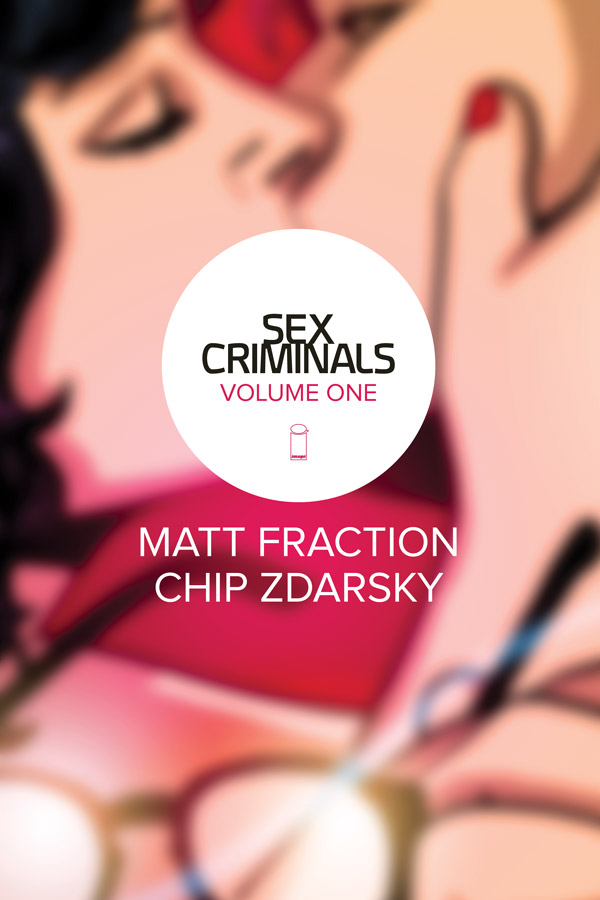
Sex Criminals, volume one — Matt Fraction & Chip Zdarsky

sex-criminals-vol-01-releases

This, if you haven’t heard of it, is a comic about a young couple that literally freezes time when they have sex. And, as the back-cover copy of this first trade collection puts it: “they do what any new young couple having sex and freezing time might do: they rob banks.”

Frankly, that premise ought to be enough to sell this. If it isn’t, how’s this: it’s explicitly about the sex lives of young people without being a lurid, misogynistic mess.

Read this.

Interstellar

I am willing to forgive a lot if a movie shows me something I’ve never seen before. Sure, Interstellar‘s pacing is a bit dodgy and the female characters aren’t especially fleshed out. (Okay, yeah, that bothers me. Still, hear me out.) But, ultimately, this is a movie that adopts the logic of contemporary astrophysics as the basis for its storytelling. It demonstrates how time travel might be possible and the toll it could take. It conceives a visual representation of a tesseract. It’s got the most gloriously naff robot since the creation of the Daleks.

To me, those sorts of stunts make a movie automatically worthwhile. As such, Interstellar narrowly edges out Boyhood from my top five movies of 2014. That film’s got a different kind of ambition, admittedly. But I’ll take “a realistic depiction of the cosmos” over “twelve years of suburban white people” any day. (I still love Boyhood.)

Polonium — Motion Trio

This was the year’s most unexpected pleasure. I was aware of Poland’s Motion accordion trio because of their fantastic 2009 album with Michael Nyman. But, if you’d asked me what kind of Polish music they were most likely to tackle, I probably wouldn’t have said Penderecki.

Nonetheless, here we are with Polonium, an album of 20th-century Polish classical music by some of the most revered and challenging composers in recent memory. Their rendition of Gorecki’s Concerto for Harpsichord and String Orchestra, adapted for piano and three accordions, practically renders the original superfluous. They make similarly convincing essays of Penderecki’s Chaconne In Memorium John Paul II and Lutosławski’s Bucolics.

But the real stunner is an original work co-composed by Motion Trio founder Janusz Wojtarowicz and fellow accordionist Jacek Hołubowski: Sounds of War. You won’t believe those are accordions.

The Walking Dead, the game, season two

2014 marked my rediscovery of video games. I hadn’t played much of anything since the days of Majora’s Mask, but after several friends eloquently enthused at me about the amazing things that were happening in the video game world nowadays, I had to check it out.

It’s incredible how far that rabbit hole went.

There aren’t going to be many games on this list, because most of the games I played this year were the highlights of the past two or three years: Bioshock: Infinite, The Stanley Parable, Gone Home, FEZ, and of course the first season of the video game iteration of The Walking Dead. I was bowled over by how involved I became with this game’s characters, and the original story far outpaces the one season of the television show that I’ve watched.

I gulped down the game’s second season as soon as all five episodes were available, and contrary to popular opinion, I think that the strongest moments of season two are even more harrowing and involving than the first season. Perhaps it’s a tad less consistent, but come on: this is a game that forces you to make choices on behalf of an eleven-year-old girl that inform not only whether she survives the zombie apocalypse, but also what form her evolving moral code takes. Considering the ambition of that, all stumbles are forgiven.

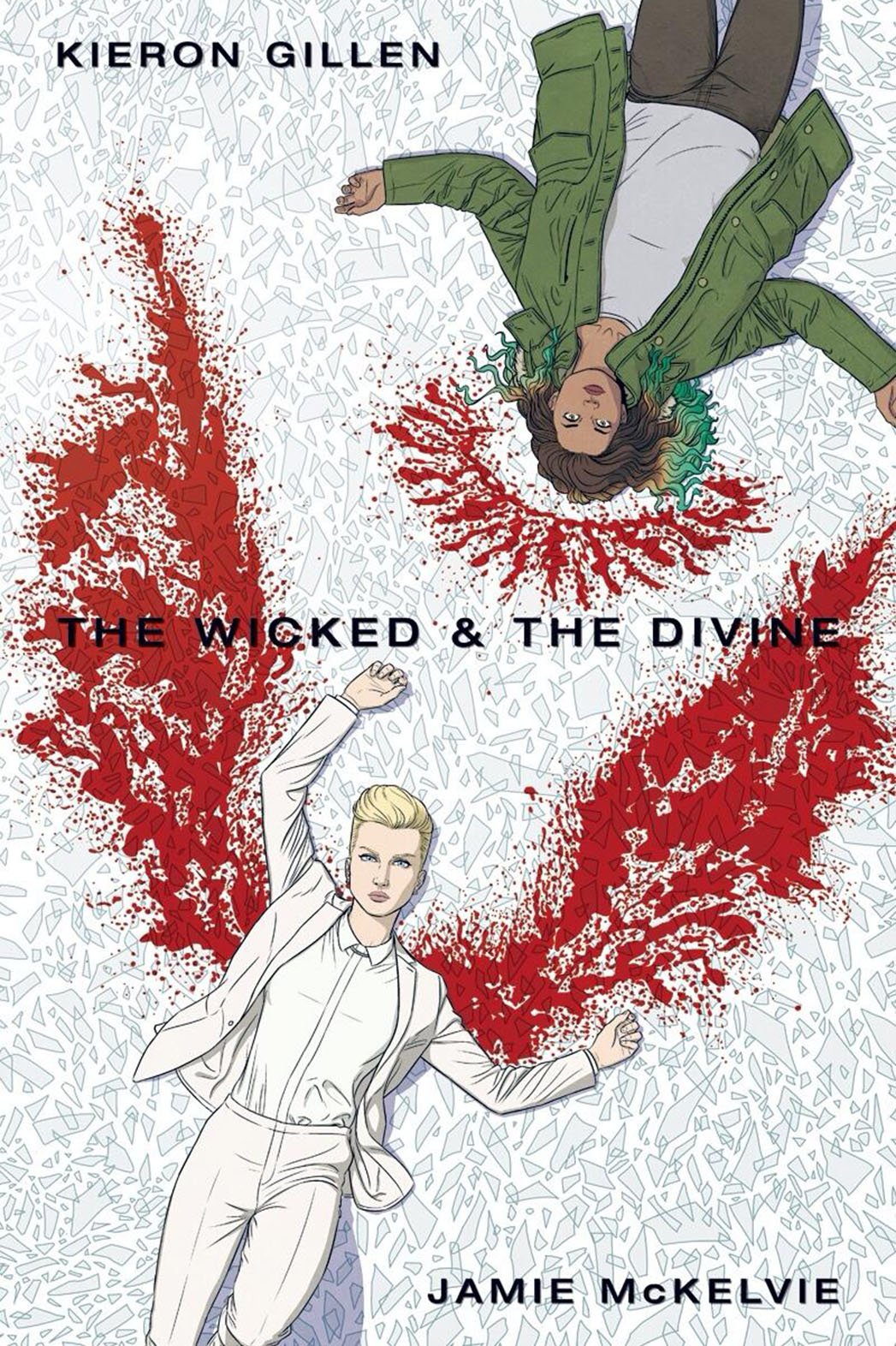
The Wicked and the Divine, volume one — Kieron Gillen & Jamie McKelvie

The_Wicked_and_The_Divine_Promotional_Picture_from_January_2014

It seems like having a great premise is everything when it comes to new comics, nowadays. In the case of this one — possibly the most acclaimed comic of the year — it’s “gods getting reincarnated as young pop stars.”

Again, that premise ought to sell this outright. If not, I’ll elaborate: one of the pop stars is Kate Bush (well, basically). Go forth and buy this trade collection.

For the time being, Sex Criminals is my favourite ongoing comic. But, I feel like this has the potential to become a major work on the level of The Sandman or Alan Moore’s Swamp Thing.

Run the Jewels 2 — Run the Jewels

I have very little to say about this album that everybody else hasn’t already observed. Suffice it to say that I love it as much as everybody else seems to.

Animism — Tanya Tagaq

My favourite non-classical album of the year. The lion’s share of the attention that’s been devoted to Animism since its well-deserved Polaris win has focussed on Tagaq herself. Which, fair enough. She’s probably the most extraordinary musician in Canada, right now. The breadth of unexpected sounds she can conjure from her throat is shocking. Plus, she’s got a lot of important things to say.

But, to me, this album succeeds the same way that great jazz albums succeed: as a collaboration between musicians who know how to make fascinating sounds at the spur of the moment. The album’s core trio consists of Tagaq, violinist/producer Jesse Zubot, and drummer Jean Martin — who gives one of the great instrumental performances of the year. Listening to the telepathy happening between those three provides moments of joy on an album that deliberately resists being loved.

Well, I love it anyway. Animism is difficult, alienating, troubling and spiky. I wish more music were like it.

Note: The Pixies cover above is emphatically not the best track on the album (that would be “Damp Animal Spirits”), but it deserves to go down in history as one of the most revelatory covers ever.

Gone Girl

At the Parsons Oscars, David Fincher would have been nominated for best director, Gillian Flynn would have been nominated for best adapted screenplay, Ben Affleck would have been nominated for best actor, Jeff Cronenweth would have been nominated for best cinematography, and Trent Reznor and Atticus Ross would have been nominated for best score. (Sure, they’re not as good as Mica Levi, but they’re still great.)

Oh, and Rosamund Pike would still be nominated for best actress.

99% Invisible

Before Serial, the biggest podcasting success story of 2014 was 99% Invisible. This was their first full year of weekly episodes — a feat made possible by a pretty impressive Kickstarter campaign. We got a new, surprising, audio-rich story every week; we were introduced to a new regular producer in Katie Mingle; and host Roman Mars’s warm bonhomie got even warmer for the gratitude he evidently feels for his generous listeners.

And then, as a result of an even more impressive Kickstarter campaign, we got Radiotopia: a constellation of other intricately-produced podcasts that share funding and cross-promote. Before podcasts were suddenly a thing, these people were working really hard at making podcasts a thing.

99pi is still the highlight of the bunch, though. It’s a show about design, in the broadest sense possible. The entire human-constructed world is grist for the mill. This year, they tackled everything from Ouija boards to Penn Station to tunnels for cows. They made me laugh; they made me cry. They reinvigorated my love for audio storytelling once a week. This, for me, was the podcast of the year.

Orange is the New Black, season two

So, remember what I said about Interstellar and how I love stories that I’ve never seen before? Orange is the New Black does that exact thing, one episode after another — probably in a more profound way than Interstellar.

I’ve never seen a show with so many fully-realized characters. From Vee (*grr) to Red (*punches the air) to Miss Rosa (*sobs), I became massively invested in all of their stories, this season. Taylor Schilling’s performance continued to be wonderful — and continued to be not even the highlight of the show.

Side note: that Zombies song I linked to at the beginning (this one) is totally going to close out this show’s series finale. I’m absurdly confident in this.

Become Ocean — John Luther Adams

John Luther Adams’s Pulitzer win for Become Ocean seemed a long time coming. I fell in love with Adams’s mesmerizing, textural compositions after reading Alex Ross’s profile of him in his book Listen to This. But, Become Ocean really does feel like a new peak for this composer. A 42-minute sound tapestry of gradually rising and falling tension, this piece uses the massive sonic palate of a symphony orchestra more completely than anything I’ve heard in a long time.

Adams sums up the piece’s thematic premise in a short, beautifully crafted statement in the CDs liner notes: “Life on this earth first emerged from the sea. Today, as the polar ice melts and sea level rises, we humans face the prospect that we may once again, quite literally, become ocean.”

The statement reminds me of another strangely moving pronouncement of doom, accompanied by arhythmic droning: the tape that precedes the rendition of Peter Gabriel’s “Here Comes the Flood” on Robert Fripp’s Exposure album. Both pieces of music deal — however obliquely — with ecological disaster, and both of them remind us that we will never have enough power over the natural world to keep it from killing us all when things get bad enough.

Become Ocean, to me, is the album of the year. No matter what you normally listen to, you should hear this.

The Grand Budapest Hotel

It’s like Buster Keaton, Alfred Hitchcock, Stanley Kubrick and Terry Gilliam made a movie together. And that movie is my favourite of 2014. It’s a tough pick between this and Birdman, but ultimately, I’ll go for the one that I could not keep myself from seeing in theatres a second time.

This is the movie that once-and-for-all puts the lie to the notion that Wes Anderson’s artificiality gets in the way of the feels. It’s true: everything in this movie is ostentatiously crafted and adjusted by Anderson, from the highly choreographed jaunts through the titular hotel to the aesthetically pleasing single tear that was carefully applied to F. Murray Abraham’s face in the dining room scene. But none of this prevents the movie from having the intended effect, be it laughter or a bit of a twinge, at every turn. Because it’s not a filmmaker’s job to feel things. It’s the audience’s. And I don’t see why a movie presided over by an aloof, aesthete’s eye should affect me less directly than one produced with a more improvisatory approach. As I said on Twitter at the time, sincerity be damned. Give me craftsmanship any day.

Also, nothing in movies or on TV made me laugh harder this year than “She’s been murdered. And you think I did it.” *runs*

Doctor Who, series eight

This second year of my Doctor Who obsession was slightly more sedate than the first. The frenzy of discovery that led me to gulp down the first seven series of the rebooted show and a pretty significant chunk of the classic one in a matter of months seems to have abated, now. So, it is with a rational and balanced mind that I can proclaim OMG TWELVE IS TOTALLY MY DOCTOR.

This series has certainly been the most consistent one since Doctor Who rebooted. Its highlights (“Listen,” “Dark Water/Death in Heaven,” “Kill the Moon”) don’t quite reach the heights of previous series (there’s no “Human Nature/The Family of Blood” or “The Pandorica Opens/The Big Bang”), but “Listen” comes awfully close.

And, more crucially, there are no clunkers here. Every episode feels like it’s building to the themes that showrunner Steven Moffat would pay off in his spectacular two-part finale. But every episode is still allowed to be its own self-contained story — which is really important, because what’s the point of a show about a magical box that can take you anywhere if all of the stories are the same?

We saw a different, more ruthless and conflicted Doctor in Peter Capaldi. We saw new dimensions in Jenna-Louise Coleman’s performance as Clara (although, as blogger Caitlin Smith convincingly argues, they were probably there before and we just didn’t notice). We saw Nick Frost as Santa Claus.

We are waiting in agony for more.

Blood and Laurels — Emily Short

Since the storied elder times of Zork, text-based gaming has been on something of a low simmer. Plenty of fantastic hobbyists have been making absolutely stellar works of interactive fiction in that tradition — the one where you type commands and the computer responds, when it understands — for more than twenty years, now. But, it was a niche community, to say the least.

Now, with games like Device 6 and A Dark Room making a stir in mobile gaming, it seems like the world may be ready for more word games. After all, what do we spend all of our time doing, nowadays? We spend it reading text on screens.

2014 saw the release of one of the most promising platforms for interactive fiction, going forward. Versu is a massively more flexible new version of the Choose Your Own Adventure. Basically, you read text and make choices at critical points (or, for that matter, whenever you’d rather intervene than stand idly by). Choices can be as simple as making one gesture instead of another, or as sweeping as siding with one character in an argument over another. Versu’s artificially intelligent non-player characters react in kind.

The platform’s launch title, Blood and Laurels is by one of the most acclaimed authors of interactive fiction in recent years: Emily Short. It’s a story of intrigue in Ancient Rome. I don’t even want to think about how many endings it probably has. It’s a fantastic story, but what’s most exciting is the potential of this format. My prediction for 2015: this will be big, soon.

Honourable mentions: Salad Days — Mac DeMarco; The Ambassador — Gabriel Kahane; Stella di Napoli — Joyce DiDonato; Lamento — Romina Basso; Mad Men, season seven, part one; Last Week Tonight, season one; Game of Thrones, season four; Serial; Radiolab; Philip Sandifer’s blog; Boyhood.

The Endless River is not a real Pink Floyd album – it says so right on the cover

It’s time I said something about the new Pink Floyd album. I know I’m a little bit late to the party on this, but since when have I cared about that sort of thing?

I’ll get straight to it – the most remarkable thing about The Endless River is how it goes out of its way to convince you that it is not a real Pink Floyd album.

You can learn most of what you need to know about The Endless River before you even listen to it. You could start with the title, which is taken from the final lines of 1994’s The Division Bell: the lines that we’ve been assuming would be the last ones we’d ever hear from Pink Floyd.

Then, you might move on to the track titles. And, maybe you’d recognize “Autumn ’68” as a reference to “Summer ’68,” a similarly-titled track from 1970’s Atom Heart Mother. You might conjecture that the ridiculously-named “Talkin’ Hawkin'” features Stephen Hawking’s second guest appearance with Pink Floyd, after The Division Bell‘s “Keep Talking.”

And, what about the lyrics? There’s only one track that has them, “Louder Than Words,” so a quick skim shouldn’t take long. You’ll find references to heartbeats and pulses, evoking both the famous opening of The Dark Side of the Moon, and the title of the band’s final live album, P.U.L.S.E. 

By now, you might be suspecting that this album isn’t meant to stand alone as an independent work. This, after all, is a lot of history to have to contend with on a “new” album.

Okay, so you’re ready to give this thing a listen. But, of course, we’re forgetting a major part of the pre-album experience: the massive paratext that you’ve been immersed in for months now. By that, I mean the reports, interviews and track previews that have been cropping up on your Facebook news feed or your magazine stand, depending on how closely you fit Pink Floyd’s target demographic.

And, from that paratext you would have gleaned a couple of key facts. Firstly, that this album is composed largely of doctored outtakes from The Division Bell. It’s been painstakingly arranged so that it doesn’t feel like an outtakes collection, but the band has been entirely transparent about the fact that it is one.

And secondly, that The Endless River is intended as a tribute to the band’s keyboardist, Richard Wright, who died in 2008, along with any hopes you had that Pink Floyd would ever tour again.

Knowing these two facts, you really weren’t that surprised to find so many references to Pink Floyd’s back catalogue littering The Endless River. This, after all, is a backwards-looking project.

You listen to the album. It fulfils your expectations, given that those expectations were so expertly managed by the way that this album was marketed: not as a new volume of the Pink Floyd saga, but as an epilogue to a story that ended definitively in 1996. This isn’t just an old band relying on the appeal of nostalgia to sell copies; this is David Gilmour and Nick Mason actively undermining their new album’s place in the Pink Floyd canon.

Because it’s not a real Pink Floyd album. It’s a Pink Floyd commemorative object.

But why does any of this matter? I mean, really; this is a band that was already a nostalgia act when they folded in 1996. The fact that they were silent for nearly 20 years prior to The Endless River seems like it ought to make this album into something of a big deal, but the fact that they’ve been irrelevant for even longer undercuts that significantly. Their album is the biggest musical pseudo-story of 2014.

And yet it was massively successful. It went to number one on the U.K. charts, it is now the most pre-ordered album of all-time (ousting One Direction), and it may have been at least partially responsible for a spike in vinyl record sales the likes of which we haven’t seen since… 1996, interestingly.

The fact that a Pink Floyd album that’s not actually a Pink Floyd album sold that well is telling. It certainly doesn’t prove that there’s a demand for new Pink Floyd music. Because, after all, this isn’t that. It does prove, however, the extent of the abiding respect that exists for Pink Floyd’s legacy.

And that is exactly what a commemorative object is for.

A belated reaction to Book Riot’s MaddAddam dream cast

I’m about three-quarters of the way through Margaret Atwood’s MaddAddam right now, and it is the most exciting thing in my life. I’m becoming inordinately excited about HBO’s upcoming Darren Aronofsky-helmed TV adaptation of Atwood’s entire dystopian trilogy, to the point where it cannot possibly live up to my expectations. (The world building of Game of Thrones meets the storytelling density of The Wire meets the visual symbolism and character depth of The Sopranos…)

So, a few months late, I happened upon Book Riot’s MaddAddam dream cast, written by Josh Corman. Needless to say, I have some thoughts on his casting choices. Check out the Book Riot post, then read on:

(Oh, and I guess there might be spoilers ahead. Be warned.)

Aaron Paul as Jimmy/Snowman: Well, we’re used to seeing him as a feckless, brooding underachiever. So, that’s a point in his favour. But Snowman-the-Jimmy is more sardonic than Jesse Pinkman. I’m not sure Paul can divest himself of his sincerity to the extent required for him to match the Snowman in my brain.
My suggestion – Evan Peters: I confess that I’ve only seen Peters in one role – Quicksilver in the latest X-Men. There’s a teensy bit of overlap between the two characters: Quicksilver is basically the world’s most efficient slacker, after all. That role proved that he can bring the wit and the unlikely charm required for Jimmy. And, I just get the feeling based on reading his other credits (seemingly dominated by a bunch of roles on American Horror Story) that he can bring the vulnerability as well.

Paul Dano as Glenn/Crake: A million times, yes. This is so perfect that I’ll be disappointed if HBO casts anybody else.

Rinko Kikuchi as Oryx: Yeah, she’ll do. I liked her well enough in Pacific Rim. I can’t help but think that there must be somebody better out there. But, presumably because of the paucity of visible film and TV roles for Asian women, I haven’t the slightest clue who that person could be.

Anna Kendrick as Ren: I dunno. I can’t see Kendrick playing a character who suffers as much as Ren does. Corman writes that “Kendrick’s winning smile would make Ren’s fear all the more gripping,” but I suspect it would mostly just put a damper on what a shitty deal Ren gets in this story.
My suggestion – Emilia Clarke: It’s a pipe dream, I know. Game of Thrones will almost certainly be raging on when MaddAddam hits our screens, rendering Clarke woefully unavailable. But seriously, how perfect would she be? She could sell the dickens out of Ren’s fear and hurt. And who knows? Maybe the GoT showrunners will kill Dany off brutally next season so she can play Ren. We can only hope.

Ellen Page as Toby: Sorry, no. Even if she looked her age, she’d still look about 10 years too young. Plus, Toby is supposed to be a hard-shelled woman with a soft interior. Page’s calling card is the opposite: unthreatening, but with a steely resolve. I love her, but uh-uh.
My suggestion – Elizabeth Moss: Okay, I know she’s only five years older than Page. But somehow, I see this working. Atwood makes quite a lot of Toby’s unastounding appearance in the books, and we know from Mad Men season one that Moss can be made to look plain, with a certain amount of ingenious costume and makeup design. And, she’s flat out just one of the best actresses working today. She’s good at playing tough, intelligent characters. And I think she’d really shine in scenes with Toby and Zeb. Speaking of…

Chad Coleman as Zeb: Ooh, I like this. I totally wouldn’t have thought of it, since it’s been a while since I watched The Wire, and The Walking Dead isn’t really my thing. But this man has roguish charm to burn. And I suspect he could bring the requisite danger to Zebulon – every bit as important as the snark.

So, there’s my thoughts on the roles that Book Riot cast. But, while we’re playing this game, let’s do a few more. The MaddAddam trilogy is filled with vibrant supporting players. So, who should get the call for those?

Jeffrey Wright as Adam One: It’s all in the voice. Wright is capable of some seriously mellifluous tones. As far as I can tell from having read eleven-twelfths of the trilogy, Adam One’s defining traits are not so much charisma and wisdom, like you’d expect from a leader of a religious movement. It’s more a sort of brazen imperviousness and ruthless devotion to enacting his ends. He’s not a pastor; he’s an activist. I can see Wright pulling this off with marvellous aplomb.

Gillian Jacobs as Amanda: I envision Jacobs’ performance in this as basically a sincere version of her high school anarchist persona that crops up from time to time in Community. I think she could do that. And I think it would work. And, I think she has the range to pull off Amanda’s catatonia in the later parts of the story. And, I think she’d be brilliant alongside Emilia Clarke.

Constance Shulman as Pilar: She plays Yoga Jones in Orange is the New Black. It’s easy enough to picture her lovingly tending bees, but things would really get interesting when she’s pitted against Coleman’s Zeb in a chess match on the HealthWyzer premises. The thing about Shulman is that she’s a reassuring presence, but she can also totally rewire your impressions of a character in the course of a single scene so that she’s suddenly not reassuring anymore.

This was fun. God, I can’t wait for this show.

A short preview of my upcoming prog-ject

Tormato

Sometime in the next year, I’m planning on starting another blog. This new one will be focussed around one long-term project, exploring the history of progressive rock. I have chosen ten bands that I feel define that movement/scene/genre in the 1970s. I will be writing about each of their albums (good and bad) in chronological order of release, starting with Pink Floyd’s 1967 debut, and continuing on through prog’s salad days, its strangulation at the hands of post-punk critics, and its subsequent refusal to die completely. I’ll cover a total of 150 albums, with intermittent posts to add historical context, to make note of what music is popular at a given time, and to offer commentary on prog bands other than the central ten. Ultimately, I hope for the project to offer a nuanced reassessment of a style of music that tends to all get painted with the same brush.

Here’s a bit of a preview: what follows is an introduction to this project that sort of dances around the central argument. Hopefully, I’ll be able to get started on this fairly soon. But first, I’ve got some reading to do.

***

June 1978:

The wave had crashed on the Topographic Ocean.

The members of Yes were finishing up recording sessions for their upcoming ninth studio album, Yes Tor. For the first time in several years, things weren’t going well. From 1971-74, Yes had made a series of albums that arguably represent the sublime pinnacle of what a rock band could achieve. Led by the deeply and non-denominationally spiritual Jon Anderson, Yes reconstituted the dregs of flower power into a utopian worldview that meshed well with the band’s unabashed earnestness. These were musicians who strove for the highest level of aesthetic accomplishment, and made no apologies.

In ’78, Yes was coming off of the high from their eighth outing, Going for the One, which – true to its name – had been a number one album in the UK. It also spawned the top ten hit single “Wonderous Stories,” and it managed to reinstate the band’s critical reputation, which had taken a hit after their ambitious double album Tales from Topographic Oceans was brutalized in most magazines.

But, while Yes had been scrambling to find a way to focus their sprawling, mystical, virtuosic music into a format that listeners could once again get behind, a change had come over the United Kingdom. Economic recession was casting an ever-darker cultural shadow, and a burgeoning subculture of leather-clad, spiky-haired young people was beginning to speak out against purportedly “bombastic” music like Yes, Pink Floyd and King Crimson. It was out with Jon Anderson’s post-psychedelic utopian visions, and in with Johnny Rotten’s disillusionment and cynicism.

During the Yes Tor sessions, guitarist Steve Howe, bassist Chris Squire and drummer Alan White tried to push the band towards the new modernity, like the Rolling Stones had just done on Some Girls. But, if we are to believe what we read in CD liner notes, Anderson wasn’t having it. So, the band’s deflated hard rock and tentative motions towards new wave were forced to coexist with Anderson’s latter-day hippie sensibilities. Nowhere is this more obvious than on Anderson’s last utopian prophesy of the 1970s: a song called “Circus of Heaven.”

Musically, the cut is a botched attempt at reggae. Rather, it might be. It’s actually so unconvincing that it’s difficult to tell if that’s what the band was going for or not. Anderson’s lyrics tell the story of “the very final day,” when a Midwestern town is visited by the titular circus – an event that confirms the existence of not just angels, but also unicorns, fairies, elves and centaurs. A deity called “the seventh lord of the seventh age” presides over the event. The locals gaze upon him in wonder.

But, the story concludes on an uncharacteristically sour note. After the circus packs up and heads off to astonish some other world, Anderson imagines himself walking away from the circus grounds with his six-year-old son. Anderson proclaims with typical ebullience: “Wasn’t that something beautiful, amazing, wonderful, extraordinary, beautiful?” The boy (voiced on the record by Anderson’s actual son, Damion) is curiously unmoved:

“Oh, it was okay. But there was no clowns. Or lions, or tigers, or bears! No candyfloss, or toffee apples. No clowns.”

Perhaps it’s not a stretch to interpret this as a reflection of how Anderson was feeling about the musical trends of the time. Even from within his own band, he was being confronted with the possibility that his aesthetic was becoming passé. But, any move away from that aesthetic – any gesture of appeasement towards the growing ranks of Yes detractors – could be interpreted as a betrayal of the cause. If music is meant to be the vehicle for the grandest feats of human accomplishment, and for the enrichment of the spirit, why should a band stop striving for that? Anderson was stuck. Fitting, then, that his final prophesy should end with a discordant note of cynicism.

There are lots of moments that could mark the death of progressive rock. There’s Emerson, Lake and Palmer’s lavish 1977-78 tour, which nearly bankrupted them. There’s Gentle Giant’s tepid attempts to crack the singles chart after 1976. “Circus of Heaven” represents another possibility: the moment when punk rock made a cynic of Jon Anderson. Really, how could he not be cynical of a world that would willingly trade the spectacular for the self-consciously mundane?

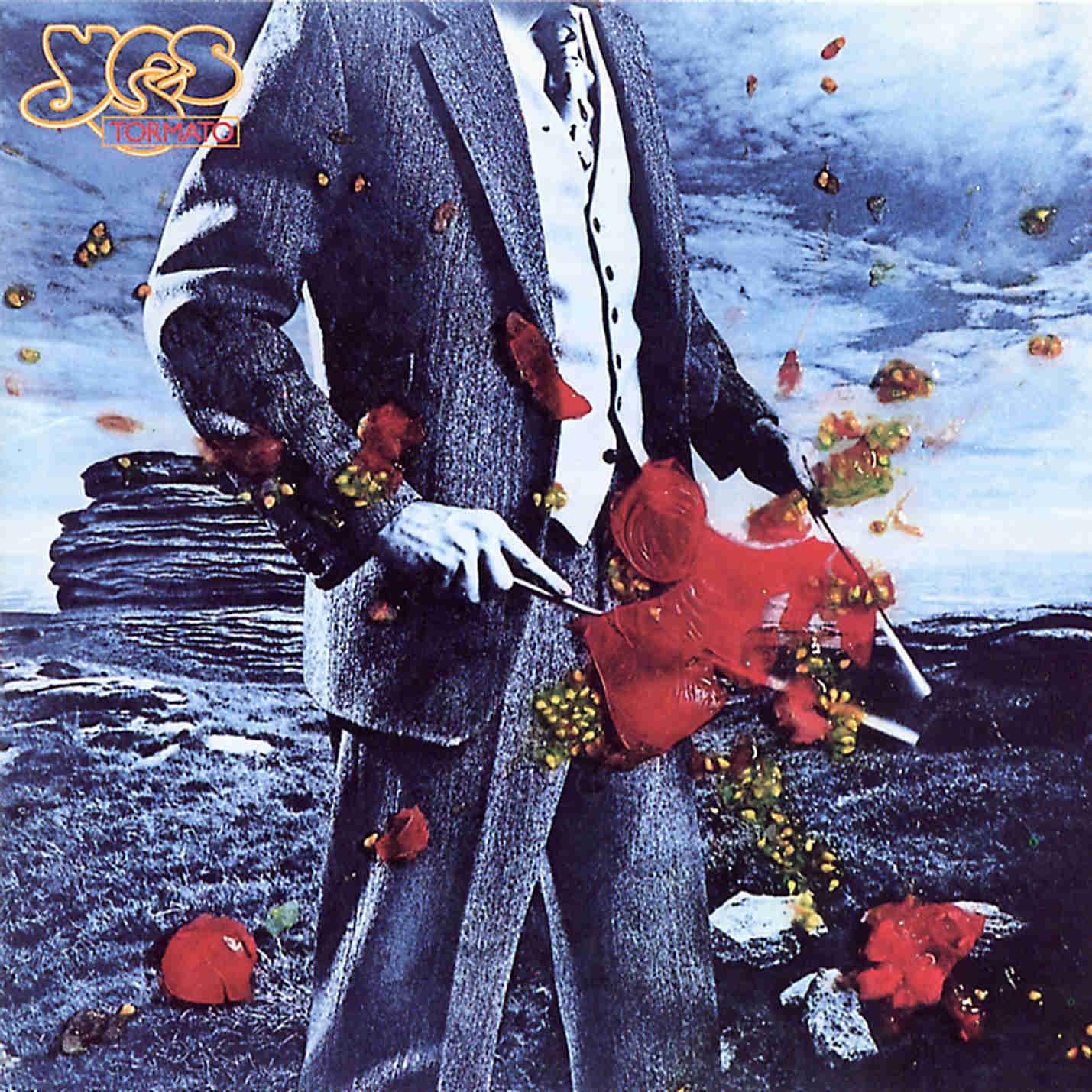
Between June and September of 1978, Yes succumbed to irony for the first time in their career. The design studio Hipgnosis turned in some lacklustre artwork for the new album’s cover and the band’s famously mercurial keyboardist, Rick Wakeman, hurled a tomato at it. In what one can only assume was a collective fit of acute despondency, the band just decided to leave it that way, prompting a last-minute change of the album’s title.

Tormato front

Tormato was released on September 20, 1978. The record was not well received. “Circus of Heaven” was singled out for particular ridicule. Shortly after, Anderson and Wakeman left the band, the latter for the second time.

It would never quite be the same for Yes, after this. They would never recapture the wide-eyed sincerity of their best music. But, for a brief moment, from the late ’60s to about 1975, the world had bought into Jon Anderson’s utopian prophesies. This blog tells the story of how that moment came to be, how it came to an ignoble end, and how the ten definitive progressive rock bands of the 1970s (the Lords of the Seventh Age, if you like) kept making music long after the circus had left town.

***

BLOG TITLE: Circus of Heaven

EPIGRAPH: “What happened to this song we once knew so well?” – Jon Anderson

Which Beatles Album Are You? (Answer: You wish you were a Beatles album.)

I’ve been hesitant to ever write anything about the Beatles. I figure they’ve far exceeded their deserved allotment of critical ink. At this point, the Beatles’ overwhelming significance is a cyclical proposition: they are overwhelmingly significant, and thus they are much discussed, and thus they are overwhelmingly significant.

But they can be useful to have around. Beatles albums have become part of the critical vernacular, each one signifying a specific creative intention, or point in a band’s career. Most readers will know what you mean when you refer to an album as a given band’s “Sgt. Pepper.” Ditto for “White Album,” as this review attests to. Some would refer to these as critical clichés. I prefer “archetypes.” These albums are so ubiquitous that you can use them as shorthand without the fear of alienating anyone.

I’ve always thought that most of the Beatles’ albums are somehow archetypal. So much so, that my thinking about any other band’s body of work tends to be mediated by the Beatles’ discography. I’ll give an example of that later. First, here’s my attempt to codify what some of the Beatles’ albums signify, at least for me.

(Note: Below, I am referring to the UK versions of these albums, as standardized on the 1987 CD releases.)

A Hard Day's NightA Hard Day’s Night – Some bands don’t have an “early period:” they arrive fully formed. This archetype belongs to the bands that aren’t like that. Seen in retrospect, early periods are interesting because of their promise of things to come. During their early period, a band may produce innovative music, and even great music, but their superlative masterpieces are still ahead of them. The archetypal “Hard Day’s Night” is the best album of a given artists’s early period. Some of the traits that will come to define their best work are first observed on this album.

Examples: Pink Floyd’s Meddle, Rush’s Fly By Night, The Rolling Stones’ Out of Our Heads

Beatles For SaleBeatles For Sale – Sometimes, a band makes an album that demonstrates a substantial refinement of their skills both as songwriters and instrumentalists, but fails nonetheless to live up to the standards of their previous work. This could occur because of a single creative misstep, or because of any number of mitigating circumstances, such as lack of time, or interpersonal tensions.


Examples: Yes’s Time and a Word, Genesis’s Nursery Cryme

RevolverRevolver – The archetypal “Revolver” is the album where a band is straining against the constraints of the idiom they have established for themselves. It is a masterpiece, but it is characterized less by effortless mastery than by a sort of hardy frontier spirit. Usually, it directly precedes the archetypal “Sgt. Pepper,” but there are exceptions to this.


Examples: Radiohead’s The Bends, Jethro Tull’s Aqualung, Wilco’s Summerteeth

Sgt._Pepper's_Lonely_Hearts_Club_BandSgt. Pepper’s Lonely Hearts Club Band – There’s more to this archetype than simply being a band’s best or most acclaimed album. (Besides, the internet seems to prefer Revolver nowadays, anyhow.) A given band’s “Sgt. Pepper” is a meticulously constructed demonstration of utter confidence in their idiom. It may be groundbreaking, but it does not feel experimental in retrospect, because its construction is such that it does not call attention to its innovation.


Examples: Radiohead’s OK Computer, Jethro Tull’s Thick as a Brick, Wilco’s Yankee Hotel Foxtrot

The BeatlesThe Beatles (“The White Album”) – This archetype usually marks a point in a band’s career when they have produced a masterpiece that will make it difficult for them to best themselves. Having reached the apex of their established idiom, and having found themselves at the risk of creative stagnation, the band sees no option but to revert to an extreme form of the experimentalism that defines the “Revolver.” The result is always diverse and usually unwieldy. But, at the best of times, it attains a sort of cohesiveness from its compulsive heterogeneity. It usually directly succeeds the archetypal “Sgt. Pepper.” There are very few exceptions to this, as this archetype derives its identity from its precedents. (In the case of the original “White Album,” the album Magical Mystery Tour separates the two. However, the original UK release of Magical Mystery Tour was not a proper album, but an EP. So, The Beatles was the band’s first album-length statement since Sgt. Pepper.)

Examples: Radiohead’s Kid A, Jethro Tull’s A Passion Play, Wilco’s A Ghost is Born

Let It BeLet It Be – Much in the same way that the archetypal “White Album” comes about because of a conscious attempt not to stagnate, the archetypal “Let It Be” is the product of a band’s anxieties about going too far afield, or becoming a caricature of their more successful incarnation. Sometimes, it acts as a sort of damage control when a band has already reached that point. The “Let It Be” represents a conscious effort to make music that is simpler in any number of ways than the music that immediately precedes it.


Examples: The Moody Blues’ A Question of Balance, The Rolling Stones’ Beggars Banquet

Looking at Beatles albums as archetypes allows us to look at non-Beatles albums as mirrors of Beatles albums. Whether it is critically profitable or not is beside the point: this game of equivalences is great fun. It is particularly entertaining when it doesn’t really work, so you’re forced to justify your choices in outlandish ways. To demonstrate, here’s how I have come to think about the classic albums of the Beatles’ eternal rivals, the Rolling Stones:

The Stones’ early period ended with Aftermath and Between the Buttons. On these records, R&B gave way to art pop, and then to psychedelia, in a perfect reflection of the Beatles’ Rubber Soul and Revolver. To clarify: Between the Buttons is a “Revolver.” And indeed, the variety of timbres and styles on Between the Buttons represents the most profitable experimentalism of the Stones’ career. What happens next is a little complicated.

Their Satanic Majesties Request is the most problematic album the Stones released until the mid-seventies. Critics deride it as a fashion-conscious knock-off, cashing in on the success of Sgt. Pepper. Putting aside the fact that Satanic Majesties has much more to do with the jangly psychedelia of Pink Floyd’s recent debut, The Piper at the Gates of Dawn than with the meticulously composed Sgt. Pepper, mere imitation is not sufficient for an album to constitute an archetypal “Sgt. Pepper.” For the Stones, mastery of their idiom was a long way off at this juncture.

So, the band had their first genuine failure on their hands. Time to go into damage control mode. The rootsy country-rock of Beggars Banquet, together with the hard rock single “Jumpin’ Jack Flash,” represents a return to form, in terms of critical reception as well as style. The Stones will likely never be remembered as masters of psychedelia or art pop. Their idiom is fundamentally based in American styles of popular music, poured into British Invasion-shaped bottles. Beggars Banquet returns to this model of music making, and is thus a textbook “Let It Be.”

This realignment allowed the Stones to once again begin working towards their own “Sgt. Pepper.” In Let It Bleed, punning title aside, they produced a second “Revolver.” Not since Between the Buttons had there been a Stones album with this level of stylistic variety. And having experimented once again, the Stones finally made their “Sgt. Pepper” with Sticky Fingers: the most seemingly effortless collection of satisfying songs the Stones would ever make. For instance, a track with the epic sweep of “Moonlight Mile” is fairly unprecedented in the Stones’ catalogue. But, it succeeds so completely that it fails to call attention to the innovation, much like the Beatles’ “A Day in the Life,” and perhaps more so. Only a “Sgt. Pepper” could contain such a track.

Having made Sticky Fingers, there was only one direction for the Stones to go in, and that was every direction conceivable, all at once. Thus, Exile on Main St. Every rootsy style that the band had assimilated is accounted for here: blues, country, gospel, soul, and rock ‘n’ roll, maybe even with a bit of folk thrown in. Exile is an unwieldy double album, including tracks in barely releasable states of completion. The only more archetypal “White Album” is the original one.

So, to recap:

Between the Buttons = a “Revolver”

Their Satanic Majesties Request = a would-be “Sgt. Pepper”

Beggars Banquet = a premature “Let It Be”

Let it Bleed = a second “Revolver”

Sticky Fingers = a deferred “Sgt. Pepper.”

Exile on Main St. = a “White Album”

Convincing? Probably not. Whatever. I had fun.

I ran, I fell – OR – Why my hands were bleeding at the Kronos concert

The word “injury” can elicit tremors of terror amongst musicians, and with reason.

I have known two trumpet players whose careers have been interrupted by a malaise of the muscles around the mouth. One was able to retrain his chops to behave like they did before, but it was a painstaking process that took months of delicate practice. The other needed surgery to reconstruct his embouchure.

I once spoke to a violist whose hand contracted into a fist inexplicably, and didn’t come undone for several months.

Singers may develop polyps on their vocal folds, making their jobs rather painful for a while.

And those are the lucky ones. Musicians are vulnerable. An injury that most people could easily adapt to can mean never playing music professionally ever again. Snap. There goes that career.

However, I count myself unique amongst these cases, as I am the only person I know to have suffered an injury as a member of the audience. This is the story of the night when the universe confirmed that I was never meant to be a musician.

***

On the evening of October 19, 2013, I attended the Kronos Quartet’s 40th anniversary concert at the Chan Centre on the UBC campus. I reviewed it for Vancouver Weekly. I had just emerged from the hall after an (intermittently) interesting pre-concert Q&A with Philip Glass, whose sixth string quartet was to be premiered that night. I was excited.

I realize now that I may have been spared a great deal of inconvenience and physical discomfort if my press credentials hadn’t garnered me such an excellent seat at the concert, so near the front of the hall. Had I been closer to the door, I might have been among the first to make it to the washroom after the Q&A ended, but no. By the time I reached the lobby, the line was firmly in place and not getting any shorter.

I have a natural aversion to public toilets, but I can normally get past it. Also, I’m not usually opposed to waiting in lines. But before I will commit to placing myself in such close proximity to people I don’t know, I need to be reasonably certain that those people will not attempt to make social contact with me. Call it what you like: it’s how I am on all but my best days.

Situations in which people have been stimulated en masse are always high-risk for awkward conversation. Minutes prior, the Chan Centre audience had been in the presence of a legend: an (intermittently) interesting experience that required unpacking. My fear was that whoever I lined up behind would feel the need to unload his analysis upon me, obligating me to offer up an original, creative thought in response. And I damn well wasn’t going to be coming up with any of those until I settled down to write. I don’t think well on my feet.

So, I figured I’d just dart over to the nearby journalism school, which I attend by day, and to which I conveniently have 24-hour access. The building has two men’s washrooms that I’ve come to trust (and a third one that I still feel weird about).

I don’t know why I decided to run there. I had plenty of time. A leisurely stroll would have been entirely adequate. The concert didn’t start for a half-hour. And frankly, running is not a thing that I do. (That’s partially because it makes me look ridiculous. I run with my torso plank-straight, arms flailing about. It looks stupid, but there’s nothing I can do about it.) I’ve been known to walk quickly when under stress, but for the most part, I’m a stubbornly slow-moving individual. In high school, it drove my phys-ed teachers nuts.

Anyway, between the Chan Centre and the J-school, there’s a slight downhill grade. So the crucial point is that once I’d started, I only kept running because I was too lazy to forcibly decelerate. And then there were stairs.

My recollection of what happened next is a little hazy. What I remember can be summed up into these points:

  1. I made it down the stairs without incident.
  2. There was a truck turning the corner as I dismounted.
  3. Upon reaching the bottom of the staircase, I botched the landing.
  4. The person in the truck began to roll down the window while I lay on the ground, moaning.
  5. I was deeply embarrassed about what had just occurred.
  6. I managed to get back on my feet and I ran into the school before the person in the truck had the chance to say anything. There was no way I was going to speak to a human being about the astonishing lack of equilibrium that I had just demonstrated.

Thus it was that I incurred my injury in the most prosaic fashion imaginable: I ran, I fell.

***

The second floor of UBC’s journalism school is arranged in a ring. If you’re so inclined, you can walk past three or four professors’ offices, through the reading room, past the stairs, end up back where you started, and do it all over again. This is especially convenient when you suspect you’ve broken your hand in an embarrassing “running and falling” incident, and you need to walk it off.

I suspected that my hand was broken, or at least fractured, because it had felt this way before. Six years prior, when I was in high school back in Fort McMurray, I had fallen down a cliff on the banks of the Athabasca River. I fractured the fourth metacarpal in my left hand, and was in a cast for several weeks. At the time, I aspired to become a professional pianist of some kind.

Snap. There goes that career.

But, never mind. At some point, my singular lack of talent and commitment would have scuppered me anyway, so it doesn’t upset me too much. I earned a degree in the trumpet instead. It wasn’t for me. And here we are.

In the J-school washroom, I started running my hands under cold water and I realized that my right was probably not going to stop bleeding for a while. My fall onto rough concrete had left my hands not only internally injured, but displaying some semblance of road rash.

I gingerly put my coat back on and headed back to the Chan Centre. My hands were both becoming sorer by the minute, but I had a concert to review, and I’d be damned if I was going to miss the premiere of a Philip Glass string quartet.

***

I didn’t make a good impression on the guy sitting next to me. In retrospect, I suppose “I’d shake your hand, but mine won’t stop bleeding,” isn’t the best way to introduce oneself, but what else was I meant to say? Mercifully, the concert started right away.

It’s a strange thing, hearing live music when you’re in pain. Sometimes it seems so immediate, so present: the perfect distraction. But sometimes you find yourself drifting.* You start thinking things like “Should I leave and go to the hospital?” Or, “Man, it’s hard to clap.” But three things kept me in my seat:

  1. This was history. A new work by Philip Glass is a big deal.
  2. I had a job to do. I said I would review this concert, and I was damn well going to.
  3. The Kronos Quartet is extremely awesome. Sometimes, they were so good I forgot I even had hands.

So I stayed at the Chan Centre, soaking in the music, hands bleeding into my lap.

***

My hand wasn’t broken, just sprained. I left the hospital at 3:00 AM that same night. By that time, the pain was (intermittently) much more manageable, and the road rash had scabbed over. The only problem was, I couldn’t move the fingers on my left hand. For the next week, it was difficult to do dishes, put on clothes, shampoo my hair, and pour things. Writing was okay. (Well, kind of.)

But, if I were a musician, my entire life would have ground to a halt that week. No practicing, no rehearsals, no concerts. If any of the members of Kronos had run and fallen on October 19, Philip Glass’s sixth string quartet might still not have premiered.

But they didn’t, and that’s the key. See, playing an instrument isn’t all about what’s in your brain. It took me a long time to realize that. Playing an instrument requires a connection to your body that I just don’t possess, and never have.** Ask my old phys-ed teachers. Ask anybody who has ever witnessed the ridiculous spectacle of me running.

So, I’m very happy to live in brainland now, with the intricate physical skills of music-making far behind me. I have a cliff on a riverbank to thank for that, and a concrete staircase to remind me that my life is good.

_____

*In my VanWeekly review, I proclaimed that “String Quartet No. 6 lacks the immediacy of Glass’ previous chamber music, but one gets the feeling that repeated listening will yield rewards.” Avid classical music fans will recognize this statement as a euphemism for “I sat through the concert but I can’t remember how the damned music sounds.” It’s a common problem when you’re hearing a piece for the first time. I would normally have reservations about admitting this, but given that my hand was quickly swelling up and becoming immobile, I think I deserve a break.

**Don’t get me wrong, there are many other crucial traits that I feel I lack: natural musicality, perseverance, etc. But this one is undeniable. Even my mother would admit this one.

Vancouver’s new HMV is useless and I’m upset

When I first visited Vancouver in the summer of 2011, I spent a solid two hours in the HMV on Robson Street. Maybe more. I used to love these places.

When I moved to Vancouver in the fall of 2012, I searched and searched for the three-floor wonderland that had so entranced me the previous year – to no avail. The space that once held that HMV has been through a spectacular transformation since I set foot in it. As I’m writing this, it houses the world’s second largest Victoria’s Secret. CDs are on their way out, but lingerie is forever.

The British music store chain’s future has been called into question this year. So, when I was walking down Robson the other day, I was shocked to see a brand new HMV, right across the street from where the old one used to be. I stepped inside.

By the time I left, I had realized something that the rest of the world has known for years: it really is over for these kinds of stores.

We’re going to have to take a few steps back if I’m going to properly communicate my disappointment.

Some people think of HMV as the music store equivalent to Tony Roma’s: generic, middle-of-the-road, and the same in every city in the world. I resent this view. I’ve always felt that you can learn something about a city by walking around its largest HMV. Montreal’s, for instance, has the most massive classical section I’ve seen in a chain store – evoking the sense of high culture that pervades that city. The wide variety of obscure prog and psychedelic gems you could find at the dearly departed Vancouver location suggests that if you search the Lower Mainland hard enough, you may come across an old hippie or two.

My memories of childhood in Fort McMurray are peppered with weekend jaunts down to Edmonton with my family, where I would gladly spend hours in the two-storey HMV at the West Edmonton Mall. I have a sentimental attachment to those three big, pink letters that no quirky indie shop could match.

So, my recent trip to Robson Street’s new HMV kind of ruined my day. The store is about the size of a two-chair barber shop. In terms of selection, if you take away the small selection of Criterion DVDs and Blu-Rays, you’re basically looking at a Wal-Mart entertainment section. Amusingly, an employee asked if she could help me find anything three times in the course of my fifteen-minute visit. “I know you mean well,” I thought, “but I could see your whole selection the second I walked in the door.”

A world without HMVs would be rough for those of us who maintain an irrational attachment to music as a physical commodity. HMV has always offered an opportunity to step off the street into a place that’s familiar, but maybe a little bit new as well. It’s a place where you’re likely to find the albums you’ve been reading about but haven’t gotten around to hearing. It is my personal favourite waste of time.

But, His Master’s Voice is fading fast.

I must admit that after a long struggle, my logical brain finally pounded my sentimental side into submission. Nowadays, I’ve more or less gone digital. But, compared to the pleasure of aimlessly wandering the endless aisles of a well-stocked, multi-storey, bricks and mortar music store, shopping on iTunes is just not much fun.

The Haystack Files: #1 – Marty Sammon’s Hound Dog Barkin’

The Haystack Files is my new occasional series about obscure albums that found their way into my collection by happenstance. The discs profiled in each instalment are the slimmest of needles in the haystack of recorded music. Some of them are great.

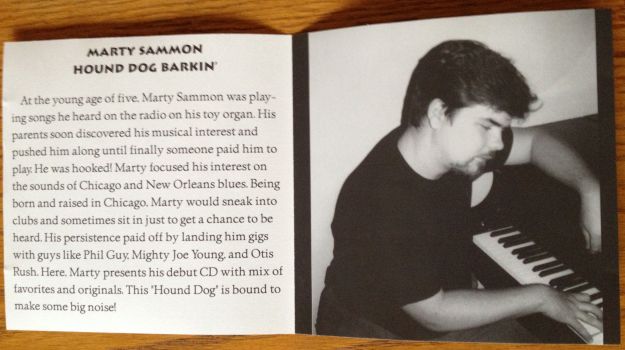
Hound Dog Barkin' front

When I was in elementary school, my dad went on a business trip to Chicago with some co-workers and they spent an evening at Buddy Guy’s Legends, the renowned blues club.

Every souvenir my dad brought home was blues-related: assorted t-shirts bearing the faces of Muddy Waters, Howlin’ Wolf and John Lee Hooker, various ‘Best of the Blues’ compilations, and an autographed copy of pianist Marty Sammon’s self-released debut CD, Hound Dog Barkin’. (You can see the autograph in the photo above.) I say ‘debut CD’ pointedly: he released several cassettes in the 90s, that have vanished into the blues ether.

Sammon was one of the acts playing at Legends the night my dad was there. Nowadays, you might know him as the show-stealing pianist who plays with Buddy Guy. But back then, he was an up-and-coming session player trying to get some attention as a solo artist. Even the most voracious of blues fans probably didn’t know his name, at least outside of Chicago.

But for me, in my formative music-listening years, Hound Dog Barkin’ came to define the sound of the blues piano: not Dr. John; not Otis Spann; not Ray Charles. No exaggeration: Sammon is still the best blues pianist I’ve ever heard. The riffs to his original tunes “I Don’t Believe You Baby” and “Stuck With You” are never far from the front of my mind.

Hound Dog Barkin' insert

I don’t mean to say that the album is an unqualified masterpiece. For one thing, Sammon thoroughly outclasses his band. Guitarist Doug McDonald is an able sideman but when he solos, one finds oneself waiting for the next piano solo.

Sammon’s lyrics are a potpourri of blues cliches, replete with canine references and dodgy gender politics. His vocal delivery is adequate, not outstanding.

As you might expect, the one track on the album with no singing and no band is an album highlight. On “Marty’s Midnight Boogie,” Sammon’s fingers slide across the keyboard like eggs in a buttered pan. It’s a kitschy old-time boogie-woogie track, but it’s technically astonishing, and it’s fun.

The best track on the album, though, is Sammon’s rendition of The Meters’ “Hey Pocky A-Way.” The unaccompanied piano introduction is a musical adrenaline shot to the heart, and it even features a pretty good performance by drummer Cleo Cole.

Hound Dog Barkin' back

Sadly, “Hey Pocky A-Way” is not featured on the edition of the album that’s currently available on iTunes. That version, titled Hound Dog Barkin’ – Originals Re-Release features only Sammon’s six originals, and not the five covers on the CD release. It does, however, boast a live version of Sammon’s wonderful “I Don’t Believe You Baby” that my CD doesn’t have.

This truncated iTunes release is probably your best chance to experience this disc. Get it. If it were released by a major label, Hound Dog Barkin’ would be an acknowledged blues piano classic by now.

Ian Anderson is a better singer than you probably think.

If you’ve never actually had a conversation with me, count yourself lucky.

There are only a few things I can really talk about, and they’re almost certainly not the same things you like to talk about.

One thing I prattle on about all the time is my love for Jethro Tull. And, once I’ve found myself deeply involved in a satisfying rhetorical conversation on that topic, I almost always get the same vaguely disinterested response from my unlucky company: “Yeah, that guy can sure play the flute.”

I know that they all mean well, when they say that. But they’re entirely missing the point.

Ian Anderson’s flute playing isn’t what makes Jethro Tull a great band. It’s not even what makes Ian Anderson a great musician. Or, not the only thing, anyway.

So, let’s take a look at a different side of everybody’s favourite rock & roll man-flamingo – his singing voice.

Anderson makes no claim to be a good singer. He’s said before than when he joined the band that would become Tull, as a harmonica player, the mic was thrust upon him because his voice was slightly less awful than everybody else’s. But Anderson can do more with that nasal baritone than he gives himself credit for: indeed, more than anybody gives him credit for.

Here’s my argument in brief:

Proposition: Ian Anderson, the unsung hero of rock vocalists, is in some respect as agile a singer as some of his more acclaimed contemporaries.

…which of course begs the question, in what respect?

Well, for now, let’s consider Anderson’s use of melisma. That’s when you sing more than one note on a single syllable of text. It’s the opposite of syllabic singing, which is when you sing one note per syllable.

This should make it clearer:

We often associate melisma with ornate, baroque vocal music and gospel-inflected pop. In recent years, it’s become popular as a tasteless mechanism to show off your dubious technique on TV talent competitions. But, there’s no question that it takes some vocal agility and control to pull off highly melismatic singing.

Ian Anderson sings melismas kind of obsessively. He’s even mentioned in the Wikipedia article on melisma: “Melisma is also used, though rarely and briefly, in the music of Jethro Tull: examples include the eponymous track of the album Songs From the Wood, and the song Skating Away (On the Thin Ice of the New Day).”

Actually, Anderson’s melismas are neither rare nor brief. Almost every Tull album up to Crest of a Knave is loaded with them.

So, here’s the crazy thing I did to prove my proposition.

Method: I chose three songs by three different rock bands of the 1970s. One of the bands is Jethro Tull. All of the songs chosen show an accomplished vocalist at the peak of his abilities. I analyzed each song to determine which is, on average, the most melismatic.

Of course, trying to rank rock singers’ vocal abilities by any objective measure is a fool’s errand. But maybe when you see the way this shakes out, you’ll listen to Anderson’s snide, sardonic rasp a little differently.

Let’s meet our contestants:

Ian Anderson

Contestant #1: Ian Anderson

On behalf of our intrepid contender, I have submitted the track “Minstrel in the Gallery.” It’s a powerhouse vocal performance that shows Anderson’s approach to melodic, acoustic music and riff-powered hard rock in equal measure.


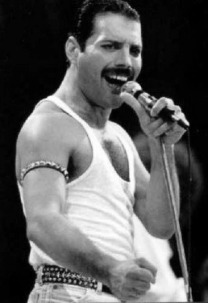
Freddie Mercury BW

Contestant #2: Freddie Mercury

It was an obvious choice, really. Mercury’s four-octave range is enough to ensconce him in the top tier of his generation’s great singers. Add expressiveness and flexibility to that, and he’s a shoe-in for a spot in our contest.

“Somebody to Love” sees Mercury singing in every corner of his massive range. And, unlike most Queen, it’s got a bit of church in it. Church is, of course, the ultimate domain of the melisma, so we can expect Freddie to score pretty high with this track.


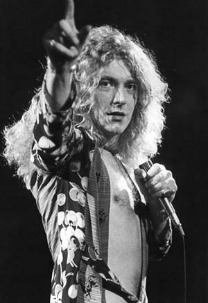
Robert Plant BW

Contestant #3: Robert Plant

Sometimes, when you listen to music from the ’70s, you wonder what the singer gets up to during the ten-minute instrumental breaks. Not so with Led Zeppelin. Plant is right there in the thick of it. No rock singer understands that the voice is an instrument quite like he does.

We’ll judge him according to his performance on “Kashmir.” The track is mostly based on repetitive patterns in the guitar and drums, with an orchestral arrangement that doesn’t command much attention. So, the responsibility of keeping the listener’s interest throughout the track’s eight-and-a-half-minute duration falls squarely on Plant. He “oohs” and “whoahs” his way through the task with great finesse.

Process:

If you’re not interested in how I reached my conclusions, and I wouldn’t judge you for that, you can skip to the section titled “Results.” Just take for granted that my methods are totally precise and scientific, and that there were no grey areas for me to exploit for my own purposes. I would never cook the books like that. Trust me.

The ultimate goal of this little experiment is to calculate the ratio of notes per syllable in the lead vocal of each selected track. That means we need to count the syllables and the notes in each performance. So, we need an accurate transcription of the lyrics of each song as sung, complete with any incidental “heys,” “yeahs” etc. Then, we can count the syllables in each text, and listen closely to each recording to count the notes.

Here’s what I came up with:

Minstrel in the Gallery

Transcription

The minstrel in the gallery looked down upon the smiling faces.
He met the gazes, observed the spaces between the old men’s cackle.
He brewed a song of love and hatred, oblique suggestions and he waited.
He polarized the pumpkin-eaters, static-humming panel-beaters;
Freshly day-glow’d fact’ry cheaters, salaried and collar-scrubbing.
He titillated men-of-action, belly warming, hands still rubbing
On the parts they never mention.
He pacified the nappy-suff’ring, infant-bleating one-line jokers.
T.V. documen’try makers, overfed and undertakers,
Sunday paper backgammon players, fam’ly-scarred and women-haters.
Then he called the band down to the stage and he
Looked at all the friends he’d made.

The minstrel in the gallery looked down upon the smiling faces.
He met the gazes, observed the spaces in between the old men’s cackle.
And he brewed a song of love and hatred, oblique suggestions and he waited.
He polarized the pumpkin-eaters, static-humming panel-beaters;

The minstrel in the gallery looked down on the rabbit-run.
And he threw away his looking-glass – and saw his face in everyone.
Hey!

He titillated men-of-action, belly warming hands still rubbing
On the parts they never mention, salaried and collar-scrubbing, yeah.

He pacified the nappy-suff’ring, infant-bleating one-line jokers.
T.V. documen’try makers, overfed and undertakers,
Sunday paper backgammon players, fam’ly-scarred and women-haters.
And then he called the band down to the stage and he
Looked at all the friends he’d made.

The minstrel in the gallery looked down on the rabbit-run.
And he threw away his looking-glass – and saw his face in everyone.
Huh-hey!
The minstrel in the gallery, yes.
Looked down upon the smiling faces.
He met the gazes, yeah.
Mm, the minstrel in the gallery.
Mm, and he waited, yeah.

Notes

For our purposes, it’s important to note the way that Anderson pronounces the words “suffering,” “family,” “documentary,” and “factory.” Each of these words could be sung with a varying number of syllables, depending on the context. Anderson always chooses the shorter one. For example, “documentary” becomes “documen’try,” so that it’s pronounced with four syllables. Accounting for this, Anderson sings a total of 458 syllables.

Counting the notes isn’t quite so black and white. I frequently wondered whether Anderson was singing six notes on a given word, or seven; seven or eight; nine or ten. It’s easy to lose count when the notes fly by as fast as they do here. Where there was ambiguity, I generally erred towards the lower number, to counteract my pro-Anderson bias. In the end, I counted a total of 704 notes in the lead vocal.

So, the average number of notes per syllable in “Minstrel in the Gallery” is about 1.54.

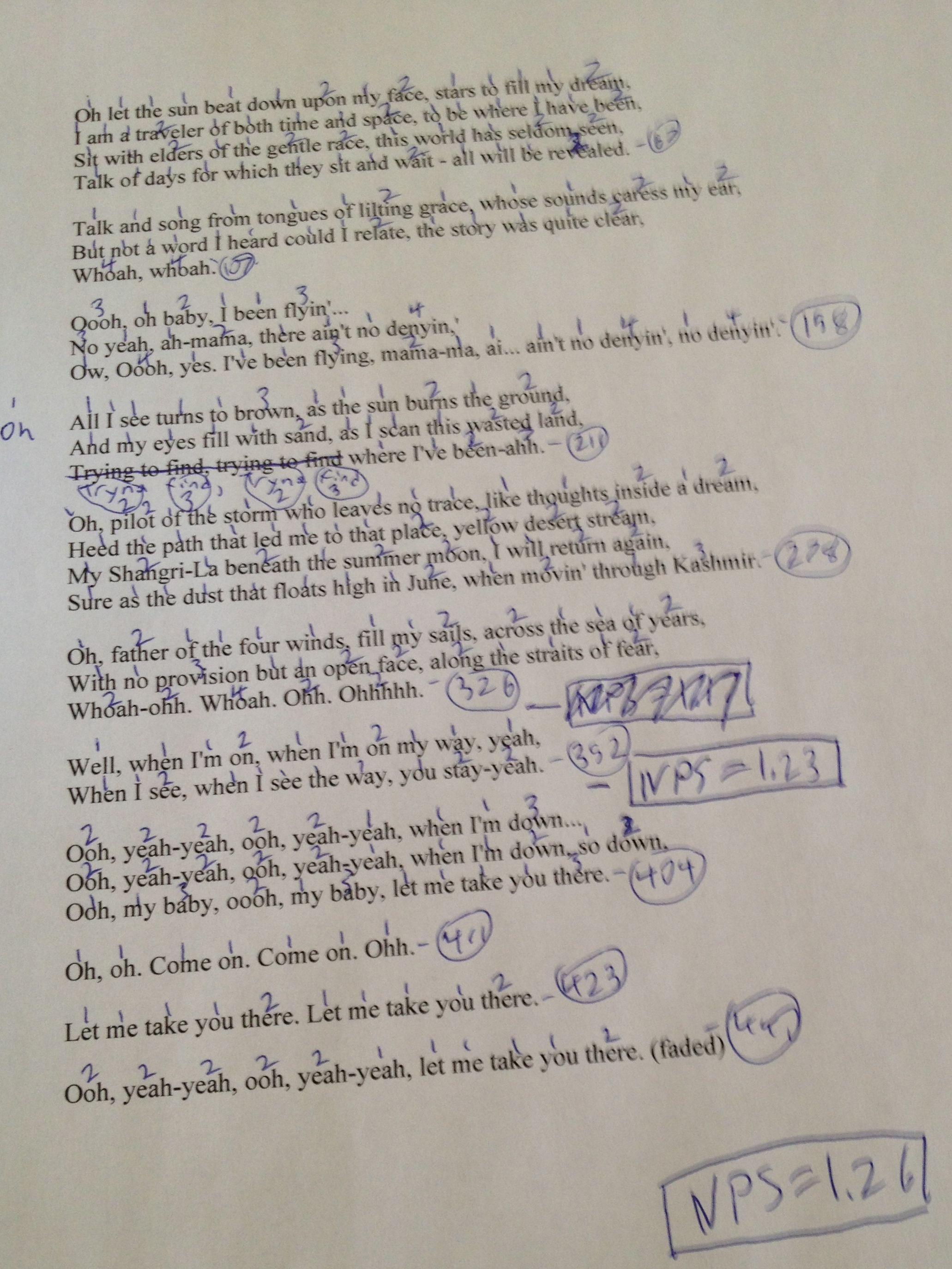
Here’s a picture of my notes for this track, which look like something only an insane person would produce. They show the number of notes that I heard in each word of the song. All in the interest of transparency:

MITG Transc

Somebody to Love

Transcription

(Note: This is a transcription of the lead vocal only. Mercury does sing backup in this track as well, but for the sake of comparison, I’ve left that out. Also, like I could seriously pick him out in the mix…)

Can…

Ooh…
Each morning I get up I die a little,
Can barely stand on my feet,
Take a look in the mirror and cry,
Lord what you’re doing to me,
I have spent all my years in believing you,
But I just can’t get no relief, Lord!
Somebody, ooh somebody…
Can anybody find me somebody to love?

Yeah…
I work hard every day of my life,
I work till I ache my bones,
At the end,
I take home my hard earned pay all on my own,
I go down on my knees,
And I start to pray,
Till the tears run down from my eyes,
Lord somebody, ooh somebody,
Can anybody find me somebody to love ?

Everyday – I try and I try and I try,
But everybody wants to put me down,
They say I’m going crazy,
They say I got a lot of water in my brain,
Ah, got no common sense,
I got nobody left to believe.

Ooh somebody – ooh,
anybody find me somebody to love?

Got no feel, I got no rhythm,
I just keep losing my beat,
I’m OK, I’m alright,
I ain’t gonna face no defeat,
I just gotta get out of this prison cell,
Someday, I’m gonna be free, Lord!

Uhhh-ooh
Find me – Find me – Find
Ooh – Find me – Find me somebody to love
Ooh

Ooh, can anybody find me
Somebody to love.

Ooh
Find me somebody somebody somebody somebody to love
Find me find me find me find me find me
Ooh somebody to love
Ooh
Find me find me find me somebody to love
Anybody anywhere, anybody find me somebody to love love love love
Find me, find me, find me
Love.

Notes

Once I stuck all of Mercury’s improvisatory flights of fancy into the transcription, I found that he sings 369 syllables in total, not counting backup vocals.

The number of notes that he sings is even more ambiguous than in Anderson’s case, due to the fine line between melisma and portamento, which is where you slide up or down between notes, singing all of the pitches between the two. There are two key notes in such a gesture, at the beginning and the end, with an undefined number of pitches in between.

If we were to make a distinction between melisma and portamento, we could say that in melisma, the singer moves cleanly between the notes, and in portamento, he slides between them in a more relaxed fashion. Still, that’s a pretty fine line to draw, so in the spirit of generosity, and to once again counteract my bias, I have counted some of Mercury’s portamenti as two notes, rather than one “bent” note.

I have only done this where Mercury clearly intends to move from one note of the melody to another, rather than to ornament a single note. An example of the former would be the word “look” in the line “take a look in the mirror and cry.” That gets counted as two. An example of the latter would be the word “stand” in the line “can barely stand on my feet.” That’s just one.

This is one of those grey areas that I said didn’t exist.

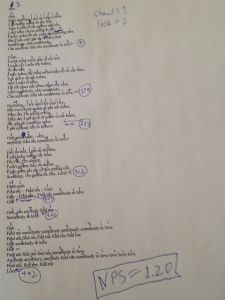
All said and done, I counted 442 notes, resulting in a notes-per-syllable ratio of 1.20.

Here are my notes.
STL Transc

Kashmir

Transcription

(Note: Where the vocal fades out at the end of the song, I assumed that Plant follows the same pattern as previously, both in terms of words and notes.)

Oh let the sun beat down upon my face, stars to fill my dream,
I am a traveler of both time and space, to be where I have been,
Sit with elders of the gentle race, this world has seldom seen,
Talk of days for which they sit and wait – all will be revealed.

Talk and song from tongues of lilting grace, whose sounds caress my ear,
But not a word I heard could I relate, the story was quite clear,
Whoah, whoah.

Oooh, oh baby, I been flyin’…
No yeah, ah-mama, there ain’t no denyin,’
Ow, Oooh, yes. I’ve been flying, mama-ma, ai… ain’t no denyin’, no denyin’.

All I see turns to brown, as the sun burns the ground,
And my eyes fill with sand, as I scan this wasted land,
Tryna find, tryna find where I’ve been-ahh.

Oh, pilot of the storm who leaves no trace, like thoughts inside a dream,
Heed the path that led me to that place, yellow desert stream,
My Shangri-La beneath the summer moon, I will return again,
Sure as the dust that floats high in June, when movin’ through Kashmir.

Oh, father of the four winds, fill my sails, across the sea of years,
With no provision but an open face, along the straits of fear,
Whoah-ohh. Whoah. Ohh. Ohhhhh.

Well, when I’m on, when I’m on my way, yeah,
When I see, when I see the way, you stay-yeah.

Ooh, yeah-yeah, ooh, yeah-yeah, when I’m down…
Ooh, yeah-yeah, ooh, yeah-yeah, when I’m down, so down,
Ooh, my baby, oooh, my baby, let me take you there.

Oh, oh. Come on. Come on. Ohh.

Let me take you there. Let me take you there.

Ooh, yeah-yeah, ooh, yeah-yeah, let me take you there. (faded)

Notes

Another one of those fine lines: Is he singing “whoah,” or “whoah-ohh?” Anyway, it sounds to me like Plant sings 348 syllables, here.

The same distinction between melisma and portamento applies here, as it did with Mercury. I’ve treated it the same way.

When I calculated the notes-per-syllable ratio of this track, I realized it’s kind of unfair. The end result is a higher score than Mercury received, but the majority of Plant’s melismas are only two notes long: hardly melismas at all, compared to Mercury’s nine and eleven note beauties. Nonetheless, Plant sings two notes on a syllable frequently enough to put him just over the top, for a total of 440 notes, and a ratio of 1.26.

Another page of notes:

Kash Transc

Results:

The proposition stands. Ian Anderson’s notes-per-syllable ratio of 1.54 is the highest of the three by a clear margin. Robert Plant is the runner-up with a ratio of 1.26, and Freddie Mercury, in spite of singing far longer melismas than Plant, brings up the rear with a score of 1.20.

These may seem like small numbers, but bear in mind that the standard number of notes to sing on a syllable of text is one. Melismas are the exception rather than the rule, even in the three songs examined here.

Perhaps it seems slightly trivial to rank singers based on inconsequential little numerical values like these. But it certainly pegs Anderson’s claim not to be a good singer as false modesty. For all his shortcomings, whatever they are, he has a lot of vocal flexibility.

Moreover, it’s always used in service to the song. “Minstrel in the Gallery” deals with the relationship between the performer and his audience. It uses the image of a medieval minstrel to shed light on the public personas of ’70s rock idols. A teeny bit of technical showmanship can be expected, given that theme. You can also find a lot of melisma on side two of Aqualung. That’s the churchy side, so it fits. (See “Hymn 43” in particular.)

But also, that guy can sure play the flute.