Category Archives: Classical Music

Omnireviewer (week of Nov. 1, 2015)

If for some reason you make a habit of reading these, you’ll quickly realize that I like everything. You’re unlikely to see any real hatchet jobs here. I just like to enthuse about things, mostly. Here are your 32 reviews for the week:

Music

Vulfpeck: Thrill of the Arts — It’s funk produced with the minimalist precision of Krautrock. The arrangements are one unconventional decision after another. The choice to minimize the role of the drum kit at times is a weirdly good one. And the lyrics are brilliantly nonsensical. One of those unexpected pleasures.

David Bowie: Young Americans — In his book on John Peel, David Cavanagh refers to this as “the sound of [Bowie] cruising through black America in a limousine, occasionally slowing down to shed a few more parts of himself by the roadside.” I can’t do any better than that.

David Bowie: Station to StationYoung Americans was an only-half-successful experiment, but if it led to the insight that produced Station to Station, it was entirely worthwhile. This is my favourite Bowie album save for Low, and some days Hunky Dory. On the other hand, after listening to this and Young Americans in direct succession, my headphones are now coughing out thick clouds of cocaine. So, that’s inconvenient.

The Beatles: Rubber Soul — I just realized that my listening today has included soul of both plastic and rubber persuasions. Aside from that, what’s there to say about this? For years, it was the earliest Beatles album I cared to listen to. I’ve since developed a taste for the early stuff. But I still think this marks the point where they went from being a good little band to being the Best Band Ever. Not my favourite band, mind. But if you want to say to me that the Beatles are objectively the greatest band in history, I’ll tend not to argue with you.

Ted Hearne: The Source — First off, the track “We called for illumination at 1630” is one of the most staggering things I’ve heard recently. It’s an instant classic that everybody should hear. Most of the rest of this deeply unorthodox oratorio is less excellent than that. I sure respect Hearne’s political engagement (the oratorio’s text is drawn from the Manning leaks, among other primary sources). But it all feels a bit earnest to me: a bit austere and serious, as if to say, “This is important! DO NOT SMILE.” Still, it feels wrong to dismiss this on one listen. Accusing a work that deals with Chelsea Manning and the war in Afghanistan of being overly serious is admittedly somewhat perverse. I do wish more composers would try stuff like this. And that one track. Holy smokes. Listen to it now.

Eve Egoyan/Linda Catlin Smith: Thought and Desire — This is the first I’ve heard of Linda Catlin Smith’s music. It’s quite static, and at times there isn’t much to latch onto as a listener. Each of the nocturnes, chorales and miscellaneous compositions on this disc of piano music is essentially a sequence of slow moving but very rich chords without melodies stringing them together. Shades of Satie and Brian Eno. I listened while I worked, and eventually found myself really getting into it. I find the last twenty minutes boring, but the first forty are lovely. Egoyan’s releases are always worth hearing, because she plays music that nobody else does, and plays it well. Even if this isn’t quite as enthralling as some of her previous discs, these are still world premiere recordings and I value that inherently.

Mr. McFall’s Chamber: Solitudes — Who knew there was such a thing as Finnish tango? In any case, this is an album that takes that style as its jumping off point, and proceeds to do my favourite thing for contemporary classical albums to do: be completely enthralling while containing music written almost entirely by people I’ve never heard of. There’s nearly an hour of music by composers I don’t know, compared with less than ten minutes of music by composers I do. That seems about the right ratio. Olli Mustonen’s Toccata and Erkki-Sven Tüür’s Dedication are particular highlights. And the playing!

The Chemical Brothers: Further — I’ve already written at length about how happy this album makes me on Two Matts, the blog I co-write with Matt Meuse. It was one he assigned me, knowing full well I’d be into it. But he might not have guessed that I’d still be listening to it semi-obsessively several weeks later.

Live events

Hey Rosetta! Live at the Vogue — I’ve only done this a couple of times: that thing where you go to a concert by an artist you’ve barely heard of. But the friend I went with has seen them eight or nine times, so he was well-prepared to give me the lowdown on these folks beforehand. Plus, the concert turned out to be a good way in. Hey Rosetta! is a great live band for a couple of reasons. First, they play and sing brilliantly. Not a given, as we know. It’s the bands whose execution is solid that you want to see live. Secondly, their songs can get a bit anthemic. You want to be in a crowd of people, listening to some of those songs. I’m especially glad to have been at this specific show because Yukon Blonde was the opening act, and the two bands did their 2015 election anthem “Land You Love” for the first time live as an encore. Lovely moment, there. Plus, the lighting design was clever: twenty-or-so incandescent bulbs were distributed across the stage on stands. At times, the stage lights would go off completely, leaving the band lit solely by those bulbs. Wonderful. Time to listen to some Hey Rosetta! albums.

Movies

The Zero Theorem — You know you’re truly in love with an artist when you even enjoy the works of theirs that you can objectively identify as bad. This is how I am with Terry Gilliam. I’m on record stating that my favourite movie is Brazil, and that remains true on all the days when it is not Mulholland Drive or Velvet Goldmine. Then there are the Gilliam movies that are basically accepted as good, which I believe are masterpieces: 12 Monkeys, The Fisher King, and Fear and Loathing in Las Vegas. There are the misunderstood gems, Tideland and The Imaginarium of Doctor Parnassus, both brilliant. And so it goes, on down to Brothers Grimm and Jabberwocky, neither of them any good at all, both of which I like in spite of myself. The question with The Zero Theorem was never “will I like it,” but rather “which of those categories will it fit into?” Turns out, it’s the one with Tideland and Parnassus. Nobody likes this, but it’s great. Gilliam’s satire continues to be a hilariously blunt instrument, and his gender politics are extremely suspect, but this is an enthralling movie. It probably helps that it’s the most similar thing he’s done to Brazil. It’s full of signs and boxes and advertisements you should read but can’t, because everything goes by too fast. It’s got David Thewlis as a cut-rate Michael Palin and Christoph Waltz as a big-budget Jonathan Pryce. It’s got women wearing outlandish things on their heads. I was never not going to like this.

Television

Doctor Who: “The Zygon Invasion/Inversion” — Well, the season got off to a slow start, but we’re sure as hell into the thick of it now. This two-parter was completely magnificent. Still not quite as good as last season’s high points (which were, incidentally, also written by the two writers credited here), but damn good. Between his Doctor Who work and Jonathan Strange and Mr. Norell, Peter Harness is quickly becoming my second-favourite writer associated with Doctor Who. And if “space ISIS” isn’t quite as good a premise as “the moon’s an egg,” at least we got Peter Capaldi and Jenna Coleman both giving their best-ever performances on the show.

Last Week Tonight: November 1, 2015 — Nothing here that will set the world ablaze. No dingo babysitters. But it’s always nice to hear somebody say “hey, maybe we should focus on actual present-day news instead of talking about an election that’s a year away” and then doing that thing.

Literature, etc.

David Cavanagh: Good Night and Good Riddance — This continues to be fantastic, and really lent some clarity to the rise of punk rock. While I’ve become considerably more amenable to punk in recent years, I still have some lingering skepticism. But, when you see on a show-for-show basis how boring music was in 1975-76 (LOTS of Eagles and other Eaglesy bands on the radio), you begin to understand. Also, Cavanagh cleverly notes how many of the artists on certain Peel shows from this period were living in tax exile. Sort of puts a nice fine point on things, doesn’t it?

China Miéville: “The Buzzard’s Egg” — This is one of the best stories I’ve gotten to in this collection so far. Miéville’s stories live and die on the novelty of their premises, and this premise is really something: an army of ruthless imperialists conquer peoples and take their land by stealing their idols, thus rendering their prayers useless. Piquant, no? And Miéville’s chosen just the right narrator to offer a window into that world.

Alex Bilmes: Noel Gallagher interview for Esquire — I don’t really like Oasis. I’ve never listened to a full Oasis album. But I love interviews with Noel Gallagher. And this one is gigantic. Bilmes has the restraint to say his piece at the beginning, and then just give the people what they want, which is 6,500 words of Noel being garrulous and abrasive. Sample: “Hard work and a fucking filthy tongue, that’s what I inherited from my mum. She taught the Nineties how to swear. And what’s the word, stoicism? Yeah, she was hardcore. She didn’t give a fuck.”

Ben Grossblatt/Alex Fine: How to Speak Klingon — A few friends and I have been going to pub trivia around Vancouver for a year or so. There’s a nerd bar here called the Storm Crow that’s becoming a favourite for its fairly challenging questions and its Cthulhu altar. This was a first place prize, and it is frankly ridiculous that I’m even reviewing it. It is a children’s board book with buttons that make sounds. It is not a serious thing. That said, it is better than it needs to be. Wookiepedia tells me that in addition to this most minor of Star Trek credits, Grossblatt has also written peripheral fiction pertaining to Star Wars. And the illustrator, Alex Fine, did covers for Newsweek when Newsweek still had covers. So, they’re not hacks. This provides useful phrases for various contexts in Klingon society. Like, on public transportation, it teaches you the phrase for “I don’t have exact change and await my just and devastating punishment.” Or, at the office: “There are no bad ideas, only ideas meriting death.” Or, at karaoke: “Hold me closer, tiny dancer.”

Games

Stasis: Howlongtobeat.com tells me it should take me about five hours to beat this game. Reviewers imply that they played it in an afternoon. I’ve played for nine hours over the course of two weeks, and I don’t feel like I’m nearly done. I’m really bad at this, aren’t I?

Podcasts

The Allusionist: “Criminallusionist” — Radiotopia cross-promotion continues. I’m beginning to wonder if this is a straightforwardly good thing or not. The bulk of this is just a full episode of Criminal, and while that’s nothing to complain about, I did actually tune in for The Allusionist. Maybe this is how Marvel Comics fans feel when they complain about big crossover events?

This American Life: “The Heart Wants What It Wants” — The major highlight of this is Shankar Vedantum’s story about men who were conned into paying for love letters from fictional women. The key takeaway is that I should probably start listening to Vedantum’s Hidden Brain, although do I really have time for another podcast? (Evidently yes, as we shall see.)

Pop Culture Happy Hour: “A Conversation with Robert Galbraith (aka J.K. Rowling)” — I will likely not read Career of Evil, but the structural gimmick sounds fun (much of the novel is narrated by the murderer, but you don’t actually know which of the suspects is doing the narrating). This is one of my favourite things about listening to tons of podcasts: it helps me keep track of what’s going on in the cultural world without my having to actually take in ALL of it. (Though you can see I’m trying.)

Surprisingly Awesome: “Mold” — I’ve expressed ambivalence towards “wonder surrogacy” before, in other media. That’s where there’s a person in the text itself whose role it is to express wonder, interest or enthusiasm in the hopes that the audience will join in. This new podcast has wonder surrogacy baked into its premise. Provided that the topics covered continue to have the same hidden depths as they find in mold, there will always be one host whose job boils down to saying “isn’t that interesting?” At the worst of times, this approach strikes me as desperate. Surely it’s better to just say interesting things and get on with it than to be constantly trumpeting your own appeal. In this premiere episode, it’s fine. But I will remain vigilant.

In Our Time: “Utilitarianism” — This is BBC Radio 4. This is a very austere production with no music, no tape, seemingly no editing, and no obvious enthusiasm. This is a man mumbling disinterestedly into a microphone, trying to coax the history of a major branch of philosophy from a panel of sleepy professors. This condescends not a whit to its audience, and makes no compromises. In fact, it seems to be ignoring its audience altogether. I will probably listen to more of this.

Reply All: “Shine On You Crazy Goldman” — P.J. Vogt drops acid at work. P.J. Vogt is quickly becoming the most interesting podcast host. Matt Lieber is a Pink Floyd reference.

The Memory Palace: “no. 116,842” — The Memory Palace always makes me get all watery at inopportune moments. DiMeo has this uncanny ability to wrest meaning out of a phrase by repeating it: in this case, “let her mind wander.” See also, “Mary Walker would wear what she wanted.”

The Memory Palace: “Craning” — Every time I hear a really good episode of The Memory Palace, it makes me want to go back and listen to this one again. I must have heard it ten or twelve times, now. It is my favourite nine minutes of audio I’ve heard this year. It’s a landscape of Cape Canaveral on the morning Apollo 11 launched, wrought with incredibly fine brushstrokes — right down to the spectators camping out in station wagons, overnight, with the tailgates open for the feet of tall children in sleeping bags. There are more perfect turns of phrase here than I’ve ever heard in a radio piece. Throw in some meditative music, and this is a total sucker punch. I can’t account for why this has such an effect on me. That’s probably why I love it so much.

99% Invisible: “Butterfly Effects” — An original, Sam Greenspan-produced story about how bad design might have decided a federal election. This is what this podcast is for. 99pi is a continuous act of validation for Roman’s “beautiful nerds.” Because, when everything in the world is so inherently interesting, how can you not want to learn everything about it? How can you not be a nerd? In a sense, the premise of 99pi is the opposite of the premise for the new Gimlet podcast, Surprisingly Awesome. Where the latter takes for granted that some things are boring, 99pi is interested in everything, and trusts that you are too. No wonder surrogacy, here.

The Moth: “Hand Transplant, DNA, and a Backwards Heart” — And, we’re back. Janna Levin’s story of love and astrophysics is structurally a thing of beauty. I’m a sucker for recurring motifs that develop thematically through the course of a narrative. (See: The Memory Palace, and also most everything by Beethoven.) The other two stories are less interesting, but not by much.

The Heart: “Kaitlyn+Mitra” — This two-parter about the intimate business partnership of The Heart’s two founders could have been a little inside baseball, but they invited their audience in by literally inviting the audience to a big event — a wedding, of sorts. The Heart is so good. For one thing, it’s one of the best-sounding podcasts on Radiotopia, along with The Truth and 99pi. For another, it cares not a whit about taboos. And was that Brian Eno’s slowed-down Pachelbel I heard in there? Clever.

Pop Culture Happy Hour: “‘Brooklyn Nine-Nine’ and Things We Meant to Do” — And now, a proper episode of PCHH. Pop culture panel shows are a dime a dozen, but this is far and away the best of the major ones. Every episode sounds like what it hopefully actually is, which is four people who really like talking to each other talking about stuff they like. I generally find this panel more insightful than Slate’s, and it’s actually funnier than the less structured and less censored Pop Rocket from Maximum Fun. This episode is a pretty standard instalment. And that is just fine. This is a podcast I almost always listen to the day it comes out, because I can rely on it to be good company on a commute or a run, even when the topics at hand aren’t that interesting to me.

Radiolab: “Staph Retreat” — You know you listen to too many podcasts when you hear two separate accounts of Alexander Fleming’s discovery of penicillin in the same week, entirely by coincidence. This is the better one, by the way. As you’d expect. Honestly, Radiolab lost me for a while. Between the reduced presence of Robert Krulwich, the less ambitious sound design and the increased focus on the sort of current affairs stories that other shows like This American Life already do, I felt like this show had somewhat lost its distinctiveness. But between this and “The Rhino Hunter” from September, it looks like they’re back on top.

Surprisingly Awesome: “Free Throws” — More wonder surrogacy, but this time, Adam Davidson is essentially a perfect surrogate for me, because this is a sports story, and neither he nor I could care less about sports. But, even given this optimal situation, in which both Davidson and I come around to the interest of free throws in the end, they cap it off with an ending in which Davidson’s wonder far exceeds my own, and the perfect surrogacy is broken. This is the key risk of this kind of storytelling: if the audience isn’t completely analogous to the surrogate, they need to engage their empathy in order to feel the intended effect. And people are (or at least, I am) bad at engaging their empathy when the stakes are zero. I’ll keep tuning in to this, because it really is entertaining on a moment-for-moment basis. But I distrust this structure.

Welcome to Night Vale: “The September Monologues” — I do like it when Night Vale plays with the format. I suppose some of what I said last week might make it sound like I don’t. But the real problem is when there’s too much focus on long-term storytelling and worldbuilding, and not enough on just making the episode at hand work. This is one of the best episodes I’ve heard, if only for the brilliant monologue by Steve Carlsburg. I always figured Cecil was just being a jerk about him. And that weather gag is genius.

Omnireviewer (Week of Oct. 25, 2015)

I read, watch and listen to a whole lot of stuff. Usually, I have thoughts on that stuff. Oftentimes, those thoughts are not substantial enough to justify a proper essay, and I don’t have time for that anyway. To wit, here is the premise of Omnireviewer: if I read, watch or listen to it, I will review it in a few sentences. Every Sunday, I will compile the previous week’s reviews in a post like this one.

Before we begin, a few guidelines. Here are some things I generally won’t review:

  • Stuff made by people I know, or people who people I know know. I’m doing this for fun, not to make my life awkward.
  • Every bit of music I listen to for work. My job involves listening to a LOT of music. I’ll review it if it’s especially interesting or new, but I won’t hold myself to this.
  • Fragments. If I listen to a single song on the way to the grocery store, no. If I listen to a whole album walking home from work, yes. If I watch a John Oliver segment on YouTube, no. If I watch a full episode of Last Week Tonight, yes.
  • Blog posts/articles/essays etc. This accounts for a lot of what I read in any given week. But actually reviewing that stuff seems needlessly far down the rabbit hole, even for me.

For things that will take me more than a week to get through (i.e. books and games), I’ll give them a mention when I start them, review them when I’m finished them, and give updates periodically in between. That’s unless the book or game breaks down logically, like episodic games or collections of short stories. In that case, I’ll review each part.

Not everything I review will be new, nor will it all even be new to me. I revisit old favourites as frequently or more than I seek out new favourites — especially where music’s concerned. But I’ll only review something in an Omnireviewer post once. Subsequent revisitations will occur anonymously. In general, if I don’t mention that I’ve seen/read/heard something before, I probably haven’t.

Finally, none of what I’ve said above constitutes “rules.” By which I mean: I reserve the right to break them at my convenience. And now, here are my reviews of the 28 things I read, watched or listened to since Sunday, October 25:

Movies

A Girl Walks Home Alone At Night — I’m not one of those people who gorges on horror movies around Halloween, because most of my favourite horror movies aren’t the Halloween kind of horror movies. I don’t scare easy, so I tend to prefer horror of a more existential persuasion — the kind that finds its way into your dreams and changes you for a while. (See especially Davids Lynch and Cronenberg.) This is not that kind of movie. This is a vampire movie, totally Halloween-ready. But totally, totally unconventional. Best to go into it knowing as little as possible. But, if you’ve seen it: that scene with the disco ball? Seriously.

Television

Doctor Who: “The Woman Who Lived” — This season of Doctor Who hasn’t been hitting it out of the park for me. I adored the last season, and I think Peter Capaldi is as good an actor as ever played the Doctor. But the scripts so far this year have been bland: even Steven Moffat’s, and to me he’s the best writer in all the land. Strange then, that Catherine Treganna — best known for her work on Torchwood, which I don’t especially like — should write the first really good episode of the season. It’s no “Listen,” or “Kill the Moon,” but Maisie Williams playing a jaded immortal was always going to be a winning concept.

QI: “A Medley of Maladies” — The brilliance of QI is that the humour often veers into territory that you’d be embarrassed to enjoy if it were stand-up, but it’s packaged alongside fascinating obscure trivia to make you feel less dumb. Any episode with Ross Noble is bound to be a gem.

Music

Peter Hammill: Nadir’s Big Chance — I’ve been meaning to listen to this for years, and somehow didn’t get around to it until now. This is the album where the lead singer of Van Der Graaf Generator allegedly invented punk rock in 1974. If that sounds a bit outlandish to you, you’re right. But there are places where he comes surprisingly close. More importantly, this is fantastic. Possibly second only to In Camera in Hammill’s solo catalogue.

Philip Glass: Solo Piano — This is a collection of three separate pieces of music that all feature a two-note repeating pattern in the left hand. One might think it would get old, but it’s actually hypnotic in the way that Glass is at his best. His piano playing is pretty scrappy in places, but it’s always nice to hear recordings where that feels beside the point.

Wilhelm Kempff: Brahms Klavierstücke, Op. 116-119 — It was about time I sat down and listened to Brahms’s final piano pieces all the way through. The famous Eb-major intermezzo was always a favourite, but all of these pieces are gems. It’s perfect mood music — a mellow old scotch in harmony and counterpoint. I can see this joining my other favourite solo piano music (Debussy’s preludes, Beethoven’s late sonatas, Bach’s partitas) within a few listens. Kempff’s 1963 recording is deservedly a classic. I’ll be checking out his Beethoven next, for contrast.

Jethro Tull: Peel Sessions, 1968-69 — A revisit, inspired by a book I’ve been reading (see below). These recordings really highlight what Mick Abrahams brought to the table. For all that Martin Barre added to the band, Abrahams plays most of these early songs better. Ian Anderson’s vocal performance on “Stormy Weather” is borderline minstrelsy, though. This is not a pun; this is an allegation of casual racism, lest anybody misunderstand. These things happen with white blues bands. I still love this, though.

Neil Young: Time Fades Away — An old favourite of mine. It’s hard to reckon why Young still hates this album and refuses to reissue it. Is he even listening? He may have been out of his head at the time, but his band has never sounded better. “Last Dance” is not one of Young’s best songs, but it is one of his very best tracks. It’s all in the performance. The fakeout at the end is one of my favourite moments on a rock live album. Also, how is this not in every list of best album covers ever?

Literature, etc.

China Miéville: “The Rope is the World” — This is from his short story collection Three Moments of an Explosion, which I’ve been really enjoying. Miéville’s writing sometimes borders on poetry in its density. In this story about elevators into the atmosphere, he coins words on the fly with no explanation. It forces you to think through their likely etymology, lest you lose the plot entirely. I can see how some readers might be frustrated by that, but I find it fun.

Reza Aslan: No God But God — I’m about two-thirds of the way through, and already recommending it to everyone I know. I was always amazed by Aslan’s eloquence in interviews. He could basically talk into a microphone for several hours, transcribe it, and that would be a decent book. But he’s way more of a craftsman than that. He structures his chapters around an introductory anecdote or parable, told in prose worthy of the best living novelists. Each of these stories helps situate you before he transitions into his always-lucid argumentation. It’s an ingenious structure. I’ll have more to say about the content itself when I’m finished the book.

David Cavanagh: Good Night and Good Riddance — I bought this as soon as I finished the Kindle sample. Good God, is this ever exactly what I want to read right now. In case you haven’t read the Guardian’s shimmering platinum review, this book is a deep dive into the life’s work of the BBC Radio 1 DJ John Peel, with whom I am not directly familiar, being 25 and Canadian. But his show was clearly a force in a number of consecutive countercultures. And Cavanagh’s a dazzling writer. I’ll be putting a couple of other books down for a while, to tuck into this.

Games

Stasis — After reading so many rave reviews, I confess to being a little disappointed. There are bright spots in this: parts of it are genuinely terrifying, and exploring a post-catastrophe civilization riddled with biological horrors is never not going to be fun. But, the voice acting leaves much to be desired, the writing is weak at best, the villain is of the moustache-twirling variety, and the backstory just introduced a hackneyed love quadrangle that I assume was supposed to make me feel something but didn’t. By the time I finish this, I may like it better.

Podcasts

(These will always come at the end, because I listen to a lot of them — commutes, runs and dishes, you know — and I listen to several of the same ones every week. It may get dull for you, even if it never does for me.)

Welcome to Night Vale: “Rumbling” — My general opinion of Night Vale is that it’s a great idea with some great writing and some great jokes, but it has structural issues. This instalment foregrounds some of those issues. Cecil Baldwin, who I generally like a lot as a character and slightly less as a host, oscillates back and forth between phoning it in and overselling every joke. The choices of background music seem arbitrary. Still, this is tying up threads of a major plot arc, and I can forgive a bit of sluggishness while the show adjusts to a new status quo.

The Allusionist: “Vocables” — I’ve been listening to a lot of podcasts from the Radiotopia network, lately. They’ve got a fundraising campaign on, and they’re going big. This is apparently the first of several planned crossover events where Helen Zaltzman will collaborate with hosts of other Radiotopia shows, which is satisfying in itself for podcast geeks like me. This week, it’s Hrishikesh Hirway from Song Exploder. So, language geekiness collides with music geekiness and I couldn’t be happier.

The Truth: “Starburst” — I loved this. I won’t spoil it by describing it too much. It’s a radio play about a jerk magazine writer at a comic con, but it quickly veers off in a truly unpredictable direction. The really notable thing about it is how The Truth’s pristine, elaborate sound design feeds into the story to become a structural element. I’ve never heard that before in the episodes of this show that I’ve listened to. It’s only fifteen minutes long. It’s well worth your time. Also, people who are interested in nominating things for Hugos should nominate this for a Hugo.

This American Life: “The Night in Question” — I love a good conspiracy theory. And here’s one with political implications, to boot. This is about how most of Israel questions the official narrative about the assassination of their prime minister 25 years ago. It’s gripping in exactly the way that Serial gets too much credit for being.

On The Media: “Truth(ish)” — Where Jon Stewart was always a comedian who also happened to be a media critic, Brooke Gladstone and Bob Garfield are media critics who also happen to be funny. If you were one of the people who watched Stewart’s Daily Show as much for the sanity as for the humour, you need to be listening to this. If the West Wing pastiche that opens this episode doesn’t sell you on the entire show, you’re unlikely to be into it at all.

Fugitive Waves: “WHER: 1000 Beautiful Watts” — The Kitchen Sisters’ radio storytelling can be a bit on the slow, meditative side for my taste, but they have a great ear for interesting characters. In this two-parter, they interview the women (and a couple of the men) who kept the first all-woman radio station in the United States running. It also contains an infuriating yet funny clip of one of the first female radio announcers trying to ward off the explicit advances of her male guest while maintaining on-air decorum. Worth a listen.

This American Life: “The Call Was Coming from the Basement” — The story of a woman getting attacked by a rabid raccoon is perhaps not Alex Blumberg’s very best work. But David Sedaris’s story about hanging out in a morgue makes up the difference.

The Memory Palace: “Butterflies” — This podcast might just have the best writing for the ear that I’ve ever heard. Nate DiMeo is basically a spoken word artist for history nuts. This is a particularly sweeping and ambitious story, at more than twice the normal length (it’s 20 minutes long). It’s a story about humans screwing themselves. Those stories are always relevant.

Fresh Air: “Gloria Steinem” — Steinem is a hero and has some great stories. Hearing her talk about the circumstances she encountered in media at the beginning of the women’s movement is fascinating: editors feeling that one editorial saying “women are equal” needed to be counterbalanced by another saying “no they’re not,” etc. Terry Gross asks some unexpected questions and gets some truly wonderful moments of radio out of it. There’s a reason Marc Maron calls her the “industry standard.”

Meet the Composer: “Ingram Marshall” — This is the first episode of Meet the Composer that I’ve listened to that’s about a composer I’d never heard of. And, I’ll certainly be looking into Ingram Marshall’s music further. So, mission accomplished, there. But the great thing about this show is that every episode incorporates at least one tangential discussion of an element of music history for context. This time around, we hear about the legacy of gamelan in Western music: from Debussy to the Canadian composer Colin McPhee, who transcribed gamelan music for two pianos and performed it with Benjamin Britten. That you’ve got to hear.

99% Invisible: “War and Pizza” — Most of what’s in our grocery aisles started off as military technology. That is a tidbit I can now file away and impress somebody with later. This is why I love 99% Invisible.

Reply All: “The Law That Sticks” — A somewhat procedural episode of Reply All. You should listen to it, because the law it’s about is properly disturbing. But it feels like that’s the main reason the producers think you should listen to this episode, also. Basically, not one of their most fun episodes, but worth hearing.

The Moth: “Kimya Dawson & Kevin Haas” — It’s fine. Kept me amused during my run. Sometimes The Moth knocks me flat. Not this time.

Theory of Everything: “The Things We Do For Money” — ToE’s cross-promotion game has been strong since the start of the Radiotopia fundraising campaign. Last time, Roman Mars helped tell the long-view story of podcasting, and this time Jonathan Mitchell from The Truth reconstructed a radio play by Walter Benjamin. (I know.) I don’t mind people asking for money when they do it in a way that’s this clever.

Welcome to Night Vale: “The Retirement of Pamela Winchell” — Oh, look, it’s picking up already.

Live events

Welcome to Night Vale: Live at the Chan Centre — I waffled on whether to go to this. Night Vale is scrappy at the best of times: their live episodes even more so. Plus, I’m about twenty episodes behind. But then I thought, eh, what are the chances of the most popular comedy/horror podcast coming through your town on Halloween? And I bit the bullet, ditched my plans and went. (I tried to convince my friends to come with, but it went down kind of like this.)

Gosh, but this was a whimsical experience. The story was a fluffy, whimsical romp. The musical guest was a whimsical sort of musical guest, of the harmonium/glockenspiel/ukulele-playing variety. And the audience sure was whimsical. I mean, it was Halloween, to be fair. But one gets the feeling that some of those people might dress like that year-round. Good on ‘em.

This live show lacks the bloat of some of the others I’ve heard. Cecil carried the bulk of the story, with a brief appearance from Carlos being the only significant guest spot. The story was mercifully continuity-light, considering how much listening I have to do before I’m caught up. It just told a story and got done with it, which is what I wish Night Vale would do more often. Cecil was in top form. Everything was in its right place and made me glad I decided to go. Plus: kidding aside, that whimsical musician, Eliza Rickman, is completely fantastic.

But even in a live setting, Disparition’s background music still doesn’t make a lick of narrative sense.

Things I loved in 2014

So, 2014 had its ups and downs, hey? All the same, the year’s movies, music, TV, games, comics and podcasts helped keep me happy, provided necessary diversion, and helped put my puny problems in perspective.

Here then, in as random an order as I could meticulously devise, are twenty things that I loved in 2014. I should note that, for other-people’s-interest reasons, this list is limited to stuff that actually came out in 2014. However, if I’m being honest, the thing that made me happiest this year was probably the Zombies, the thing that diverted me most ably was probably Bioshock, and the thing that best helped me put my problems in perspective was, as ever, Mahler 9.

Still, it’s a pretty killer list.

Birdman

To me, this is what filmmaking looks like when everybody does everything right. By maintaining the illusion — and it is an illusion — that the bulk of the film is one continuous take, Alejandro Iñárritu and his cinematographer, the always astonishing Emmanuel Lubezki, have devised a premise by which the wonder of live theatre is translated to film. Because, in the theatre world, it’s always one take. And then, by taking that wonder and incorporating illusions only possible in contemporary film, he reprocesses it through the entirely different wonder of movie making. All kinds of wonder, all at once.

And, on a smaller level, every aesthetic choice that was made here, from the jazz drum score, to the set dressing worked for me. Plus, it’s super funny. Plus, it’s got at least three of the best performances of the year (Michael Keaton, Emma Stone, Edward Norton). Plus, everything.

Wood Works — Danish String Quartet

Back in 2011, I fell utterly in love with the movie Hugo. To me, it seemed to reaffirm in the clearest terms possible why movies are something we need. It’s an odd comparison, I know, but this album by the fantastic Danish String Quartet came closer than anything since Hugo to giving me that same feeling of renewed appreciation for a particular medium.

Wood Works features heart-melting arrangements of Scandinavian folk music. The miracle of the album is that these arrangements are always idiomatic to the string quartet, without ever feeling “classical.” Because these are fiddle tunes and that would just be wrong.

The quartet is confident that these folk tunes are not mere kitsch, and that confidence allows them to veer perilously close to that, but they know where the line is and they stop short of crossing it. Instead, they land right in the elusive sweet spot where music can be sentimental but not mawkish. The ensemble’s rich tone and togetherness shine through especially well in these clear and simple tunes.

This album is a reaffirmation of the fact that string quartets are a good idea. It’s my favourite chamber music release of the year.

Also, you’ve got to check out their NPR tiny desk concert.

Louie, season four

Season four of Louie was barely even a comedy. Louis C.K. has reached a level of confidence as a writer/director/actor where he doesn’t have to do jokes all the time. And, this was still the funniest season of TV I watched this year.

The scene above is maybe not the most talked-about scene of the season, but it typifies what I love most about it. Louie and Janet’s argument about whether or not to send their daughter to private school is as much of a slice-of-life as you get on TV, but without any of the self-conscious mundanity that cliché usually implies. The turn that the scene takes around the two-minute mark is just flat out one of the best things that C.K. has ever written.

StartUp

So, podcasts had a Matthew McConaughey-like 2014. It probably seems perverse not to include Serial on this list, so let me assure everybody that I did in fact enjoy Serial, and will surely gulp down the second season with unbridled delight.

That said, I don’t feel it was a standout among the many podcasts I followed this year. In fact, it wasn’t even my favourite serialized podcast, created by a This American Life producer, that starts with the letter “S.”

StartUp, Alex Blumberg’s podcast about starting a podcasting company, is just so much fun. This is a high-stakes personal story about a guy who dropped everything to pursue a dream, and wants to tell you about it in real-time. From the cringe-inducing botched pitch to a major potential investor in the first episode, to the moment when Serial rudely intrudes on StartUp‘s narrative in the tenth, this is essential. And, the recent announcement that the show will continue to use the serialized format — focussing on a different startup each season — bodes incredibly well for the future.

Catch up now, so you can follow the story as it unfolds.

Under the Skin

(Okay, it got a wide release in 2014, so it counts.)

You know who I really miss? David Lynch. I know he’s been making music, or whatever, but the fact that there hasn’t been a David Lynch movie since 2006 is just absurd. So, it stands to reason that two of the things that made me happiest this past year were the announcement that Twin Peaks would be returning with Lynch in the director’s chair for every episode, and Jonathan Glazer’s Under the Skin.

The standard comparison to draw when discussing Under the Skin seems to be Kubrick rather than Lynch. But, while it’s certainly true that it’s more linear and far less symbolic than Lynch’s finest moviesUnder the Skin is the first movie since Inland Empire that conjures the otherworldly dread that I so crave in films.

Plus, Mica Levi’s electro-Penderecki-with-drum-machines score is my pick for best of the year. Reznor and Ross are mere pretenders.

Mahler Lieder — Christian Gerhaher & Kent Nagano

Of all of the “classical” albums on this list, this is the only one that features conventional, straight-ahead readings of fairly standard repertoire. (Although, you’ll find a very honourable mention of Joyce DiDonato’s Stella di Napoli, below.) Honestly, not many recordings like this hold my interest, these days. The way I see it, if you’re going to record music that’s already been recorded more times than anyone can keep track of, you damn well better give an 11 out of 10 performance.

And Christian Gerhaher absolutely does, here. Until this year, I was fervently devoted to Thomas Hampson, where Mahler’s concerned. Now, I can’t imagine anybody singing the Wayfarer songs as well as Gerhaher. It feels effortless. That’s a hell of a trick.

Note: The video above isn’t from this specific recording and features the Berlin Philharmonic with Simon Rattle, rather than the Orchestre symphonique de Montréal with Nagano, but it’s enough to illustrate the point, which is that holy crap can this guy sing.

Sex Criminals, volume one — Matt Fraction & Chip Zdarsky

sex-criminals-vol-01-releases

This, if you haven’t heard of it, is a comic about a young couple that literally freezes time when they have sex. And, as the back-cover copy of this first trade collection puts it: “they do what any new young couple having sex and freezing time might do: they rob banks.”

Frankly, that premise ought to be enough to sell this. If it isn’t, how’s this: it’s explicitly about the sex lives of young people without being a lurid, misogynistic mess.

Read this.

Interstellar

I am willing to forgive a lot if a movie shows me something I’ve never seen before. Sure, Interstellar‘s pacing is a bit dodgy and the female characters aren’t especially fleshed out. (Okay, yeah, that bothers me. Still, hear me out.) But, ultimately, this is a movie that adopts the logic of contemporary astrophysics as the basis for its storytelling. It demonstrates how time travel might be possible and the toll it could take. It conceives a visual representation of a tesseract. It’s got the most gloriously naff robot since the creation of the Daleks.

To me, those sorts of stunts make a movie automatically worthwhile. As such, Interstellar narrowly edges out Boyhood from my top five movies of 2014. That film’s got a different kind of ambition, admittedly. But I’ll take “a realistic depiction of the cosmos” over “twelve years of suburban white people” any day. (I still love Boyhood.)

Polonium — Motion Trio

This was the year’s most unexpected pleasure. I was aware of Poland’s Motion accordion trio because of their fantastic 2009 album with Michael Nyman. But, if you’d asked me what kind of Polish music they were most likely to tackle, I probably wouldn’t have said Penderecki.

Nonetheless, here we are with Polonium, an album of 20th-century Polish classical music by some of the most revered and challenging composers in recent memory. Their rendition of Gorecki’s Concerto for Harpsichord and String Orchestra, adapted for piano and three accordions, practically renders the original superfluous. They make similarly convincing essays of Penderecki’s Chaconne In Memorium John Paul II and Lutosławski’s Bucolics.

But the real stunner is an original work co-composed by Motion Trio founder Janusz Wojtarowicz and fellow accordionist Jacek Hołubowski: Sounds of War. You won’t believe those are accordions.

The Walking Dead, the game, season two

2014 marked my rediscovery of video games. I hadn’t played much of anything since the days of Majora’s Mask, but after several friends eloquently enthused at me about the amazing things that were happening in the video game world nowadays, I had to check it out.

It’s incredible how far that rabbit hole went.

There aren’t going to be many games on this list, because most of the games I played this year were the highlights of the past two or three years: Bioshock: Infinite, The Stanley Parable, Gone Home, FEZ, and of course the first season of the video game iteration of The Walking Dead. I was bowled over by how involved I became with this game’s characters, and the original story far outpaces the one season of the television show that I’ve watched.

I gulped down the game’s second season as soon as all five episodes were available, and contrary to popular opinion, I think that the strongest moments of season two are even more harrowing and involving than the first season. Perhaps it’s a tad less consistent, but come on: this is a game that forces you to make choices on behalf of an eleven-year-old girl that inform not only whether she survives the zombie apocalypse, but also what form her evolving moral code takes. Considering the ambition of that, all stumbles are forgiven.

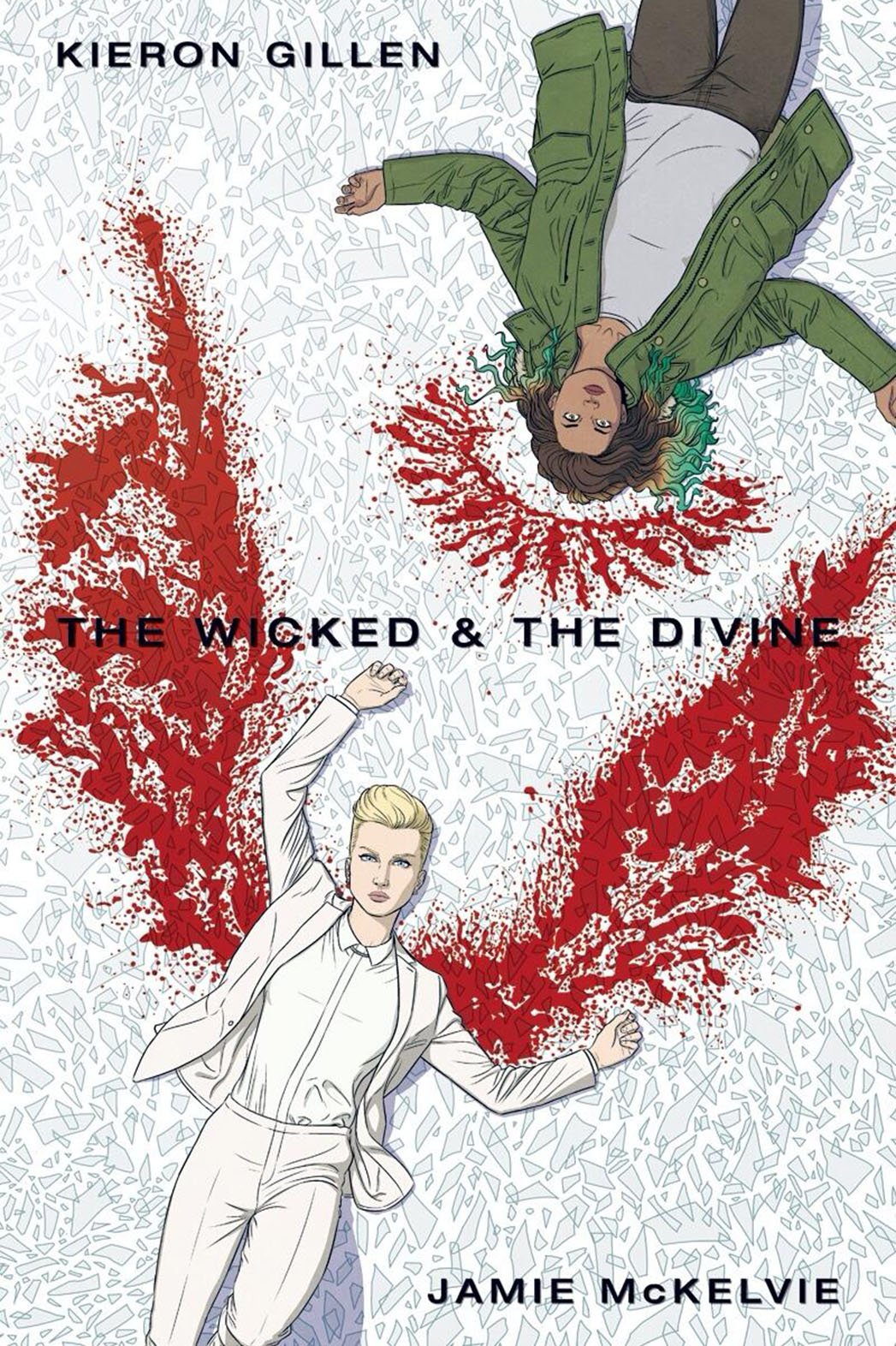
The Wicked and the Divine, volume one — Kieron Gillen & Jamie McKelvie

The_Wicked_and_The_Divine_Promotional_Picture_from_January_2014

It seems like having a great premise is everything when it comes to new comics, nowadays. In the case of this one — possibly the most acclaimed comic of the year — it’s “gods getting reincarnated as young pop stars.”

Again, that premise ought to sell this outright. If not, I’ll elaborate: one of the pop stars is Kate Bush (well, basically). Go forth and buy this trade collection.

For the time being, Sex Criminals is my favourite ongoing comic. But, I feel like this has the potential to become a major work on the level of The Sandman or Alan Moore’s Swamp Thing.

Run the Jewels 2 — Run the Jewels

I have very little to say about this album that everybody else hasn’t already observed. Suffice it to say that I love it as much as everybody else seems to.

Animism — Tanya Tagaq

My favourite non-classical album of the year. The lion’s share of the attention that’s been devoted to Animism since its well-deserved Polaris win has focussed on Tagaq herself. Which, fair enough. She’s probably the most extraordinary musician in Canada, right now. The breadth of unexpected sounds she can conjure from her throat is shocking. Plus, she’s got a lot of important things to say.

But, to me, this album succeeds the same way that great jazz albums succeed: as a collaboration between musicians who know how to make fascinating sounds at the spur of the moment. The album’s core trio consists of Tagaq, violinist/producer Jesse Zubot, and drummer Jean Martin — who gives one of the great instrumental performances of the year. Listening to the telepathy happening between those three provides moments of joy on an album that deliberately resists being loved.

Well, I love it anyway. Animism is difficult, alienating, troubling and spiky. I wish more music were like it.

Note: The Pixies cover above is emphatically not the best track on the album (that would be “Damp Animal Spirits”), but it deserves to go down in history as one of the most revelatory covers ever.

Gone Girl

At the Parsons Oscars, David Fincher would have been nominated for best director, Gillian Flynn would have been nominated for best adapted screenplay, Ben Affleck would have been nominated for best actor, Jeff Cronenweth would have been nominated for best cinematography, and Trent Reznor and Atticus Ross would have been nominated for best score. (Sure, they’re not as good as Mica Levi, but they’re still great.)

Oh, and Rosamund Pike would still be nominated for best actress.

99% Invisible

Before Serial, the biggest podcasting success story of 2014 was 99% Invisible. This was their first full year of weekly episodes — a feat made possible by a pretty impressive Kickstarter campaign. We got a new, surprising, audio-rich story every week; we were introduced to a new regular producer in Katie Mingle; and host Roman Mars’s warm bonhomie got even warmer for the gratitude he evidently feels for his generous listeners.

And then, as a result of an even more impressive Kickstarter campaign, we got Radiotopia: a constellation of other intricately-produced podcasts that share funding and cross-promote. Before podcasts were suddenly a thing, these people were working really hard at making podcasts a thing.

99pi is still the highlight of the bunch, though. It’s a show about design, in the broadest sense possible. The entire human-constructed world is grist for the mill. This year, they tackled everything from Ouija boards to Penn Station to tunnels for cows. They made me laugh; they made me cry. They reinvigorated my love for audio storytelling once a week. This, for me, was the podcast of the year.

Orange is the New Black, season two

So, remember what I said about Interstellar and how I love stories that I’ve never seen before? Orange is the New Black does that exact thing, one episode after another — probably in a more profound way than Interstellar.

I’ve never seen a show with so many fully-realized characters. From Vee (*grr) to Red (*punches the air) to Miss Rosa (*sobs), I became massively invested in all of their stories, this season. Taylor Schilling’s performance continued to be wonderful — and continued to be not even the highlight of the show.

Side note: that Zombies song I linked to at the beginning (this one) is totally going to close out this show’s series finale. I’m absurdly confident in this.

Become Ocean — John Luther Adams

John Luther Adams’s Pulitzer win for Become Ocean seemed a long time coming. I fell in love with Adams’s mesmerizing, textural compositions after reading Alex Ross’s profile of him in his book Listen to This. But, Become Ocean really does feel like a new peak for this composer. A 42-minute sound tapestry of gradually rising and falling tension, this piece uses the massive sonic palate of a symphony orchestra more completely than anything I’ve heard in a long time.

Adams sums up the piece’s thematic premise in a short, beautifully crafted statement in the CDs liner notes: “Life on this earth first emerged from the sea. Today, as the polar ice melts and sea level rises, we humans face the prospect that we may once again, quite literally, become ocean.”

The statement reminds me of another strangely moving pronouncement of doom, accompanied by arhythmic droning: the tape that precedes the rendition of Peter Gabriel’s “Here Comes the Flood” on Robert Fripp’s Exposure album. Both pieces of music deal — however obliquely — with ecological disaster, and both of them remind us that we will never have enough power over the natural world to keep it from killing us all when things get bad enough.

Become Ocean, to me, is the album of the year. No matter what you normally listen to, you should hear this.

The Grand Budapest Hotel

It’s like Buster Keaton, Alfred Hitchcock, Stanley Kubrick and Terry Gilliam made a movie together. And that movie is my favourite of 2014. It’s a tough pick between this and Birdman, but ultimately, I’ll go for the one that I could not keep myself from seeing in theatres a second time.

This is the movie that once-and-for-all puts the lie to the notion that Wes Anderson’s artificiality gets in the way of the feels. It’s true: everything in this movie is ostentatiously crafted and adjusted by Anderson, from the highly choreographed jaunts through the titular hotel to the aesthetically pleasing single tear that was carefully applied to F. Murray Abraham’s face in the dining room scene. But none of this prevents the movie from having the intended effect, be it laughter or a bit of a twinge, at every turn. Because it’s not a filmmaker’s job to feel things. It’s the audience’s. And I don’t see why a movie presided over by an aloof, aesthete’s eye should affect me less directly than one produced with a more improvisatory approach. As I said on Twitter at the time, sincerity be damned. Give me craftsmanship any day.

Also, nothing in movies or on TV made me laugh harder this year than “She’s been murdered. And you think I did it.” *runs*

Doctor Who, series eight

This second year of my Doctor Who obsession was slightly more sedate than the first. The frenzy of discovery that led me to gulp down the first seven series of the rebooted show and a pretty significant chunk of the classic one in a matter of months seems to have abated, now. So, it is with a rational and balanced mind that I can proclaim OMG TWELVE IS TOTALLY MY DOCTOR.

This series has certainly been the most consistent one since Doctor Who rebooted. Its highlights (“Listen,” “Dark Water/Death in Heaven,” “Kill the Moon”) don’t quite reach the heights of previous series (there’s no “Human Nature/The Family of Blood” or “The Pandorica Opens/The Big Bang”), but “Listen” comes awfully close.

And, more crucially, there are no clunkers here. Every episode feels like it’s building to the themes that showrunner Steven Moffat would pay off in his spectacular two-part finale. But every episode is still allowed to be its own self-contained story — which is really important, because what’s the point of a show about a magical box that can take you anywhere if all of the stories are the same?

We saw a different, more ruthless and conflicted Doctor in Peter Capaldi. We saw new dimensions in Jenna-Louise Coleman’s performance as Clara (although, as blogger Caitlin Smith convincingly argues, they were probably there before and we just didn’t notice). We saw Nick Frost as Santa Claus.

We are waiting in agony for more.

Blood and Laurels — Emily Short

Since the storied elder times of Zork, text-based gaming has been on something of a low simmer. Plenty of fantastic hobbyists have been making absolutely stellar works of interactive fiction in that tradition — the one where you type commands and the computer responds, when it understands — for more than twenty years, now. But, it was a niche community, to say the least.

Now, with games like Device 6 and A Dark Room making a stir in mobile gaming, it seems like the world may be ready for more word games. After all, what do we spend all of our time doing, nowadays? We spend it reading text on screens.

2014 saw the release of one of the most promising platforms for interactive fiction, going forward. Versu is a massively more flexible new version of the Choose Your Own Adventure. Basically, you read text and make choices at critical points (or, for that matter, whenever you’d rather intervene than stand idly by). Choices can be as simple as making one gesture instead of another, or as sweeping as siding with one character in an argument over another. Versu’s artificially intelligent non-player characters react in kind.

The platform’s launch title, Blood and Laurels is by one of the most acclaimed authors of interactive fiction in recent years: Emily Short. It’s a story of intrigue in Ancient Rome. I don’t even want to think about how many endings it probably has. It’s a fantastic story, but what’s most exciting is the potential of this format. My prediction for 2015: this will be big, soon.

Honourable mentions: Salad Days — Mac DeMarco; The Ambassador — Gabriel Kahane; Stella di Napoli — Joyce DiDonato; Lamento — Romina Basso; Mad Men, season seven, part one; Last Week Tonight, season one; Game of Thrones, season four; Serial; Radiolab; Philip Sandifer’s blog; Boyhood.

I ran, I fell – OR – Why my hands were bleeding at the Kronos concert

The word “injury” can elicit tremors of terror amongst musicians, and with reason.

I have known two trumpet players whose careers have been interrupted by a malaise of the muscles around the mouth. One was able to retrain his chops to behave like they did before, but it was a painstaking process that took months of delicate practice. The other needed surgery to reconstruct his embouchure.

I once spoke to a violist whose hand contracted into a fist inexplicably, and didn’t come undone for several months.

Singers may develop polyps on their vocal folds, making their jobs rather painful for a while.

And those are the lucky ones. Musicians are vulnerable. An injury that most people could easily adapt to can mean never playing music professionally ever again. Snap. There goes that career.

However, I count myself unique amongst these cases, as I am the only person I know to have suffered an injury as a member of the audience. This is the story of the night when the universe confirmed that I was never meant to be a musician.

***

On the evening of October 19, 2013, I attended the Kronos Quartet’s 40th anniversary concert at the Chan Centre on the UBC campus. I reviewed it for Vancouver Weekly. I had just emerged from the hall after an (intermittently) interesting pre-concert Q&A with Philip Glass, whose sixth string quartet was to be premiered that night. I was excited.

I realize now that I may have been spared a great deal of inconvenience and physical discomfort if my press credentials hadn’t garnered me such an excellent seat at the concert, so near the front of the hall. Had I been closer to the door, I might have been among the first to make it to the washroom after the Q&A ended, but no. By the time I reached the lobby, the line was firmly in place and not getting any shorter.

I have a natural aversion to public toilets, but I can normally get past it. Also, I’m not usually opposed to waiting in lines. But before I will commit to placing myself in such close proximity to people I don’t know, I need to be reasonably certain that those people will not attempt to make social contact with me. Call it what you like: it’s how I am on all but my best days.

Situations in which people have been stimulated en masse are always high-risk for awkward conversation. Minutes prior, the Chan Centre audience had been in the presence of a legend: an (intermittently) interesting experience that required unpacking. My fear was that whoever I lined up behind would feel the need to unload his analysis upon me, obligating me to offer up an original, creative thought in response. And I damn well wasn’t going to be coming up with any of those until I settled down to write. I don’t think well on my feet.

So, I figured I’d just dart over to the nearby journalism school, which I attend by day, and to which I conveniently have 24-hour access. The building has two men’s washrooms that I’ve come to trust (and a third one that I still feel weird about).

I don’t know why I decided to run there. I had plenty of time. A leisurely stroll would have been entirely adequate. The concert didn’t start for a half-hour. And frankly, running is not a thing that I do. (That’s partially because it makes me look ridiculous. I run with my torso plank-straight, arms flailing about. It looks stupid, but there’s nothing I can do about it.) I’ve been known to walk quickly when under stress, but for the most part, I’m a stubbornly slow-moving individual. In high school, it drove my phys-ed teachers nuts.

Anyway, between the Chan Centre and the J-school, there’s a slight downhill grade. So the crucial point is that once I’d started, I only kept running because I was too lazy to forcibly decelerate. And then there were stairs.

My recollection of what happened next is a little hazy. What I remember can be summed up into these points:

  1. I made it down the stairs without incident.
  2. There was a truck turning the corner as I dismounted.
  3. Upon reaching the bottom of the staircase, I botched the landing.
  4. The person in the truck began to roll down the window while I lay on the ground, moaning.
  5. I was deeply embarrassed about what had just occurred.
  6. I managed to get back on my feet and I ran into the school before the person in the truck had the chance to say anything. There was no way I was going to speak to a human being about the astonishing lack of equilibrium that I had just demonstrated.

Thus it was that I incurred my injury in the most prosaic fashion imaginable: I ran, I fell.

***

The second floor of UBC’s journalism school is arranged in a ring. If you’re so inclined, you can walk past three or four professors’ offices, through the reading room, past the stairs, end up back where you started, and do it all over again. This is especially convenient when you suspect you’ve broken your hand in an embarrassing “running and falling” incident, and you need to walk it off.

I suspected that my hand was broken, or at least fractured, because it had felt this way before. Six years prior, when I was in high school back in Fort McMurray, I had fallen down a cliff on the banks of the Athabasca River. I fractured the fourth metacarpal in my left hand, and was in a cast for several weeks. At the time, I aspired to become a professional pianist of some kind.

Snap. There goes that career.

But, never mind. At some point, my singular lack of talent and commitment would have scuppered me anyway, so it doesn’t upset me too much. I earned a degree in the trumpet instead. It wasn’t for me. And here we are.

In the J-school washroom, I started running my hands under cold water and I realized that my right was probably not going to stop bleeding for a while. My fall onto rough concrete had left my hands not only internally injured, but displaying some semblance of road rash.

I gingerly put my coat back on and headed back to the Chan Centre. My hands were both becoming sorer by the minute, but I had a concert to review, and I’d be damned if I was going to miss the premiere of a Philip Glass string quartet.

***

I didn’t make a good impression on the guy sitting next to me. In retrospect, I suppose “I’d shake your hand, but mine won’t stop bleeding,” isn’t the best way to introduce oneself, but what else was I meant to say? Mercifully, the concert started right away.

It’s a strange thing, hearing live music when you’re in pain. Sometimes it seems so immediate, so present: the perfect distraction. But sometimes you find yourself drifting.* You start thinking things like “Should I leave and go to the hospital?” Or, “Man, it’s hard to clap.” But three things kept me in my seat:

  1. This was history. A new work by Philip Glass is a big deal.
  2. I had a job to do. I said I would review this concert, and I was damn well going to.
  3. The Kronos Quartet is extremely awesome. Sometimes, they were so good I forgot I even had hands.

So I stayed at the Chan Centre, soaking in the music, hands bleeding into my lap.

***

My hand wasn’t broken, just sprained. I left the hospital at 3:00 AM that same night. By that time, the pain was (intermittently) much more manageable, and the road rash had scabbed over. The only problem was, I couldn’t move the fingers on my left hand. For the next week, it was difficult to do dishes, put on clothes, shampoo my hair, and pour things. Writing was okay. (Well, kind of.)

But, if I were a musician, my entire life would have ground to a halt that week. No practicing, no rehearsals, no concerts. If any of the members of Kronos had run and fallen on October 19, Philip Glass’s sixth string quartet might still not have premiered.

But they didn’t, and that’s the key. See, playing an instrument isn’t all about what’s in your brain. It took me a long time to realize that. Playing an instrument requires a connection to your body that I just don’t possess, and never have.** Ask my old phys-ed teachers. Ask anybody who has ever witnessed the ridiculous spectacle of me running.

So, I’m very happy to live in brainland now, with the intricate physical skills of music-making far behind me. I have a cliff on a riverbank to thank for that, and a concrete staircase to remind me that my life is good.

_____

*In my VanWeekly review, I proclaimed that “String Quartet No. 6 lacks the immediacy of Glass’ previous chamber music, but one gets the feeling that repeated listening will yield rewards.” Avid classical music fans will recognize this statement as a euphemism for “I sat through the concert but I can’t remember how the damned music sounds.” It’s a common problem when you’re hearing a piece for the first time. I would normally have reservations about admitting this, but given that my hand was quickly swelling up and becoming immobile, I think I deserve a break.

**Don’t get me wrong, there are many other crucial traits that I feel I lack: natural musicality, perseverance, etc. But this one is undeniable. Even my mother would admit this one.

Vancouver’s new HMV is useless and I’m upset

When I first visited Vancouver in the summer of 2011, I spent a solid two hours in the HMV on Robson Street. Maybe more. I used to love these places.

When I moved to Vancouver in the fall of 2012, I searched and searched for the three-floor wonderland that had so entranced me the previous year – to no avail. The space that once held that HMV has been through a spectacular transformation since I set foot in it. As I’m writing this, it houses the world’s second largest Victoria’s Secret. CDs are on their way out, but lingerie is forever.

The British music store chain’s future has been called into question this year. So, when I was walking down Robson the other day, I was shocked to see a brand new HMV, right across the street from where the old one used to be. I stepped inside.

By the time I left, I had realized something that the rest of the world has known for years: it really is over for these kinds of stores.

We’re going to have to take a few steps back if I’m going to properly communicate my disappointment.

Some people think of HMV as the music store equivalent to Tony Roma’s: generic, middle-of-the-road, and the same in every city in the world. I resent this view. I’ve always felt that you can learn something about a city by walking around its largest HMV. Montreal’s, for instance, has the most massive classical section I’ve seen in a chain store – evoking the sense of high culture that pervades that city. The wide variety of obscure prog and psychedelic gems you could find at the dearly departed Vancouver location suggests that if you search the Lower Mainland hard enough, you may come across an old hippie or two.

My memories of childhood in Fort McMurray are peppered with weekend jaunts down to Edmonton with my family, where I would gladly spend hours in the two-storey HMV at the West Edmonton Mall. I have a sentimental attachment to those three big, pink letters that no quirky indie shop could match.

So, my recent trip to Robson Street’s new HMV kind of ruined my day. The store is about the size of a two-chair barber shop. In terms of selection, if you take away the small selection of Criterion DVDs and Blu-Rays, you’re basically looking at a Wal-Mart entertainment section. Amusingly, an employee asked if she could help me find anything three times in the course of my fifteen-minute visit. “I know you mean well,” I thought, “but I could see your whole selection the second I walked in the door.”

A world without HMVs would be rough for those of us who maintain an irrational attachment to music as a physical commodity. HMV has always offered an opportunity to step off the street into a place that’s familiar, but maybe a little bit new as well. It’s a place where you’re likely to find the albums you’ve been reading about but haven’t gotten around to hearing. It is my personal favourite waste of time.

But, His Master’s Voice is fading fast.

I must admit that after a long struggle, my logical brain finally pounded my sentimental side into submission. Nowadays, I’ve more or less gone digital. But, compared to the pleasure of aimlessly wandering the endless aisles of a well-stocked, multi-storey, bricks and mortar music store, shopping on iTunes is just not much fun.

Vagabond + Tombstone = “Frère Jacques” in a Minor Key

Ken Russell clearly revered the composer Gustav Mahler. The eccentric filmmaker stated in his autobiography: “Only clichés can describe what nobody has ever been able to portray: a vision of God. Mahler got so near it.”

The characteristic that sets Russell’s Mahler apart from other music biopics is how doggedly it focusses on Mahler’s music itself, rather than simply telling the story of the composer’s life. Russell almost seems to be analyzing the music through images, at times. This is difficult terrain for a filmmaker to tread upon. I’m going to explain why, and it might get technical. Stay with me:

Film is a series of photographic images. At its most basic, it is a document of objects that were actually present in front of the camera, and therefore exist in space. It is a medium for concrete images. If that’s true, then music is the anti-film. Abstract by definition, it may evoke moods or trigger images, but these are, at best, subjective.

What I mean is this: If I showed 50 people a picture of a grey cat and asked them what the image was of, they’d probably all give me the same simple response: “It’s a picture of a grey cat.” But if I played you and your 49 friends a melody and asked what it makes them think of, I might just as likely get “marble columns,” “hibernating bear,” or “a craving for pancakes” as “grey cat.” The smartest of you would probably say “nothing,” or “that’s a stupid question,” because there’s something fundamental about music that you understand: there can be no specific meaning attached to a melody, or a chord sequence, taken in isolation.

That’s not to say that music can’t take on meaning, if it is effectively paired with something more concrete, like an image, or a narrative, or words. Think of ballets, operas, film scores and (obviously) songs. Music is malleable. It has no meaning of its own, so you can make it mean whatever you want.

Here’s the flip side of that idea: music, being abstract, steadfastly resists translation into any other medium. You could rework a story as a film. A scene from a novel could form the basis of a painting. You could even reverse those processes, with a modicum of creative license. But we’re still waiting for the day when we can sit through the credits of a film and see the words “adapted from Joseph Haydn’s String Quartet Op. 76, No. 2.”

(I should note here that this idea of music not representing anything specific is contentious. I have at least two former music teachers who would shudder to read this. But, among those in my corner is Igor Stravinsky, who argues this perspective in his Poetics of Music, and also in a famous essay accompanying his 1923 Octet. So, I feel vindicated. Also, this guy.)

Here’s what this all adds up to: music communicates to its audience on a different, more ephemeral level than any other medium. (You could argue for abstract painting or sculpture, I suppose, but I’ll leave that for people who know something about it.) That’s why Hector Berlioz can write a brilliant symphony based on a trite, overwrought story of his own devising. Ultimately the audience is not experiencing a narrative, they’re experiencing something else. To delve too deeply into Berlioz’s story (or for that matter, the plots of most operas) would be to miss the point. Taken out of context, the story is trite. In context, it’s sublime. Berlioz could’ve written a novel but he didn’t; he knew better. The same applies to, say, Mahler.

Phew, we’ve made it back to Ken Russell.

Now you can see why film is a risky medium in which to attempt an analysis of a piece of music: a filmmaker could easily throw the narrative elements of a symphony up on a screen, but in doing so he would be presenting them in a context that they weren’t meant for, thereby casting the music in a less-than-favourable light.

Russell veers dangerously close to this in parts of Mahler. But in one scene, Russell’s analysis actually works.

The feat occurs in one of Russell’s famous fantasy sequences, following Mahler’s heart attack on a train. Here, Mahler (Robert Powell) envisions his own funeral, at which he is alive and trapped inside a casket. His wife, Alma (Georgina Hale), and her lover (Richard Morant) take delight in the proceedings.

The sequence is scored largely by the slow movement of the First Symphony. This movement contains one of Mahler’s broader musical gestures: the inclusion of a mournful, minor-key adaptation of the folk song commonly known as “Frère Jacques.” The song is juxtaposed with a klezmer-like theme reflecting Mahler’s Jewish heritage. A standard interpretation of this movement holds that “Frère Jacques” may have originated as a tune sung by Catholics to taunt Jews. Thus, Mahler’s juxtaposition reflects a conflict that, as a Viennese Jew who converted to Catholicism for professional reasons, Mahler would have known well.

The consequences of Mahler’s heritage and conversion is a prominent theme in Russell’s film, but here, he ignores that element of the First Symphony. The sequence instead presents Mahler’s music as the same sort of Freudian dreamscape that Russell is so adept at creating. Russell uses the image of a vagabond figure (Ronald Pickup) from an earlier scene to connect the funeral to “Frère Jacques.” The vagabond was previously introduced in a flashback to Mahler’s youth, in which he teaches Mahler about the natural world, all the while playing “Frère Jacques” obsessively on his squeezebox. He appears playing his instrument atop a tall tombstone during Mahler’s funeral procession.

Ronald Pickup as "Nick"

Ronald Pickup as “Nick”

This image points out a specific feature of the music: the way Mahler has twisted “Frère Jacques” into a minor key. Perhaps the best way to explain it is this:

“Frère Jacques” = childhood = vagabond

minor key = death = tombstone

Thus,

vagabond + tombstone = “Frère Jacques” in a minor key

So, Russell is speculating about Mahler’s creative process and laying it bare on the screen: images collide in Mahler’s subconscious, and out comes music. The music reflects the odd juxtaposition between the images by producing its own odd juxtapositions.

Even if Russell’s analysis is unconvincing, you have to admire his method. He basically reverse-engineers Mahler’s music by putting it back inside his head. That’s pretty clever.